


















Members of the Federal House of Representatives have commenced the amendment of the Nigerian constitution with far-reaching decisions that they expect would deepen the country's democracy and accelerate its development.
The review of the constitution had commenced with the participation of Nigerians with the general decision collated by the Special Ad-hoc Committee on the Review of the Constitution led by Deputy Speaker, Emeka Ihedioha.
At plenary on Thursday, Ihedioha presented the report, aimed at creating financial autonomy for Local Government Areas in other to reduce the overwhelming influences of the respective State governors.
In this case, as stated in the report, the joint accounts operated by the states and local councils would be stopped, so that the latter would begin to receive their statutory allocation directly from the Federation Account.
The report also cancels the existence of the State Independent Electoral Commission (SIEC), thus giving the Independent National Electoral Commission (INEC) the power to conduct local council elections henceforth. This is aimed at frustrating the influence of politicians the choice of persons elected into positions at the grassroots.
The report, which suggests a four-year term for political officers elected into Local Government councils, also suggests the establishment of an Independent Electoral Offences Commission to handle election matters and stipulates that anybody found guilty of electoral offences by any court in the country would be barred from contesting elections at both the State and Federal levels.
The amendment is to be debated in the form of 25 bills, and also disapproves the creation of more states in addition to giving traditional rulers representation in the National Council of State.
The committee moved items including railways, devolution of powers, health, housing and electricity from the exclusive to the concurrent list.Portions of the report contained:
•A Bill for an Act to alter Sections 7 and 162 of the Constitution to provide for independence and financial autonomy of local councils in Nigeria, and for related matters; 2011 (H.B 122);
•A Bill for an Act to alter the Constitution of Nigeria to provide a definite date for the President to present an Appropriation Bill for the next financial year to the National Assembly, 2011 (H.B114);
•A Bill for an Act to alter the provisions of Part II of the First Schedule of the Constitution of the Federal Republic of Nigeria, 1999, by deleting the word “Plateau” in line 14 and inserting instead thereof the word “Nasarawa”, 2011, (H.B 102);
•A Bill for an Act to alter sections 89 and 129 to direct the Attorney-General of the Federation to prosecute any person or authority found wanting by the Senate or the House of Representatives; and for connected matters, 2011, (H.B 177);
•A Bill for an Act to amend the Electric Power Sector Reform Act, Cap 7, LFN, 2004 and other matters connected therewith, 2012, (H.B 190);
•A Bill for an Act to alter the Constitution to remove the word, “Force” from the name of the Nigeria Police Force in order that it becomes the “Nigeria Police”; and for related matters, 2012, (H.B. 135);
•A Bill for an Act to amend the Treaties (Making Procedure, etc.) Act Cap. T20, LFN, 2004, to make consultations with relevant committees of the National Assembly a mandatory Treaty- making Procedure to all Treaties entered into between the Federation and any other country and for matters connected therewith, 2012, (H.B. 189);
•A Bill for an Act to alter Section 58 of the Constitution to make the Resolutions of the National Assembly have force of law; and for connected matters, 2012, (H.B 115);
•A Bill for an Act to alter Section 315 of the Constitution to remove the power of the President or Governor to amend an existing law, 2012, (H.B 151);
•A Bill for an Act to alter Section 7 of the Constitution to ensure efficient operations of the Local Councils in Nigeria for social, economic and political development; and for other matters connected therewith, 2012, (H.B 176);
•A Bill for an Act to alter the provision of the Constitution of the Federal Republic of Nigeria 1999, to vest appellate jurisdiction on the Sharia and Customary Courts of Appeal in respect of all matters emanating from Sharia, District and Area Customary Courts; and for other matters connected therewith; 2013, (H.B 406);
•A Bill for an Act to alter the Constitution of the Federal Republic of Nigeria, 1999, to amend the definition of a citizen contained therein to include all persons indigenous to communities now forming part of Nigeria; and for related matters; 2013, (H.B 414);
•A Bill for an Act to further alter the Constitution of the Federal Republic of Nigeria to make provisions for the enforcement of certain provisions of the fundamental objectives and directive principles of state policy as contained in the Constitution; and for matters connected therewith, 2013, (H.B 123);
•A Bill for an Act to alter the provisions of the Constitution of the Federal Republic of Nigeria, 1999 to criminalise contempt of the House of Representatives, 2013, (H.B 430);
•A Bill for an Act to alter the Constitution of the Federal Republic of Nigeria, 1999, by providing immunity for members of the Legislature in respect of words spoken or written at the plenary session or at committee proceedings, to guarantee that freedom of speech, debate and proceedings in Legislative Houses are not impeached or questioned in any court or place outside of Parliament; and for related matters (H.B432) and a Bill for an Act to alter the provisions of the Constitution of the Federal Republic of the Nigeria to guarantee freedom of speech and Legislative actions for members of the National Assembly, (H.B 457);
•A Bill for an Act to alter the Constitution of the Federal Republic of Nigeria to place the Office of the Auditor-General of the Federation on the first line charge of the Consolidated Revenue Fund and to empower the Auditor-General of the Federation and the Auditor-General of State Governments to audit the accounts of statutory corporations, commissions, authorities and agencies in Nigeria; and related matters, 2013, (H.B 442);•A Bill for an Act to alter the provisions of Section 143 of the Constitution of the Federal Republic of Nigeria, 1999, to remove ambiguities in the process of removal of the President and the Vice President from office on an allegation of gross misconduct and to provide for a more transparent and democratic procedure for impeachment; and for other matters connected therewith, 2013, (H.B 498);
•A Bill for an Act to alter the provisions of the Constitution of the Federal Republic of Nigeria, 1999 and for other matters connected therewith;
•A Bill for an Act to amend sections 315 of the Constitution of the Federal Republic of Nigeria (as amended);
•A Bill for an Act to alter the provisions of the Constitution of the Federal Republic of Nigeria, 1999 and for related matters;
•A Bill for an Act to alter Section 285 of the Constitution of the Federal Republic of Nigeria (Second Alteration) Act. No. 2 of 2010; and for matters connected thereto, 2012, (H.B 247);
•A Bill for an Act to alter the provisions of the Constitution of the Federal Republic of Nigeria, 1999, to separate the office of the Attorney-General from that of the Minister of Justice and to provide for an independence office of the Attorney-General; and for matters connected thereto, 2012, (H.B 262);
•A Bill for an Act to alter the provisions of the Constitution of the Federal Republic of Nigeria, 1999 and for other matters connected therewith;
•A Bill for an Act to alter provisions of the First Schedule, Part 1 of the Constitution of the Federal Republic of Nigeria, 1999, to allow for the change of “Egbado North” and “Egbado South” to “Yewa North” and “Yewa South”; and for matters connected therewith, 2012, (H.B 373);
•A Bill for an Act to alter the provisions of Section 7 of the Constitution of the Federal Republic of Nigeria to make it mandatory for election to the offices of the chairman and councillors of local councils in Nigeria to be held on a date to be appointed, and on the conditions prescribed by Laws made by the State Houses of Assembly; and for other matters connected thereto, 2012, (HB 259);
•A Bill for an Act to alter the Constitution of the Federal Republic of Nigeria, 1999 in section 162 (2) to provide for the Revenue Mobilisation, Allocation and Fiscal Commission to table directly before the National Assembly the commission’s proposals for revenue allocation; and for matters connected thereto, 2012 (HB 343); and
•A Bill for an Act to alter the provisions of item No. 1, Part III, Third Schedule of the Constitution of the Federal Republic of Nigeria, 1999 to allow for additional Membership of the Federal Capital Territory Judiciary Service Committee, include the Customary Court to the list of Courts in the Federal Capital Territory; and other matters connected therewith, 2012 (HB 352).
Some of the other areas examined by the report included:
Section 12 where the committee altered the provisions concerning Nigeria’s international treaty obligations, to provide for National Assembly’s ratification and enactment, Section 25 where the committee redefined citizenship to take away the question of who is an indigene or settler in the community, meaning that a person who has lived in a community for a specified period is entitled to the same rights and privileges as citizens of that community and Section 42 where the committee altered its provision to specifically prohibit discrimination against persons living with disability.
The committee also added new sections 45A-D where it made a significant proposal by making enforceable certain socio-economic rights as fundamental rights and incorporating them into Chapter IV, the justiciable part of the Constitution, thus creating as justiciable, the rights to education, right to favorable environment, right to free primary and maternal health care services, and the right to basic housing; and Section 65 where the committee agreed to allow for independent candidacy in elections in Nigeria but that this would, however, be subject to conditions stipulated under the Electoral Act.
Others include:
•Section 66: To give seriousness to the issue of electoral offence, the committee provides grounds for disqualification of a candidate from contesting elections where he has been found guilty of an offence. This is also applicable at the state level.
In order to entrench the independence of the offices of the Attorney-General of the Federation, the Accountant-General of the Federation and the Auditor-General of the Federation, and insulate them from political control, the committee put these offices on the first line change of the Consolidated Revenue Fund of the Federation.
•Section 80: The committee strengthened the provisions of Section 80 of the constitution to plug leakages from the Consolidated Revenue Fund of the Federation and public funds of Nigeria to ensure that no expenditure is made by any organ of government without appropriation by the legislature.•Sections 81 and 82: To ensure timely passage of the national budget, and discipline in expenditure, the committee stipulated that budgets be submitted by the executive for approval no later than 90 days before the expiration of the fiscal year.
•Sections 84A-C: The committee included a new section in the constitution creating a new office of the Accountant-General of the Federation and Accountant-General of the Federal Government to ensure that persons are appointed into these two separate offices for professional management of resources.
•Section 150:To give effect to the results of the Peoples’ Public Session which voted to separate the office of the Minister of Justice from that of the Attorney-General of the Federation, the committee made amendments to reflect this and insulates an independent office of the Attorney-General of the Federation from partisanship and to be managed by a professional lawyer. This is also applicable at the state level.
•Section 153: The committee felt that the issue of electoral offences is of such importance as to warrant the creation of an independent electoral offences commission to handle it.
•Section 162: The committee also altered the constitution to abrogate state joint local government accounts and empower each local government to maintain its own special account to be called “Local Council Allocation Account” into which shall be paid directly allocations made to the local government by the Federal Government from the Federation Account and from the government of the state.
•Section 197: The committee felt that it was important to protect the integrity of the electoral process at local government level and respond to the complaints of partisanship of SIEC. Accordingly, it removed SIECs and vested the power to conduct local government councils across the federation in INEC.
•Section 201 and 3rd Schedule, Part I: Role for Traditional Rulers: The committee in response to the results of the Peoples’ Public Sessions created a role for traditional rulers at the federal and state levels providing for representation of traditional rulers in the National Council of State and the creation of a State Council of Chiefs at the state level.
•Section 214: The committee in this section and across the entirety of the constitution deleted the word “Force” from the name of the Nigeria Police providing for the name of the Police to now be “Nigerian Police” rather than “Nigeria Police Force.”
•Section 241: The committee reviewed memoranda submitted on the judiciary and agreed to address concerns over delay in the courts by limiting the use of interlocutory appeals to stay proceedings in court.
•Section 308: In line with the results from the Peoples’ Public Sessions, the committee also removed the immunity from prosecution from criminal offences for persons occupying the position of president, vice president, governor and deputy governor, and to stem impunity levels.
•Section 315: The committee also altered this section of the constitution as approved by the Peoples’ Public Session removing the powers of the president and governor of the state to modify existing laws.
The Speaker of the House, Aminu Waziri Tambuwal said he would consult with other principal officers and members for the consideration of the report before they embark on recess which is two week awa
 |
|

Shettima at UNGA: Africa Demands a Seat at the Global Table
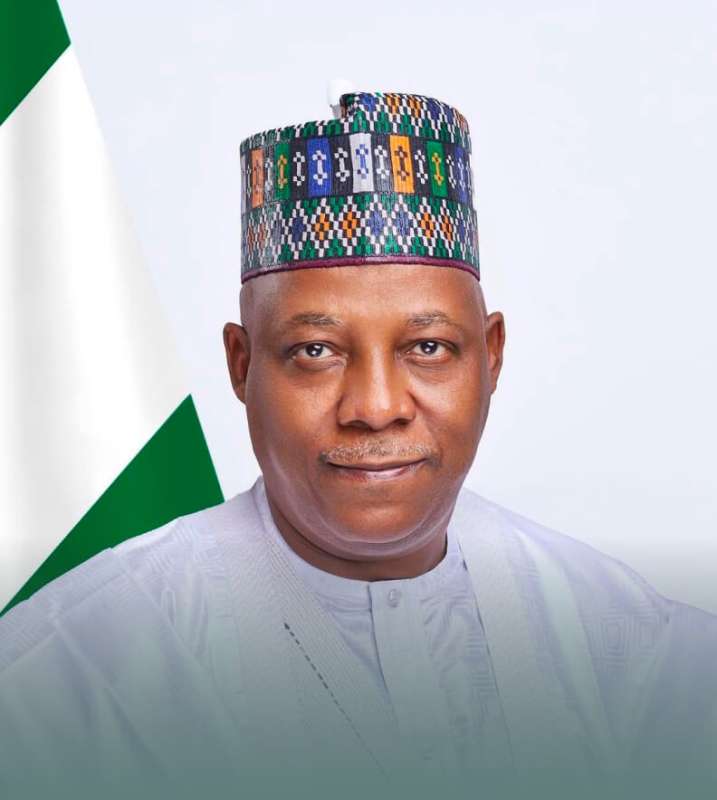
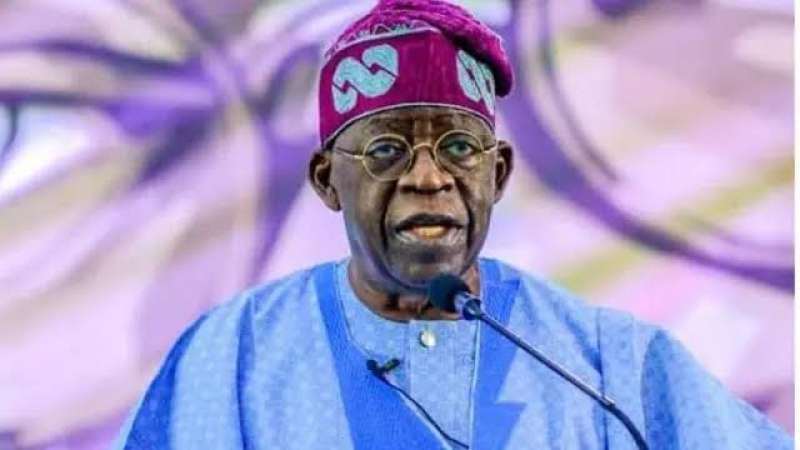
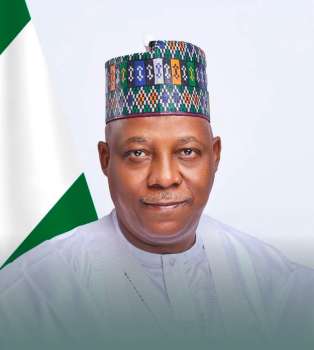
Nigeria has taken its campaign for a bigger African voice in global affairs to the heart of the United Nations, with Vice President Kashim Shettima demanding sweeping reform of the UN Security Council and permanent representation for Africa.
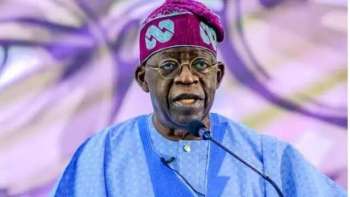
Delivering President Bola Ahmed Tinubu’s address at the **81st United Nations General Assembly** in New York on Thursday, Shettima said the international system created after World War II could no longer adequately reflect the realities of the modern world.
Nigeria called for **at least two permanent seats for Africa**, with the full rights and responsibilities of permanent membership, including veto rights for as long as the veto remains part of the Security Council, alongside **five non-permanent African seats**.
The demand puts Africa's long-standing campaign for greater representation at the centre of Nigeria's message to world leaders.
1945 cannot define 2026’
The Nigerian delegation argued that the distribution of power established in 1945 has left Africa under-represented in the institution responsible for some of the world's most consequential decisions on peace and security.
For Abuja, the issue is not simply about seats at the UN. It is about giving African countries a greater role in decisions that directly affect the continent.
Nigeria anchored its position on the **Ezulwini Consensus**, the African Union's common position on Security Council reform.
CONFLICTS: NIGERIA CALLS FOR DIPLOMACY
Shettima's address also turned to the conflicts confronting the international community.
Nigeria called for stronger diplomacy, respect for international law and protection of civilians, while urging greater international efforts to resolve conflicts, including the crisis in Sudan.
The Nigerian position was that lasting peace cannot be secured solely through military action and that diplomacy, dialogue and negotiated settlements remain essential tools for resolving conflicts.
TERRORISM: ‘NO COUNTRY CAN FIGHT ALONE’
With Nigeria continuing to confront terrorism and other forms of transnational crime, the address placed international security cooperation high on the agenda.
Nigeria called for stronger intelligence-sharing, action against terrorist financing and greater cooperation to prevent illicit weapons from crossing borders.
But Abuja also linked security to development, pointing to education, economic opportunity, accountable governance and protection of citizens** as important elements of long-term stability.
AFRICA’S WEALTH: FROM RAW MATERIALS TO INDUSTRIAL POWER
The Nigerian message went beyond politics and security.Tinubu's address, delivered by Shettima, called for Africa to transform its vast natural resources into industrial and economic opportunities by expanding **local processing, manufacturing, technology and value-added production**.
Nigeria also highlighted the African Continental Free Trade Area as an opportunity to expand intra-African trade and build stronger regional supply chains.
The message was clear: Africa's resources should generate greater value, jobs and investment within the continent rather than being exported largely in raw form.
CLIMATE AND DEVELOPMENT
Nigeria also reaffirmed its commitment to climate action, including its 2060 net-zero target, while stressing the need for financing, technology transfer and international support for developing countries.
Abuja argued that climate action and economic development should be pursued together, particularly in countries still struggling to provide reliable energy and economic opportunities for rapidly growing populations.
THE NIGERIAN MESSAGE
From the UN podium in New York, Shettima delivered a message that combined Nigeria's foreign-policy priorities with its wider vision for Africa: **greater representation, stronger security cooperation, economic transformation and a more inclusive international system.**
For Nigeria, the Security Council reform campaign remains a central part of that agenda.
The demand from Abuja is straightforward: **Africa should have a permanent voice in the room when decisions affecting international peace, security and global governance are made. And Nigeria says it intends to keep making that case.
News
CBN Slashes Interest Rate to 23% in Major Policy Adjustment
The Central Bank of Nigeria (CBN) has reduced its benchmark interest rate from 26.5 per cent to 23 per cent, marking a significant shift in its monetary policy direction.
CBN Governor, Olayemi Cardoso, announced the decision on Tuesday following the conclusion of the Monetary Policy Committee’s (MPC) 307th meeting in Abuja.
According to Cardoso, the committee reviewed developments in both the global and domestic economies, assessed emerging risks and considered their potential implications for monetary policy before reaching its decision.
“The Committee decided as follows: reset the monetary policy rate at 23 per cent,” the governor said.
The latest move represents a 350-basis-point reduction in the Monetary Policy Rate (MPR). It follows two consecutive MPC meetings at which the rate was left unchanged, after the committee lowered it by 50 basis points in February 2026.
In addition to cutting the MPR, the committee adjusted the standing facility corridor to +50 and -300 basis points around the new benchmark rate.
However, the CBN retained existing Cash Reserve Requirement (CRR) levels at 45 per cent for deposit money banks, 16 per cent for merchant banks and 75 per cent for non-TSA public-sector deposits.
Cardoso explained that the changes were designed to improve the effectiveness of monetary policy by strengthening the transmission of policy decisions through the financial system.
He said the adjustment was also part of efforts to restore the MPR as the primary signal of the CBN’s monetary policy and improve the operation of the monetary policy framework.
According to the governor, the MPC viewed the recalibration as an operational adjustment rather than a fundamental shift in the bank’s monetary policy stance.
“The Committee emphasized that the duration of the corridor does not constitute a change in the current monetary policy stance, but rather an operational reset to enhance the effectiveness of monetary policy and support the transition to an inflation targeting framework,” he said.
The committee also noted ongoing efforts by the CBN to strengthen its monetary policy implementation framework. Cardoso said transaction-based operational benchmarks had improved the transparency of money-market operations.
The MPC consequently concluded that resetting the MPR and adjusting the policy corridor would bring the monetary policy framework more closely in line with prevailing market conditions.
The committee said the changes are expected to improve policy transmission and reinforce the MPR’s role as the central benchmark for monetary policy.
Members further maintained that the latest adjustments should be viewed primarily as an operational realignment of the framework and not, in themselves, as a change in the underlying monetary policy stance.
Business
In The Spotlight
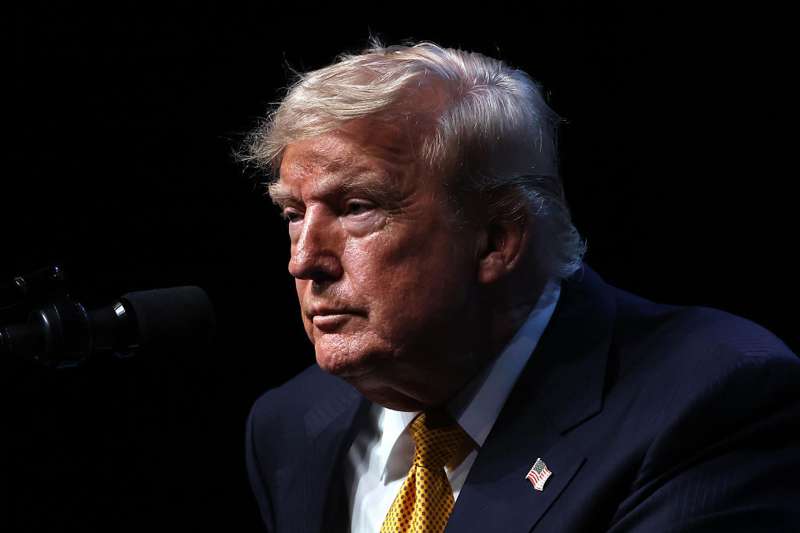
Editorial:Trump @ UNGA: Power Is Not a Substitute for Strategy
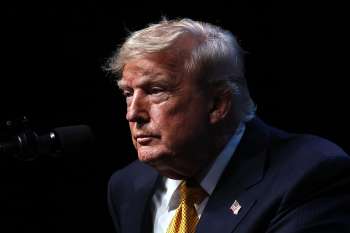
President Donald Trump came before the United Nations this week with a message that has defined much of his second presidency: The United States is powerful, it intends to use that power, and it will not permit international institutions to place limits on American sovereignty.
There was little ambiguity in the message. Trump celebrated military strength, demanded greater control over America’s borders, challenged international institutions and portrayed American technological leadership as a strategic necessity. On Iran, Gaza, immigration, the International Criminal Court and artificial intelligence, the president returned repeatedly to the same principle: Nations must defend their own interests, and the United States must remain free to act.
That is a coherent philosophy. But coherence is not the same as effectiveness.
The question raised by this speech is not whether America should be strong. No serious foreign policy can begin from the premise that American power is irrelevant. The question is what that power is for — and whether it is being used in ways that make the United States more secure over the long term.
Trump's remarks on Iran illustrated the dilemma.
He reaffirmed that Iran cannot be allowed to obtain a nuclear weapon and paired the possibility of diplomacy with warnings of devastating military consequences.
Deterrence has always depended partly on credibility. But credibility is not measured only by the willingness to threaten force. It is also measured by the ability to achieve a political outcome once force has been used.
Wars can begin with clear objectives and end with consequences no government anticipated. The history of American foreign policy offers ample evidence that military superiority does not automatically translate into political control.
That is why diplomacy cannot simply be regarded as the alternative to strength. At its best, diplomacy is one of the instruments through which strength is converted into durable agreements.
The same distinction matters in Trump's approach to the United Nations.
The president has argued that international institutions have become too costly, too bureaucratic and too willing to intrude upon national sovereignty. His administration has pursued reductions in America's financial and institutional commitments to the United Nations.
There is nothing inherently wrong with demanding accountability from an international organization. The United Nations deserves scrutiny. Its bureaucracy can be inefficient, its member states often disagree and its institutions can fail to prevent the very conflicts they were created to address.
But the choice is not simply between an ineffective United Nations and an unconstrained America.
International institutions exist in part because some problems cannot be solved effectively by individual nations acting alone. Nuclear proliferation is one. Global pandemics are another. Artificial intelligence increasingly belongs on that list.
Trump's comments about AI therefore deserve particular attention. He emphasized American technological leadership and warned against international regulation that could restrain innovation.
The United States has obvious reasons to remain at the forefront of AI development. But technological leadership and international coordination are not necessarily opposing objectives. The challenge is to develop rules that protect security without freezing innovation.
That requires American leadership, not American isolation.
The president's immigration argument followed the same pattern. He presented control of the border as an essential expression of national sovereignty and rejected the notion that international norms should prevent governments from determining who may enter their territory.
A sovereign nation plainly has an interest in controlling its borders. But sovereignty also carries responsibilities. The United States, like other countries, must reconcile border enforcement with its legal and humanitarian obligations.
The difficult work of governing begins where slogans end.
That is ultimately what was missing from the most sweeping parts of Trump's speech: not conviction, but attention to the institutional machinery required to turn conviction into lasting results.
America can impose costs on adversaries. It can withdraw from agreements. It can reduce contributions to international organizations. It can threaten overwhelming force. It can use its enormous economic and technological advantages.
But power has a second dimension that is easier to overlook: the ability to persuade allies, maintain coalitions, preserve diplomatic channels and build institutions capable of surviving changes in leadership.
The United States did not become the world's leading power merely because it possessed the world's strongest military. It built alliances. It established institutions. It cultivated economic relationships. It persuaded other countries that American leadership could serve interests beyond America's own.
Trump's speech represents a different emphasis.
It places sovereignty before institutions, pressure before accommodation and national interest before international consensus.
There is a legitimate debate to be had over whether the postwar international system has become too cumbersome, too expensive or insufficiently accountable. But reforming that system and weakening it are not the same thing.
The distinction will matter greatly in the years ahead.
A stronger America is not necessarily an America that stands alone. Nor is international cooperation synonymous with surrendering sovereignty.
The enduring challenge of American foreign policy is to combine power with restraint, independence with alliances and national interest with the recognition that American security is inseparable from the wider world.
Trump's speech made clear which side of that debate he occupies.The more consequential question is what happens next.
History will not ultimately judge the speech by its applause lines, its threats or its declarations of American strength. It will judge the policy that follows — and whether that policy produces a world in which the United States is not merely more powerful, but more secure.
Power matters. But power, by itself, is not a strategy.
In The Spotlight
Who Is in Charge? Tinubu Is in Paris, Shettima Is in New York
By now, Nigerians deserve more than explanations. They deserve clarity. President Bola Ahmed Tinubu is in Paris. Vice President Kashim Shettima is in New York.
And Nigeria is in Abuja, Lagos, Kano, Port Harcourt, Maiduguri and everywhere else Nigerians are dealing with the daily business of surviving, working and waiting for government to deliver. So, a simple question is becoming increasingly difficult to avoid:Who is in charge?
Before anyone dismisses that question as opposition politics, let us establish the facts. Tinubu left Nigeria on August 30 for what the Presidency described as a working vacation. He subsequently moved from London to Paris and, on September 21, the Presidency announced that he had extended his stay by a few days and would return at the weekend.
Shettima left Nigeria on September 20 for New York, where he is representing the President and leading Nigeria's delegation to the 81st United Nations General Assembly.
The government says there is no vacuum. It says Tinubu remains in contact with officials at home and continues to direct the affairs of government. It also says Shettima has been given the President's mandate to represent Nigeria at the UN.
Fine. But that does not make the question disappear.It makes the question more important.
A country cannot run on “trust us”
Government is not supposed to operate on whispers, assumptions or political reassurance.It operates through institutions.
It operates through constitutional authority. It operates through clearly defined responsibilities. And when the President is abroad for an extended period while the Vice President is also outside the country, Nigerians have every right to ask where executive authority is located and who is exercising it.
This is particularly relevant because Nigeria's Constitution provides a specific mechanism for a President who is proceeding on vacation or otherwise unable to discharge the functions of office.
That mechanism exists for a reason.It is designed to prevent uncertainty.It is designed to prevent a vacuum.It is designed toensure that, at every moment, Nigerians know who is constitutionally responsible for the presidency.
So why should Nigerians have to debate the issue?
The Presidency says everything is fine
The government insists that there is no disruption to governance.The Presidency says Tinubu has remained engaged from abroad. It points to decisions taken by the President while away and says the Vice President's trip to New York is an official assignment.
There is nothing inherently unusual about a Nigerian president travelling abroad.There is nothing unusual about a vice president representing the country at the United Nations.
The problem is the combination.The President is away. The Vice President is away. And the country is being told that everything is perfectly normal.
Perhaps it is.But if it is, then proving it should be easy.Tell Nigerians clearly who is exercising presidential authority.
Tell Nigerians whether the constitutional procedure has been followed.Tell Nigerians who is accountable for presidential decisions while both men are outside the country.This should not be difficult.
Leadership is also about presence
There is a difference between saying government is functioning and demonstrating that leadership is present.Nigeria is not short of challenges.
The cost of living remains a major concern. Security remains a national issue. Unemployment and economic hardship continue to affect households. Nigerians are demanding better public services and greater accountability.
At such a moment, leadership cannot be reduced to whether instructions can be transmitted from one continent to another.
Leadership is also about visibility. It is about being present when the country needs reassurance. It is about being accessible when difficult questions arise. It is about giving citizens confidence that somebody is firmly in control. A president does not have to sit permanently in Aso Rock to govern Nigeria. But Nigerians should never be left wondering whether anyone is sitting firmly at the controls.
Paris is not Abuja
There is another uncomfortable truth.Nigeria's political class has become remarkably comfortable governing from airports, hotel suites, foreign capitals and conference rooms.The rest of the country does not have that luxury.
The Nigerian worker cannot take a working vacation from inflation.The small business owner cannot take annual leave from electricity costs.The parent struggling with school fees cannot postpone the bills until the President returns. The young graduate without a job cannot simply wait for the government to reconnect with reality.
For ordinary Nigerians, the country does not go on vacation.That is why the optics matter.While the President is in Paris and the Vice President is in New York, millions of Nigerians remain at home confronting the consequences of government policy every day.
This is bigger than Tinubu
The danger is that this debate becomes another partisan shouting match. Supporters will say the President is working.
Opponents will say the government has abandoned its responsibilities. Both sides can shout themselves hoarse.
But the Constitution does not work by volume. The question is not whether Tinubu's supporters are satisfied.The question is not whether his opponents are outraged.The question is whether the constitutional chain of executive authority is clear. That is an institutional question, not a party question. And the National Assembly has a role to play in ensuring that Nigerians are not left guessing.
Nigeria deserves an answer
There is something deeply unhealthy about a democracy in which citizens have to ask social media, political parties and television commentators who is exercising presidential power.
The answer should be official.It should be constitutional.It should be unambiguous.If Tinubu is fully exercising the powers of President from Paris, say so.If Shettima is exercising presidential functions under the constitutional provisions governing presidential absence, say so.If there is no constitutional problem, explain precisely why.
But please, stop treating a legitimate question as an attack on the government.A government confident in its constitutional position should welcome clarity.
Who is in charge?
This is ultimately not about Paris.It is not about New York.It is not even primarily about Tinubu or Shettima. It is about the Nigerian presidency. A republic of more than 200 million people should not have an invisible question mark hanging over its executive authority.
Tinubu can travel.Shettima can travel.Government can continue. But constitutional responsibility must remain visible.
Because when both the President and Vice President are outside the country, Nigerians should not have to look at a map to figure out where their government is.
They should be able to look at the Constitution.And the answer should be unmistakable.Who is in charge? Nigeria deserves to know.
By Emmanuel Emeke Asiwe, Publisher/Editor-in-Chief