


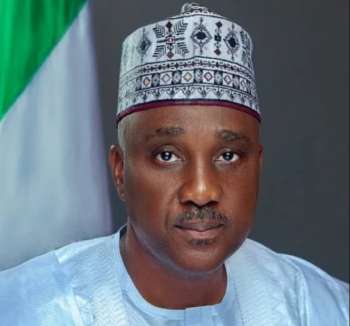










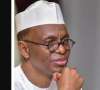
Just as President Goodluck Jonathan is speculated to be planning a meeting with the seven aggrieved governors of the Peoples Democratic Party (PDP) and some breakaway members, the party on Monday evening suspended its former National Secretary now National Secretary of the new PDP, Olagunsoye Oyinlola; National Chairman of the breakaway faction, Alhaji Abubakar Baraje; Deputy National Chairman, Sam Sam Jaja; and former Senator Ibrahim Kazaure.
Speaking with the media on Monday evening, national Publicity Secretary of the party, Olisa Metuh said the four were suspended for alleged anti-party activities, warning other party members to avoid having any dealings with the four and further asking them to report to the party’s disciplinary committee for appropriate sanctions.
nPDP Repudiate Suspension
However, the nPDP, has repudiated the suspension of the quartet, describing it as barbaric, uncivilized, unacceptable undemocratic and an abuse of PDP constitution.Chief Eze Chukwuemeka Eze, National Publicity Secretary of nPDP, in statement issued minutes after the suspension, said,
“We have learnt with sadness the continued effort by Tukur and his NWC to rubbish the democratic credentials of PDP by embarking ceaselessly on exercises of impunity by announcing the suspension of Alh. Abubakar Kawu Baraje who was once the National Chairman of PDP, Dr. Sam. Jaja, one time National Vice Chairman of PDP, Barr Olasgunsoye the current National Secretary of PDP and Ambassador Ibrahim Kazaure who was once a member of the PDP NEC in flagrant and abuse of the PDP Constitution”
“Article 57 subsections 7 and 8 which states that "Notwithstanding any other provision of this Constitution relating to discipline, no Executive Committee at any level except NEC shall entertain any question of discipline as may relate or concern a member of the NEC, Public Officer Holder I.e. Ministers, Ambassadors, Special advisers or any member of the Legislative Houses! No disciplinary Committee at any level except National Disciplinary Committee shall impose any punishment provided under Article 57 of the Constitution arising from any disciplinary on any person named in Article 57 of this Constitution.”
“With this sections of our Constitution and considering that Prince Barr Oyinlola by his position as the incumbent National Secretary of PDP as stated by the Appeal Court and considering the privileged positions both Kawu Baraje, Sam Jaja and Ambassador Kazaure have occupied in the party it becomes a imperative and a sacrosanct fact that only the NEC of the party and not any funny NWC can suspend such calibre of members of the party as mentioned above therein and sadly for the ignoramus handling the affairs of PDP at the moment which undemocratic acts are legendary the continued plot to expose our party as lacking in principle should be condemned by all and sundry.”
“This illegal act exposes Tukur and his NWC as lacking not only democratic character but lack common understanding of the PDP Constitution. To us this is an abuse of the Judiciary which recently reinstated Oyinlola as the National Secretary of the party, abuse of the Nigerian Constitution on fair hearing and most importantly exposing the intolerant attitude of Tukur and his sponsors.”
“With this greatest joke of the century, Tukur and his funny NWC have only succeeded in exposing themselves not only as champion of undemocratic acts but the greatest enemies of PDP as all their actions are all geared at ensuring that peace eludes the party.”
“Nigerians can now understand why we are hell bent of ensuring that these military mentally inclined men are removed from our political psyche if we are to enrich and uplift our democratic credentials.”
“Finally, this uncivilised act and action is not acceptable to us as we insist that Prince Barr Oyinlola must be reinstated as a matter of urgency as ordered by the Appeal Court as the National Secretary of PDP. In this regard, we urge INEC and any other government agency not to entertain any document or letter from PDP without the authorisation of Prince Oyinlola in view of the fact that he is the incumbent National Secretary of PDP fully recognised and sanctioned by a creditable Court of our country.”
“We urge all good members of PDP to remain calm, steadfast and focussed as we fight the illegality which Tukur and his people represent as the task to strengthen and rebuild our party is a task that we must conclude.
PDP in Fresh Crisis over Oyinlola’s Reinstatement
As Huhuonline.com previously reported, a fresh round of crisis is brewing in the already-troubled Peoples Democratic Party (PDP) courtesy of last week’s court ruling reinstating former Governor of Osun State, Olagunsoye Oyinlola as National Secretary of the party.
On Sunday evening , four armoured vehicles were seen at the national secretariat of the party, ostensibly as a reaction to claims by the New PDP that Oyinlola would resume office on today without a swearing in ceremony. Aside the four armoured vehicles, a detachment of policemen was seen at the Wadata Plaza, Zone 5 location of the secretariat.
The faction had addressed Oyinlola’s matter in a statement signed by its national publicity secretary, Chukwuemeka Eze to discuss the mode of receiving five unnamed PDP governors who had indicated interest in joining its fold.
“The committee was directed to submit for consideration by the G7 Governors the venue, logistics and modalities for receiving the five governors, ex-governors, nationalists and key members of the National Assembly who have indicated interest to join us”, read a part of the statement.
“The Committee is headed by Hon. Dr. Sam Jaja, the National Vice Chairman of New PDP, with Hon. Nasir Isa Abubakar, the National Organising Secretary, as the Secretary of the Committee. Other members of the Committee include Alhaji Abubakar G. Umar, National Treasurer Binta Masi Garba, Women Leader Timi Frank, the Youth Leader and Chief Eze Chukwuemeka Eze, the National Public Secretary.
“The party, after considering the expert opinion of our Legal Adviser, Eric Opia, decided that Prince Olagunsoye Oyinlola does not need any other oath of office to return to work as PDP National Secretary as he subscribed to PDP’s oath of office alongside other members of the NWC who were sworn in at the Eagle Square on March 24, 2012”.
NPDP claimed that President Goodluck Jonathan directed Oyinlola’s immediate reinstatement as National Secretary, “commending and congratulating the president for once again improving on his democratic credentials” with the move.
“Not minding the plots by some undemocratic elements within the system who want to portray our party in bad light by embarking upon an exercise in futility by trying to lure the Southwest PDP to write a petition against Prince Oyinlola and use it to invite him to the Alhaji Umaru Dikko’s Disciplinary Committee and suspend him afterwards”, NPDP said.
“To us, this plot, apart from being childish, exposes Tukur and his cohorts as true enemies of PDP and the force behind the continuous crisis in the party, which they don’t want its end because of their myopic and selfish goals. But thank God for the intervention of President Jonathan to end this undesirable macabre dance.”
However, National Publicity Secretary of the PDP, Chief Olisa Metuh denied the claims, saying the president issued no such directive.
“There is no such directive and that is not how the party works. As I speak to you, there is no directive whatsoever from the president”, Metuh said.
“We have not even got a copy of the judgment of the court, let alone talking about reinstatement. You see, the so-called New PDP engages in over-dramatisation of issues. Rather than taking up issues with them, we have decided to focus on our work at the secretariat”.
Metuh also denied knowledge of the armoured vehicles at the PDP secretariat. “I am not aware”, he said.”
Similarly, Special Adviser to the President on Political Affairs, Ahmed Gulak denied the directive, expressing uncertainty about the existence of a court ruling and judgment.
“If there a court ruling and judgement to that effect, there is no problem,” Gulak said. “But I have not seen the court ruling. I have not seen the court judgment and I have not spoken with Mr. President. So, I am not aware. If the party is served a court judgment and the order, the party is a law-abiding party and there is nothing wrong there”.
On the same Sunday, the G-7 governors and leaders of the New PDP held a meeting at the Kano Governor’s Lodge in Asokoro District, where the court ruling on Oyinlola was officially assessed as a vindication of the ideals of the group.
“We are very happy with what has happened and the Secretary-General will resume his office appropriately after all due process have been covered,” Governor Babangida Aliyu said after the meeting.
“And we think it is a vindication of what has been transpiring because all along, the issues were issues of due process, issues of reform and we are happy that that the court has done this for us. So we look forward to resolution and future resolution of matters”.
However, he gave no specific date on Oyinlola’s resumption, saying it will be determined by the conveyance of the court ruling to the PDP.
“The moment he gives notice, he will resume”, he said. “There is a court judgment. The judgment must be given to the PDP secretariat and immediately he gives, he resumes. If by tomorrow [Monday] the court judgment is ready, he resumes tomorrow”.
Aliyu said the Court of Appeal judgement would expedite the resolution of PDP crisis but added that the ball is in the president’s court, as the Presidency has not yet given the NPDP any information on whether a meeting with the president will hold or when it will.
He also confirmed that the party is examining other options should peace talks with the president fail, such as joining the All Progressives Congress (APC) or other options that would provide the leverage to reorganise the PDP in 2015.
The leadership of the PDP is still contemplating the best way to handle the Oyinlola controversy, but it has nevertheless filed a process for a stay of execution on the Court of Appeal judgement — if only to buy time for the appropriate escape route. But not everyone in the party is in support of the delay in reinstating Oyinlola.
According to a high-ranking official of the party, the delay in reinstating Oyinlola is a dent on the party’s image, considering that Oyinlola was immediately replaced on Monday 14th January, after the Friday 11th January 2013 judgment of a Federal
“Some of us drew attention to the fact that Oyinlola had appealed the judgment and that the appeal was still pending. But some of our party leaders were in a hurry to ease Oyinlola out, so, they ignored the warning”, the source said.
“Now that the Appeal Court has overturned the ruling of the lower court, it would amount to self contradiction on the part of our leaders not to allow him take his position in line with the ruling”.
Also, PDP has failed to keep to its promise to immediately reinstate Oyinlola the same way he was removed, in the event of a court ruling.
“In any event, reports have indicated that Prince Olagunsoye Oyinlola has appealed against the court judgement”, National Publicity Secretary of PDP, Chief Olisa Metuh wrote in a statement on 15th January 2013. “The NWC wants to say that as soon as the appeal is decided, the party will, in the same way as it did in the case of the Federal High Court ruling, obey the appeal decision.”
But Metuh has again defended this contradiction, saying the PDP leadership has yet to meet on the matter due to National Chairman Bamanga Tukur’s overseas trip.
“Moreover, I raised the matter with the National Legal Adviser and he told me that he had not received a copy of the judgment,” he added. “We in the National Working Committee will be meeting on Monday (today) where a decision will be taken”.
However, the party overlooked the governors who all recently played host to the opposition All Progressives Congress (APC).
Oyinlola, a former governor of Osun State, was reinstated as the party's National Secretary five days ago by the Court of Appeal presided over by Justice Abdul Kafarati. The former governor was supposed to resume at the Wadata House, Abuja secretariat of the party, but before dawn, heavily fortified security men had taken over the secretariat to prevent his resumption.
 |
|

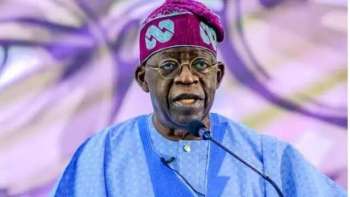
Tinubu Meets Bolloré in Paris Over Expanded Investment in Nigeria’s Creative, Digital Economy
President Bola Ahmed Tinubu has held talks with French businessman Vincent Bolloré in Paris on plans to expand investment in Nigeria’s creative and digital economy.
The meeting, held during the President’s working vacation, focused on opportunities to deepen the localisation of operations by the Bolloré Group and increase investment in sectors including film, entertainment, fibre-optic infrastructure and digital services, according to a statement issued by the presidency.
Bolloré and members of his executive team outlined proposed investments centred on Nigeria, highlighting the country’s growing influence in global entertainment through Nollywood and Afrobeats.
The group also expressed interest in expanding its operations and local presence in Nigeria, with the presidency saying the plans could support increased production, investment and employment opportunities in the country.
Tinubu reaffirmed his administration’s focus on economic growth, job creation and digitalisation, while welcoming the group’s reported plans to deepen its activities in Nigeria.
The President said the government would continue to support investments aimed at developing the creative and digital economy, strengthening infrastructure and creating opportunities for Nigerian talent.
According to the statement, Tinubu also emphasised the potential for Nigeria to serve as a base for companies seeking to operate across Africa and international markets.
The meeting comes as Nigeria continues to promote its entertainment and technology sectors as areas of economic opportunity, with the government seeking to attract investment while expanding employment opportunities for young Nigerians.
Tinubu said his administration’s Renewed Hope Agenda seeks to harness Nigeria’s talent, entrepreneurship and growing global cultural influence to create greater economic opportunities and improve livelihoods.
News
Banks Shut 476 Branches as Nigeria’s Banking Landscape Goes Digital
Nigeria’s banks are rapidly abandoning the traditional banking model, shutting down hundreds of branches and cash centres as customers increasingly move to digital and electronic channels.
Data from the Central Bank of Nigeria show that banks closed a net 476 branches and cash centres between 2022 and 2025, cutting the country’s physical banking network by 8.8 per cent in just three years.
The number of bank branches and cash centres plunged from 5,410 in 2022 to 4,934 in 2025, signalling a dramatic shift away from brick-and-mortar banking.
The contraction has gathered pace in recent years.
Banks closed 37 locations in 2023, followed by a much steeper reduction of 229 locations in 2024. Another 210 branches and cash centres disappeared in 2025.
In effect, more than nine out of every 10 locations lost during the three-year period were closed in 2024 and 2025.
The figures, contained in the CBN’s 2025 Statistical Bulletin for the Financial Sector, cover branches and cash centres operated by commercial, merchant and non-interest banks. The data were sourced from the CBN and the Nigeria Deposit Insurance Corporation.
Lagos bears the biggest hit Lagos, Nigeria’s financial powerhouse, recorded the largest decline.
The state had 1,602 bank branches and cash centres in 2022. That figure dropped to 1,532 in 2023, 1,521 in 2024 and just 1,444 in 2025.
That represents a loss of 158 locations, or nearly 10 per cent, in three years.
Despite the closures, Lagos remains overwhelmingly dominant, accounting for almost 29 per cent of all physical banking locations in Nigeria.
The Federal Capital Territory also suffered a significant contraction. Abuja went from 400 locations in 2022 to 362 in 2025, a decline of 38, or 9.5 per cent.
But some states experienced far more dramatic cuts.
Ekiti lost almost half of its banking locations, falling from 107 in 2022 to just 57 in 2025 — a staggering 46.7 per cent decline.
Enugu lost 44 locations, dropping from 162 to 118, while Oyo shed 41, falling from 237 to 196.
Other notable declines were recorded in Ondo, Plateau, Osun, Cross River and Rivers.
Northern banking centres also feel the squeeze
The contraction was not confined to the South.
Kano, for instance, initially expanded its banking footprint, rising from 164 locations in 2022 to 183 in 2024. But the reversal was sharp in 2025, when the figure crashed to 157.
Kaduna followed a similar pattern. Its locations climbed from 148 in 2022 to 164 in 2024 before falling back to 146 in 2025.
Yet not every state is losing branches.
Delta recorded the strongest expansion among the states highlighted, adding 23 locations and rising from 173 in 2022 to 196 in 2025.
Edo added 10, while Jigawa and Kogi gained six and five locations respectively.
A widening banking divide
The figures expose a striking disparity in access to physical banking infrastructure across Nigeria.
While Lagos had 1,444 branches and cash centres in 2025, Yobe had only 23, Taraba 26 and Zamfara 28.
Bayelsa and Gombe had 31 each, while Ebonyi had 32.
The imbalance underscores how heavily physical banking infrastructure remains concentrated in Nigeria’s major commercial and economic centres.
The bank branch may be losing its battle
The shrinking branch network comes despite the number of banks operating in Nigeria initially increasing.
The country had 32 banks in 2022, 33 in 2023 and 35 in 2024, before the figure slipped slightly to 34 in 2025.
That means the branch closures cannot simply be explained by a shrinking number of banks.
Instead, the figures point to a much bigger transformation: Nigerian banking is moving away from physical locations and towards digital platforms.
The CBN has itself been pushing greater adoption of alternative payment channels, particularly among farmers, traders, small businesses and informal-sector operators who may have limited access to conventional banking services.
Speaking at the 2026 CBN Fair in Lokoja, the Acting Director of Corporate Communications and Investor Relations, Hakama Sidi-Ali, stressed the importance of alternative payment channels in expanding financial access and stimulating economic activity.
The message from the numbers is even clearer.
The era of banking halls on every major street may be fading.
With hundreds of branches disappearing in just three years — and the pace of closures accelerating — Nigeria’s banking industry is betting increasingly on phones, apps, electronic payments and other digital channels rather than physical walls and counters.
For millions of Nigerians, the next bank branch may no longer be a building. It may be sitting in their hands.
Business
In The Spotlight
Dangote: OPM Made You 36th Globally—How Many Investors Will Become Billionaires?
Alhaji Aliko Dangote has done what very few Africans have ever done. He has built a business empire of extraordinary scale, crossed the $50 billion mark in personal wealth, and reportedly risen to the 36th position among the world’s 3,397 billionaires.
That is an achievement Nigerians can acknowledge. But today, I want to ask a different question. Alhaji Dangote, how many of the Nigerians who are now investing their hard-earned money in your businesses will you help turn into millionaires—and eventually billionaires? That, in my view, is the more important question. Because behind every great fortune is an army of people whose money, labour, patronage, trust and participation helped create that wealth. And that brings us to OPM—Other People’s Money.
Other People's Money Built More Than One Fortune
Let us be honest: no business empire is built by one person alone. Investors provide capital. Banks provide financing. Workers provide labour. Consumers provide revenue. Suppliers provide goods and services. Governments provide infrastructure and an operating environment. And ordinary Nigerians have been buying Dangote products for decades. Now, Nigerians are being invited to take another step—from being customers to becoming owners.
The public offering of shares in the Dangote Petroleum Refinery gives ordinary Nigerians an opportunity to put their money into one of the country's biggest industrial projects. That opportunity comes with risk, of course. Nobody should invest money they cannot afford to lose, and nobody should assume that buying shares automatically guarantees wealth.
But there is a bigger principle here.If Nigerians are going to put their money into Dangote's business, Nigerians should also have a meaningful opportunity to participate in the wealth that business creates.
Don't Take Nigerians for Granted
Alhaji Dangote, Nigerians have supported your businesses.They have bought your cement.They have bought your sugar. They have bought your flour. They have bought countless other products connected to your business empire.Nigerian workers have built factories, transported products, operated plants, sold products and provided services.
Now, ordinary Nigerians are being asked to invest directly. That creates a responsibility—not merely to shareholders, but to the broader Nigerian public.
Don't take Nigerians for granted. Treat the small investor with the same seriousness you would give the institutional investor. Give shareholders transparency. Give them accountability. Give them information. Give them confidence that their money is being managed responsibly. And when the business succeeds, shareholders should have the opportunity to benefit from that success.
Your Greatest Legacy Should Be Bigger Than Your Net Worth
There is nothing wrong with becoming extraordinarily wealthy by building successful businesses.But there comes a point when the conversation should move beyond “How much is Dangote worth?" The more interesting question becomes:How many people became wealthy because Dangote built these businesses?
Imagine the impact if hundreds of thousands of Nigerians who invest today eventually build substantial wealth from their investments. Imagine a young Nigerian who starts with a modest investment and, over decades, builds an investment portfolio capable of paying school fees, buying a home, funding a business or securing retirement. Imagine Nigerian families passing shares from one generation to another. That is how an ownership culture is created.And Nigeria desperately needs an ownership culture.
We Need More Than One Dangote
Nigeria does not simply need another Dangote. Nigeria needs 10,000 Dangotes in different industries.
We need Nigerians who build technology companies, manufacturing companies, agricultural businesses, energy companies, financial institutions, pharmaceutical companies and global brands.But we also need millions of Nigerians who can become shareholders in those businesses. A country becomes economically stronger when wealth creation spreads beyond a handful of extraordinarily wealthy individuals.
The refinery therefore presents an interesting test. Can a Nigerian industrial giant create not just a massive fortune for its founder, but also a new generation of Nigerian investors? Can ordinary Nigerians who put their money into the company eventually look back and say:I was there when it started, and I benefited from its growth”?
That would be a powerful story.
From Billionaire to Wealth Creator
Dangote has already demonstrated that he knows how to create enormous corporate value. The next challenge is different.Can he help create enormous shareholder value for ordinary Nigerians?That is where the conversation about his $51.3 billion fortune becomes relevant.
If one man's wealth can grow by tens of billions of dollars, Nigerians are entitled to ask whether the people who invest alongside him can also experience meaningful wealth creation. Not necessarily overnight.Not necessarily without risk. But over time.That is what investing is supposed to be about.
The Question Nigerians Should Keep Asking
So, Alhaji Dangote, congratulations on reaching another extraordinary milestone.But don't stop at building your own fortune. Build an ecosystem in which others can build theirs. Don't let Nigerians remain merely consumers of Dangote products. Make them owners. Don't let the story end with one Nigerian becoming one of the world's richest people. Let the next chapter be about thousands, perhaps millions, of Nigerians building meaningful wealth through ownership and investment. Because the real measure of an economic giant is not only how high the founder climbs. It is how many people rise because of the platform he created.
So here is the question Nigerians should be asking: Aliko Dangote, OPM has helped take you to the 36th richest person in the world. Now that Nigerians are putting their own money into your empire, how many of those investors will you help turn into millionaires—and, ultimately, billionaires? That is the legacy question.
By Emmanuel Emeke Asiwe (EEA) Publisher/Editor-in- Chief)
In The Spotlight
Mixed metaphors: Eating them young
On this page, I have praised former Minister Nasir el-Rufai for his work in the Federal Capital Territory.
As governor, I praised some of his work, including when he fired state teachers. I also criticised him when he became arrogant and presumptuous.
Powerful people tend to misjudge distance, in terms of how long they will remain powerful, as well as the depth of their relevance, measuring how power, once in the hands of others, can remain in their favour.
El-Rufai made both miscalculations. Following over two decades of untouchability in power from Olusegun Obasanjo to Muhammadu Buhari, he has now spent 200 days in pre-trial detention on ICPC and DSS charges.
This should not happen to a citizen, any citizen. But some citizens, when fate grants them the winning lottery ticket, become Cronus, the Titan in Greek mythology who, to maintain his power, swallowed five of his six children soon after birth.
But not Zeus, his youngest son, who miraculously survived and, becoming the supreme ruler of the Olympian gods and the “Father of Gods and Men, “would exact vengeance.
In power, el-Rufai forgot not only the principle of right and wrong, but also the concept of justice.
But it was right there the whole time: on the flip side of injustice. The truth is that wearing glasses to be able to see arms, nobody to see through clouds.
Last Tuesday’s disruption by political thugs of the visit to Benue State of Peter Obi, the presidential candidate of the Nigeria Democratic Congress, is an early reminder of the temptations of power in a Nigerian election year.
The ruling party controls the state, which is in the thick of Nigeria’s insecurity crisis. Its governor, Hyacinth Alia, is a Catholic priest. Having, in 2025, been involved in trying to prevent the same Obi from a humanitarian visit, claiming that his intervention was purely on security grounds, Mr Alia is trying to persuade the country that his are not the hands behind the crude attempt to stop, particularly Mr Obi, from travelling freely and safely in the state.
As Minister Festus Keyamo wisely said, this kind of menace is not a part of our democracy. Mr Alia, show the world your strengths, not your limitations.
Big news: the 2024 Auditor-General’s Non-Compliance report, published last month, identified over N1.34trn in audit lapses.
It found that the National Cash Transfer Office paid N33.751 billion to 3,295,207 households in 35 states in 2023 with no evidence that the money reached genuine beneficiaries.
The Office could not produce REMITA records to authenticate the payments. SERAP has written to President Tinubu demanding a published audit trail and investigation of the flagged N78.8bn in total irregularities.
Similarly, Femi Falana (SAN) has called on the EFCC to investigate and prosecute officials.
Given that we are dealing with a specific regime of governance coated in colours of ruthlessness, it is doubtful that these calls will yield anything.
The truth is that the situation is worse than what we know so far, and so, I have a different call: that Nigerians pay close attention to what is actually a long-running looting spree of our poorest and most vulnerable. There is a scorched-earth assault going on.
I begin in 2019, the start of the second term of the fake anti-corruption champion Muhammadu Buhari:
The Auditor-General’s 2019 report on the FGN Consolidated Financial Statements discovered that 36 MDAs made individual transfer payments,totalingN15,534,467,561.26, without identifying the beneficiaries, ignoring the relevant budget lines for “Transfers–Payment to Unemployed” and “Transfers–Payment to Aged/Vulnerable Group.” The Auditor-General flagged the risk of “diversion of public funds” and “misapplication of funds.”
The 2020 report is more curious. In the MDA-by-MDA budget-performance schedule, the National Social Investment Office shows: Approved Budget N0.00, Supplementary Budget N0.00, Total Budget N0.00, but the actual spending is N275,010,764,595.02! That is, the NSIO somehow recorded spending N275bn with no budgetary authorisation at all.
Surely, somebody has an explanation?
The 2021 Non-Compliance report, Volume II, found under the Ministry of Humanitarian Affairs that N54,630,000,000 in N-Power Batch C1 stipends (the August–December 2021 backlog) was recorded as paid but, per the Auditor-General’s own field visits, “was not actually effected to the beneficiaries.”
The same section found N2,617,090,786 paid for the National Home-Grown School Feeding Programme (COVID-19 period), the Auditor-General recommending full recovery to the Treasury: a combined N58.05bn flagged in that one ministry in that one year.
Surely, somebody has an explanation?
The 2022 Non-Compliance file is titled as Volumes I and II merged, but despite that filename, Volume II appears to be absent, as it excludes Humanitarian Affairs, NSIPA, NCTO or NASSCO, meaning that their work was either not audited at all, or that that specific audit has yet to be published.
Again, and similarly, despite examining the two volumes of the 2023 Non-Compliance report, neither the Ministry of Humanitarian Affairs, NSIPA, NCTO, NASSCO, N-Power, GEEP nor school feeding appears anywhere, although many other agencies were thoroughly audited.
Surely, somebody has an explanation?
That brings us to the 2024 itemised findings SERAP has publicized: N33.751bn in cash transfers with no beneficiary confirmation; N36.744bn paid in December 2023 without prepayment audit; N4.616bn in unsupported expenditure which the Auditor-General says “may have been diverted”; N350.18m in enrolment payments to state coordinators with no supporting documentation; N89.51m for store items never delivered or logged; N17.42m in diesel cash advances with no traceable purchases; and at NASSCO, N2.24bn paid through 158 vouchers without prepayment audit.
These appear to be the patterns that Nigerian MDAs exhibit in their work every year, with vulnerable Nigerians exploited every year.
But the first challenge is for journalists to track Humanitarian Affairs/NSIPA through every audit year to establish the full carnage.
There is another crisis: that despite all of this, a lot of MDAs still fail to submit audited accounts to the Auditor-General, representing one of Nigeria’s worst accountability challenges. This is a problem that worsened significantly under the Buhari administration despite his anti-corruption rhetoric. According to the Auditor-General, the 2016 audit year saw the highest number of non-submissions (324) in modern Nigerian history: more than double the previous 22-year high of 148. In 2016-2017 alone, 436 agencies failed to submit accounts. Think about that.
President Bola Tinubu is in the middle of a three-week foreign trip, departing without formally informing the National Assembly or handing over to Vice President Shettima, violating the constitution.
For a man who is seeking a second term of office, this is a stark reminder of how little the rules, or for that matter, Nigeria, really matter to Mr Tinubu. Keep in mind that when he headed north, Mr Shettima headed south, to Angola.
The general debate of the 81st United Nations General Assembly will begin on 22 September. Mr Tinubu is scheduled to speak the following morning.
At a time of chaos and doubt in his leadership, and in democracy under his watch, he will confront the theme: “Restoring trust, managing transformation: a United Nations that delivers for all.”
By Sonala Olumhense