








Individuals and groups both within and outside Nigeria spent a major part of Monday condemning the chairman of the Lagos State Traditional Council and Oba of Lagos, Rilwan Akiolu, for saying "any Igbo person in Lagos who refuses to vote for his own endorsed candidate would die withing seven days."
The Oba, who received some Igbo chiefs resident in Lagos at his palace during the Easter celebration, reportedly commanded the Igbo people to vote for Akinwunmi Ambode, the candidate of the All Progressives Congress (APC) as governor of Lagos State in the election that would hold on Saturday because if they vote for Jimi Agbaje, the candidate of the Peoples Democratic Party (PDP), whom he called his blood, that would be their end.
By the grace of God, I am the owner of Lagos for the time being. On Saturday, if anyone of you, I swear in the name of God, goes against my wish that Ambode will be the next governor of Lagos State, the person is going to die inside this water.
« For the Igbo and others in Lagos, they should go where the Oba of Lagos heads to. When they were coming to the state, they did not come with all their houses. But now, they have properties in the state. So they must do my bidding. And that is the bidding of the ancestors of Lagos and God.
"I am not ready to beg you. Nobody knew how I picked Ambode. Jimi is my blood relation and I told him that he could never be governor in Lagos for now. I am not begging anybody, but what you people cannot do in Onitsha, Aba or anywhere you cannot do it here," the Oba had said.
Since Monday when the report as well as the audio and video format broke, Nigerians have taken to various social media to castigate the Oba with many saying he does not know how to talk while others say his comments are inciting.
Some even made jest of him saying as a retired police officer, he has been heavily influenced financially to forget the pride that should come with his stool.
CATHOLIC GROUP CONDEMNS AKIOLU
In a statement condemning him, the Catholic Caritas Foundation of Nigeria said the Oba's threat was against morality and royalty.
in a statement signed by Fr. Evaristus Bassey, Executive Secretary of the Caritas Nigeria and JDPC, Abuja, the religious group wondered why the Oba singled out the Igbos whereas even some Yorubas and people of other tribes would vote for Agbaje.
"At the national offices of Caritas Nigeria and Justice Development and Peace Commission, we are totally shocked to read about the threat handed down by Oba Akiolu to the Igbos in Lagos. While it is understandable that a Royal Father would want for his wishes to be carried out, we are deeply concerned that the royal father is missing the point that Nigeria is a republic and a democracy and not a monarchy.
"We understand the genuine fear of the great Oba of losing Lagos to strangers. But Lagos has been one of the most cosmopolitan cities in Africa for decades and any citizen contributing to its economy and politics can be a bona fide resident. As such, the upstages as happened in the last elections are to be expected.
"Nevertheless natives and non-native residents should feel free to negotiate and clarify expectations but not in the threatening and intimidating manner the revered Oba has lashed out.
"We have just a few interrogations: why single out a particular ethnic group for this curse? Does it mean a Yoruba or Hausa person living in Lagos who votes for Jimi Agbaje will go scot-free but any Igbo who votes for Agbaje will drown in the Lagoon?
"Does it mean that people should vote out of fear and not their consciences? Would such an election be free and fair, where people have to vote out of intimidation? Does not the threat of the Oba Akiolu amount to voter intimidation?
"We humbly call on the Oba himself to withdraw his curse and rather appeal to the people, for indeed such a threat may amount to playing God and God who is a merciful father will not allow his children to die so senselessly just because they were fulfilling the dictates of their conscience.
"The fact that APC is government at the centre is a strong factor to employ and appeal to people to vote APC rather than invoking ancestral powers for destruction. Why is it that in Africa we usually invoke our powers for destruction and not for building-up?"
OHANAEZE GIVES AKIOLU 48 HOURS ULTIMATUM
The Ohanaeze Youth Council (OYC), the youth wing of Ohanaeze Ndigbo, a socio-cultural organisation of Igbo people, on Monday evening issued Oba Akiolu a 48-hour ultimatum to, not only retract his threat to the Igbo people, but tender an unreserved apology to the ethnic group.
The group which reminded the monarch that democracy gives the freedom to the electorate to make their choices without intimidation, said it was a despicable insult on the Igbo nation, home and abroad, for the Oba to issue such threats adding that it was the least expected of a royal father in the rank of Oba of Lagos.
The group, which asked security agencies to invite the Oba for questioning because of the grave dangers his current posture portends, slammed the Oba for using a crude method to attempt to coerce the people in a situation where they are free to make their choices.
In a statement issued in Umuahia, Abia State and endorsed by its National President, Mazi Okechukwu Isiguzoro, the group warned that Igbo youths would not take this insult lightly, and unless he apologises within 48 hours he should know he is courting the wrath of the Igbo people. It also asked that the Oba should be held responsible should anything happen to any Ndigbo or their business interests in Lagos in the event of APC losing the Lagos governorship race.
"Inasmuch as we do not want to get involved in Lagos politics, we want to sound a note of warning that no Igbo should be vilified or persecuted for his or her electoral choice in Lagos or any part of Nigeria.
"Every Nigerian has the constitutional right to reside in any part of the country and participate in the electoral process based on one’s convictions, and electoral choice is not a crime.
"Nobody no matter what he thinks he is, has the right to command Ndigbo anywhere on who to vote for in a democratic setting," the statement said adding that the Oba's comments only revealed his innate hatred for Ndigbo.
YOU DON'T OWN LAGOS, PDP TELLS OBA
In a statement issued by its National Publicity Secretary, Olisa Metuh, the Peoples Democratic Party (PDP) condemned what it described as "the emerging height of political recklessness in Lagos and Ekiti states ahead of Saturday’s governorship and House of Assembly elections and calls on all Nigerians to stand up against such anti-democratic tendencies."
APC members in the Ekiti State House of Assembly have commenced impeachment moves against Governor Ayodele Fayose, but the PDP said: "the senseless and unpatriotic impeachment move against Governor Ayo Fayose by out-going APC state legislators and the barbaric death threats on non-indigenes in Lagos by the Oba of Lagos, Oba Rilwan Akiolu if they voted for the PDP candidate, Mr. Jimi Agbaje, ascended to a height of unruliness that should not be accommodated.
"The PDP totally and unequivocally rejects the flimsy and unsubstantiated allegations concocted by the APC legislators against Governor Fayose. We state in very clear terms that we will stand with him and bear our full weight in defense of the mandate freely given to him by the people of Ekiti state.
"We invite all lovers of democracy and the international community to note the antics of APC and the deliberate plot to destabilize the polity even when it is yet to assume power.
"In the same vein, it is indeed most unfortunate that a royal father of the status of the Oba of Lagos should attempt to drag the revered traditional institution into partisan politics to the level of threatening innocent Nigerians with the view to prevent them from freely exercising their constitutionally guaranteed right.
"Our response to the Oba of Lagos is that he cannot play God and can never be God. God owns the universe and every part of it and can never share His glory with any human no matter how highly placed.
"We therefore call on all Nigerians in Lagos state; all Igbos, Hausas, Yorubas and people of other tribes; all northerners and southerners; all Christians and Muslims to turn against this unpatriotic stance, by coming out enmasse to vote for the PDP candidate, Mr. Jimi Agbaje on Saturday.
"Undoubtedly, this anti-Nigeria position reminds of the 2013 inhuman and callous arrest, detention and eventual ‘deportation’ of non-indigenes by the APC-led government of Lagos state and confirms fears that the APC is indeed on a mission to destroy our national unity, balkanize the nation and obliterate the personal freedom Nigerians enjoy today.
"Already, the APC has started terrorizing supporters of the PDP with vows to make life unbearable for them when it eventually assumes power. Our investigation reveals that many of our prominent supporters have been marked. The process has already started with threats to the life, family and business of the Chairman of the Transformation Ambassadors of Nigeria (TAN), Dr. Ifeanyi Ubah for supporting PDP candidates and helping non-indigenes win some Lagos seats in the National Assembly on the platform of the our great party.
"Indeed, if this threats on a duly elected state governor and innocent Nigerians constitute the picture or foretaste of the order of the day when the APC finally assumes power at the center, then the nation is in serious danger. However, the PDP states in very unambiguous terms that Nigerians would not accept such under any guise whatsoever.
"This is more so because in the last 16 years, our citizens from all walks of lives have seen civility and decorum under the PDP-led administration and would not accept any attempt by anybody to institute a reign of terror in the country
"We therefore urge General Muhammadu Buhari as the leader of the APC to call his members and supporters, particularly in Lagos and Ekiti to order; especially bearing in mind that it was the peaceful atmosphere and the level playing ground nurtured by the PDP-led administration that created the room for his emergence at the presidential polls. Our country cannot at this moment afford to slide into anarchy, reign of terror and deliberate schemes to divide the the people for selfish political reasons.
"The PDP will completely resist all anti democratic forces from any quarters. We therefore charge Nigerians, especially those in Lagos and Ekiti states respectively to stand up fearlessly and reject the unpatriotic stance of the Oba of Lagos and the undemocratic move to dismantle the mandate given to Governor Ayo Fayose by the people."
FEMI FANI-KAYODE`S RESPONSE
In his reaction, the Director of Media of the President Goodluck Jonathan campaign Organisation, Chief Femi Fani-Kayode, said: "the Oba of Lagos' threat against the Igbos in Lagos that if they do not vote for the APC in the governorship elections on Saturday they should be ready for the consequences and that if they don't vote for Ambode they should be ready to perish in the lagoon is ominous and unacceptable.
"The truth is that we were threatened with ethnic cleansing and religious carnage in the north had Buhari not won the election on march 28th and had Jonathan not quickly conceded defeat and now our traditional supporters are being threatened in Lagos and in many other states.
"Let two things be clearly understood. In as much as we all want peace in this country and in as much as Jonathan has graciously and quickly conceded defeat in the Presidential election, this does not mean that we are weak or powerless.
"Let it be clearly understood by all and sundry that any attempt to kill or molest our supporters in the north, in the west or indeed in any other part of the country either before, during or after saturday's governorship elections or any attempt at ethnic or religious cleansing by the APC, their supporters or their friends and agents will be deemed unacceptable and will be met with defiance, contempt and resistance.
"Enough of all these APC threats and all this rubbish. No-one is intimidated on our side and neither do we fear for the future because God is with us, He is faithful and He is in control. We want peace and we want harmony in this country but no-one or no group of people will be allowed to turn us or our supporters into slaves or give us sleepless nights.
"The APC would do well to remember that they only won the presidential election by 2 million votes. The PDP got 12 million votes in that election which means that we have 12 million loyal foot soldiers and supporters in this country and that is no mean feat.
"We are a strong party, we are confident for the future, we are ready for anything and most important of all we are ready for the polls on saturday. We take this opportunity to urge the PDP faithful in Lagos to go out and vote en masse for the PDP.
"We urge them to vote for Jimi Agbaje and to free Lagos state from the shackles of darkness and oppression. We urge them to stand firm, to hold their heads up high and to do their very best.
"We urge our supporters in Rivers state, Oyo state, Imo state, Plateau state, Kaduna state and indeed in all the states where elections will take place on saturday to do the same, to take the destiny of their respective states into their hands and to vote for the PDP candidates in the various elections.
"What happened during the presidential election on March 28th was sad and unfortunate but we have accepted defeat and we wholeheartedly accept the will of the people of Nigeria. That does not however mean that we should close shop and not put up a good fight for Saturdays governorship elections.
"This is the time to call on the party faithful to rise up. This is the time to rally our troops and to call on our footsoldiers and loyalists to come out in their millions and wipe away the sadness of march 28th by winning massively in saturdays governorship elections.
"This is the time to prove to our detractors that despite their provocative utterances, their empty and boastful threats, their mocking words and their gratutious insults that the PDP is far from dead and is still very much alive.
"Our party shall go from strength to strength despite the monumental challenges that lie ahead. Whether we win or lose on saturday is not the issue. The issue is that whatever anyone may say and whatever they may feel, the PDP is not going anywhere and neither shall we crumble and fade away. We are here for the long haul: we are here to stay."
AMBODE'S SUBTLE DISAPPROVAL
In what seems like a subtle disapproval of Oba Akiolu's threats to the Ndigbo in Lagos, Akinwunmi Ambode said he would not be a governor to selected ethnic groups in the state but would stand for everyone in the state as governor.
In a statement released to journalists on Monday, Ambode said promised that every group in Lagos would be safe in his hands as governor adding that he would not discriminate against any religious or ethnic group if elected.
"It is our Lagos and we must build it together.
« In my acceptance speech after the primaries I made this note that I will be a governor for all and Lagos is safe in my hands. I want to build on the foundation of unity, peace and progress and development laid by my predecessors.
"And though tongue and tribe may differ, we stand in brotherhood in Lagos from the smallest ethnic groups to the major ones. We are all stakeholders," he said.
PALACE CLARIFIES OBA'S STATEMENT
In a bid to douse the tension created by the Oba's statement, the palace has explained what it said actually transpired at the event.
In a statement signed by Chief Lateef Aderibigbe Ajose, the Opeluwa of Lagos, and made available to Huhuonline.com, the palace said: "last Sunday, all honorary Eze Ndigbos in Lagos paid a courtesy call to HRM Oba Akiolu. At the meeting the visitors praised the Oba for his fatherly support for and cooperation with Igbos in. Lagos. They assured him of their continued good neighbourliness with other tribes in Lagos and support everything that will further strengthen that harmony.
"Oba Akiolu on his part acknowledged the enviable performance of Governor Fashola and his contribution to the growth of investments in Lagos. He gave the assurance that he is not disturbed or angry with South-East and South- South votes for President Jonathan as perceived by the Eze Ndigbos.
"The Obas thereafter called on the Igbos chiefs to show appreciation to Lagos State by supporting his candidate Mr. Ambode for continuity of excellence as they have earlier promised.
"He assured them of his continued support and assistance where needed and the meeting ended with the traditional breaking of kola, alligator pepper, and bitter kola and pouring of libation on the ground.
"It was within this context that the tradition of Lagos with regard to the lagoon came up. It was noted that whoever works against the throne and the interest and peaceful co-existence of Lagos would end up in the lagoon as per tradition.
"Oba Akiolu stated further that the Igbo people have not betrayed the throne. Lagos has also not betrayed the Igbo people. Lagos has done so much to make the Igbos comfortable and to prosper. For this, we expect reciprocal respect and understanding. The Oba of Lagos prays that the Lagoon and the throne will continue to bless and protect all those who reside and visit Lagos.
"Oba Akiolu is the father of all irrespective of tribe, religion or political persuasion. In Lagos, we have an old traditional proverb that relates to the Lagoon. The Lagoon is unique to Lagos. The proverb stresses the need for unity and understanding when you do business in an environment and in this case when you live and do business in Lagos.
"Oba Akiolu prayed for peace for the land of Lagos and prosperity for all its inhabitants."
APC DISOWN OBA AKIOLU
However, the All Peoples Congress in a statement signed by Joe Igbokwe, the state spokesperson of the party, the APC apologized and appealed to Ndigbo to allow peace reign, considering the longstanding relationship that has existed between Igbo and Yoruba since the inception of Nigeria. “No human being is above mistakes,” Mr. Igbokwe said. “People can make mistakes and correct it thereafter. The Oba of Lagos can make a mistake and we believe that the statement credited to him was a mistake. If to err is human, we plead with Ndigbo to let the sleeping dog lie.
“After the March 28 2015 Presidential elections, Ndigbo in Lagos have been trooping into the Lagos APC fold in droves. They have pledged to throw their full weight behind the APC guber candidate, Mr. Akinwunmi Ambode. The support was total and unprecedented. You can therefore imagine how we feel as a party when this incident came just few days to the governorship elections.”
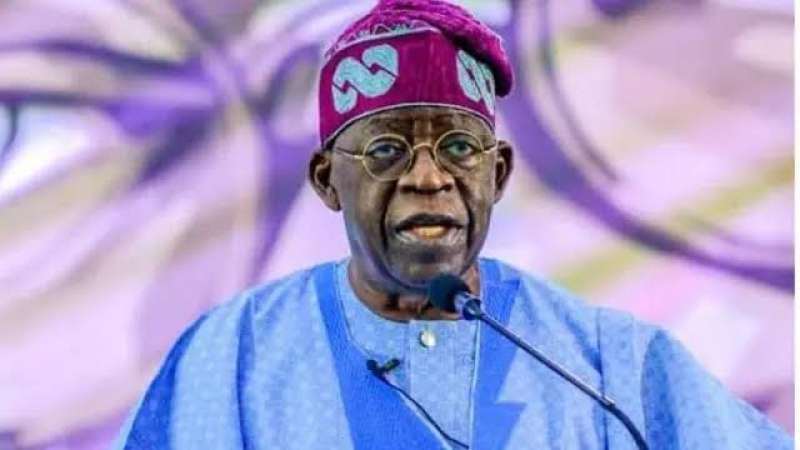
“Oba Rilwan Akiolu of Lagos is not a card-carrying member of APC. He is not a leader in APC. He does not speak for APC. He did not speak for Governor Fashola of Lagos State. He did not speak for our National leader, Asiwaju Bola Ahmed Tinubu. He did not speak for the incoming governor, Mr. Akinwunmi Ambode. His Royal Highness is at liberty to speak for himself and he spoke for himself only. Lagos APC appeals to Ndigbo not to take the statement as the position of the party in Lagos.”
“We passionately appeal to Ndigbo not to carry the statement credited to Oba Akiolu too far so as not to put a knife on things that have held us together for more than 50 years now. If out of annoyance you throw your cap away a mad man will take it and use it forever.”
“A lot is at stake in Lagos. Lagos has been fair to Ndigbo and Ndigbo have reciprocated by taking Lagos as their home no matter whose ox is gored. Lagos APC believes that Ndigbo will not burn the bridges because of this minor setback.
“Lagos APC has worked so hard with other Nigerians to enthrone a government at the centre and we cannot afford to throw all these gains away by allowing the mistakes of the last weekend to stand on our way to link Lagos effectively with the centre. Our own Oba Rilwan Akiolu’s slip of tongue should not be used as an excuse by Ndigbo to reverse these huge gains. Ndigbo should forgive and forget by voting APC en mass this coming Saturday.”
 |
|

Bamanga Tukur to Be Buried Sunday in Yola
Former Governor of the old Gongola State and former National Chairman of the Peoples Democratic Party (PDP), Alhaji Bamanga Tukur, will be buried in Yola, Adamawa State, on Sunday, September 13, 2026.
Tukur, a prominent elder statesman and businessman, died in Abuja on Saturday, according to a statement issued by his family.
His son, Awwal Tukur, the Secretary to the Adamawa State Government, announced the burial arrangements in a statement released in Yola on Saturday.
According to the statement, the remains of the deceased will be brought to Yola on Saturday ahead of the funeral.
The funeral prayers are scheduled to take place at the Lamido’s Palace in Yola at 10:00 a.m. on Sunday, after which the late politician will be laid to rest.
Tukur died just three days before his 91st birthday.
He was a prominent figure in Nigeria’s political and economic history, having served in several key public positions during a career spanning more than six decades.
Among other positions, he served as Chief Executive of the Nigerian Ports Authority (NPA), Governor of the former Gongola State and Minister of Industries. He also served as National Chairman of the PDP between 2012 and 2014.
Beyond Nigeria, Tukur played a role in promoting African economic development through organisations including the Africa Business Roundtable and the NEPAD Business Group.
The late elder statesman is survived by two wives and 18 children, including Awwal Tukur, the Secretary to the Adamawa State Government.
Northern Governors Mourn
The Northern Nigeria Governors’ Forum (NNGF) has expressed grief over the death of Tukur, describing his passing as a significant loss to the North and Nigeria as a whole.
In a condolence message issued on behalf of the forum, its Chairman and Governor of Gombe State, Muhammadu Inuwa Yahaya, described Tukur as an experienced public servant, political leader and advocate of economic development.
Yahaya said Tukur’s contributions to public administration, politics and business had left a lasting mark on the country.
He highlighted the deceased’s extensive public service record, including his tenure at the Nigerian Ports Authority, his leadership of the old Gongola State and his service as Minister of Industries.
The NNGF chairman also recognised Tukur’s involvement in continental economic initiatives and his leadership of the PDP between 2012 and 2014.
“Alhaji Bamanga Tukur lived a long and impactful life, serving Nigeria in several critical capacities and contributing significantly to the growth of our economy, institutions and political development,” Yahaya said.
He added that Tukur’s experience, wisdom and dedication to public service would be greatly missed.
Yahaya extended his condolences to the Adamawa State Government, the Tukur family, friends and associates of the deceased.
He prayed that Allah would forgive Tukur’s shortcomings, reward his contributions to humanity and grant him Aljannatul Firdaus.
News
Where & How to Buy Dangote Refinery IPO Shares
The Dangote Petroleum Refinery and Petrochemicals FZE is set to offer shares to the Nigerian public, giving individuals an opportunity to become shareholders in one of Africa’s largest refineries.
The public offer is expected to open on Monday, September 14, 2026, and close on October 13, 2026, subject to the final offer documents.
The offer comprises 4.1 billion ordinary shares at ₦525 per share, with a minimum subscription of 10 shares, costing ₦5,250.
Who Can Buy Dangote Refinery Shares?
The IPO is designed to give ordinary Nigerians an opportunity to invest in the refinery. Investors can subscribe through approved banks, fintech platforms, mobile operators, and NGX Invest.
However, investors should only use channels officially approved for the offer and should avoid sending money to individuals, agents, or platforms that are not listed in the official offer documents.
Approved Channels for the Dangote Refinery IPO
Banks
Access Bank
Ecobank
FCMB
Fidelity Bank
FirstBank
Globus Bank
GTCO
Jaiz Bank
Keystone Bank
Lotus Bank
PremiumTrust Bank
Providus Bank
Stanbic IBTC
Sterling Bank
TAJ Bank
UBA
Union Bank
Wema Bank
Zenith Bank
Fintech Platforms
Bamboo
Flutterwave
InvestNaija
Ladder
Moniepoint
Paga
Payaza
PiggyVest
Vetiva Invest
we.yan
Mobile Operators
Airtel SmartCash
MTN MoMo
Nigerian Exchange
NGX Invest
How to Buy Dangote Refinery IPO Shares
Step 1: Choose an Approved Platform
Select one of the banks, fintech platforms, mobile operators, or investment platforms officially approved to process subscriptions.
If you already use one of the approved platforms, check whether the IPO application option is available through your existing account.
Step 2: Open or Activate Your Investment Account
Investors generally need an investment or brokerage account to participate in the offer.
Depending on the platform, you may be required to provide identification, your BVN and other Know-Your-Customer information.
Step 3: Set Up Your CSCS Details
Shares listed on the Nigerian Exchange are held electronically through the Central Securities Clearing System (CSCS).
Your broker or participating investment platform should guide you through the process of opening or linking the necessary CSCS account.
Step 4: Fund Your Account
At ₦525 per share, the minimum subscription is:
10 shares × ₦525 = ₦5,250
If you want to purchase more shares, calculate the total amount based on the number of shares you intend to request and check the final prospectus for the applicable subscription rules and fees.
Step 5: Apply When the Offer Opens
The public offer is expected to open on September 14, 2026.
Log into your approved platform, select the Dangote Refinery public offer, enter the number of shares you want to subscribe for, review your information and submit your application.
Step 6: Keep Your Confirmation
After submitting your application, keep your application reference, receipt or confirmation for your records.
Step 7: Wait for Allotment
Applying for shares does not necessarily mean you will receive every share requested.
If the offer is oversubscribed, investors could receive fewer shares than they applied for. Any applicable excess funds should be handled according to the terms of the final offer documents.
Step 8: Monitor Your Shares After Listing
Once the shares are listed on the Nigerian Exchange, successful investors can monitor their holdings through their broker or investment platform.
The market price may rise or fall after listing, depending on the company’s performance, investor demand, market conditions and other factors.
Important Warning for Investors
Do not pay anyone personally to “secure” Dangote Refinery shares for you.
Before sending money or providing your financial information, verify that the platform you are using appears on the official approved list and that the application process matches the final prospectus and offer documents.
Investors should also review the official prospectus carefully, particularly the offer terms, fees, allotment rules, deadlines and risk factors.
Investment involves risk. The fact that an IPO is associated with a well-known company does not guarantee that the share price will rise after listing.
Business
In The Spotlight
Editorial: PFIPC: The Scandal Is Bigger Than Gbajabiamila (2)
The first question was: Who created PFIPC? Now Nigeria must ask a more frightening one:Who allowed it to look real? That is the question the Presidential Foreign Intervention Promotion Council scandal can no longer escape.
The controversy has already produced denials, accusations, official disclaimers, investigations and criminal proceedings. The Presidency has maintained that PFIPC was fictitious and that its alleged promoter, Prince Adeniyi Adeyemi Matthew, was falsely presenting himself as a government appointee. The Office of the Chief of Staff says it alerted security agencies as far back as October 2025 over alleged forged appointment letters.
Fine.Let the courts determine the criminal allegations.Let investigators establish who forged what, who authorised what and who benefited from what. But there is now another problem that cannot be dismissed as the work of one alleged impostor. The paper trail.
Because this story became truly explosive when reports emerged that the name PFIPC, alongside the Presidential Economic Advisory Council, appeared in the 2026 federal budget with an allocation of about ₦1.3 billion. Other reports also said the Office of the Head of the Civil Service of the Federation had approved recruitment for hundreds of positions linked to the council.
If those records are authentic, then Nigerians are entitled to ask a brutally simple question:
How does a supposedly non-existent organisation get into government paperwork? That question is bigger than Gbajabiamila. Much bigger.And it is precisely why this matter must not become a convenient contest between political camps.
The easiest thing to do now is to make this a story about whether the Chief of Staff was framed, whether he was wrongly accused, or whether his denials should be believed.
Those questions matter. But they are not enough. Because even if Gbajabiamila is completely cleared, the country will still be left staring at the same institutional wreckage.Somebody, somewhere, appears to have been able to give a questionable entity the appearance of government legitimacy.That is not a small administrative mistake.That is a security problem.
It is a governance problem. It is a financial-control problem.And, potentially, it is a national credibility problem. Think about the implications. An organisation carrying the word “Presidential” can sound powerful enough to impress businessmen, foreign investors, civil servants and even government officials.
A letter carrying the right government language can appear authentic.A title can sound official. An office address can create confidence. A meeting can create legitimacy.A photograph can create legitimacy. A budget line can create legitimacy.
And once enough of these pieces come together, fiction can begin to acquire the appearance of fact.That is the frightening part.The Nigerian state cannot afford to be protected by appearances. It must be protected by verification.
If PFIPC was indeed fabricated, then the sophistication of the alleged deception deserves serious attention. The Presidency itself said the alleged organisation had been presented as a government agency and that purported appointment letters carried falsified signatures, reference numbers and seals.That is not merely somebody printing a fake business card.That is an alleged attempt to manufacture the appearance of state authority. And the state must answer accordingly.
Who checked the documents? Who checked the appointment? Who checked the organisation's legal foundation? Who checked its place in the public service structure? Who checked its bank accounts?Who checked its office?Who checked its recruitment?Who checked its budgetary status?Who checked the officials supposedly running it?And, above all:Who had the power to stop it?Those are not partisan questions.They are state questions.
They belong to every Nigerian.This is why the PFIPC affair should now be treated as an institutional stress test. The result is uncomfortable.
The Nigerian government has demonstrated that it can publicly declare an organisation non-existent while questions simultaneously arise over how that same name appeared in official-looking government records.
Whatever the eventual explanation, that contradiction demands daylight.Not spin.Not political warfare.Not another round of accusations on television.Daylight.
If the budget entry was an administrative error, explain it.If it was inserted improperly, explain how.If recruitment approval was improperly obtained, explain who authorised it.If documents were forged, prosecute those responsible after due process.
If legitimate government officials were deceived, identify where the verification system failed.If insiders assisted the operation, expose them.And if no government insider was involved at all, then demonstrate clearly how outsiders were able to penetrate the machinery of government so deeply.
Nigeria deserves that answer.Because there is a dangerous habit in public life: once a scandal becomes embarrassing, the instinct is to find one person to carry it away.
Blame the impostor.Blame the politician.Blame the civil servant.Blame the opposition.Blame the media.Then move on.
That will not do this time.A country does not become safer because one alleged fraudster is prosecuted.It becomes safer when the system that made the fraud possible is repaired.That is the real test.
The PFIPC controversy has exposed a vulnerability that cannot be buried beneath another headline.
Government authority is an asset.It must be guarded.
The presidential name is an asset.It must be protected.Official documents are an asset.They must be secured.
The national budget is an asset.It must be beyond manipulation.And public confidence is perhaps the most valuable asset of all.
Once Nigerians begin to wonder whether an organisation can be invented, dressed in presidential language and somehow find its way into official channels, the damage extends beyond the immediate scandal.It reaches the credibility of the state.It reaches Nigeria's relationship with investors. It reaches the credibility of official correspondence.It reaches the confidence of foreign missions.It reaches the reputation of the civil service.And it reaches the fundamental question of whether government records mean what they say they mean.
That is why the authorities must resist the temptation to declare victory simply because an individual has been accused, investigated or prosecuted.
The deeper victory would be institutional.Find the loophole.Close it.Find the accomplices, if any.Expose them.Find the forged documents.Trace them. Find the money.Follow it. Find the approvals.Explain them.
Find the officials who failed in their duties.Hold them accountable, where evidence and due process establish responsibility.And then build a system in which the next PFIPC cannot happen.
Because there will always be fraudsters.There will always be con artists.There will always be people willing to manufacture influence. The real question is whether the Nigerian state makes their work easy.That is what Abuja must answer.
And this is where the story moves beyond Femi Gbajabiamila.If he is innocent of the allegations against him, then say so and let the evidence stand.But do not confuse the clearing of one man with the clearing of the system.One man can be innocent while a system is still guilty of negligence.That distinction matters.
Nigeria does not need another political scapegoat.It needs an audit of its gates.Who enters?Who leaves?Who signs?Who approves?Who verifies?Who pays?Who watches?And who answers when nobody watches?Those questions are now unavoidable.
The PFIPC scandal began as a dispute over an alleged organisation.It has become a test of something much larger:whether the Nigerian state can recognise itself when someone tries to impersonate it.That is not a scandal about one man.It is not even a scandal about one organisation.It is a warning about the machinery of government itself.And warnings ignored have a way of returning as disasters.
So let the investigation continue.Let the courts do their work.Let evidence—not political loyalty—determine responsibility.
But let nobody close this file merely because one powerful name has been cleared.The name may be cleared.The questions are not.
And until Nigerians know how an allegedly non-existent presidential body could acquire the appearance, paperwork and institutional oxygen of legitimacy, the PFIPC scandal remains unfinished. The mask may have been exposed. Now Nigeria must find out who opened the door.
In The Spotlight
Rethinking Policy From The Ground (II)
Last week, this column began with a simple proposition: Nigeria’s public policy conversation is often conducted at the wrong altitude. We examined why citizens encounter the state most directly through schools, primary health centres, rural roads, markets, transport systems, environmental services and local government offices. We also argued that a policy problem must first be understood before it is solved. Today, the column continues that argument. If knowing the problem is the beginning, the next question is what happens when a carefully diagnosed problem enters the political and administrative machinery of government. This is where incentives, institutions, competing values and frontline discretion determine whether a promising policy becomes a public good or another abandoned initiative.
From Problems Towards Choices
A government rarely chooses between a good option and a bad option. It usually chooses among imperfect alternatives, each benefiting some citizens, imposing costs on others and carrying uncertainties.
That reality should make policy analysis more rigorous. William K. Bellinger’s work on economics for policy analysis provides a useful discipline: the relevant question is not simply whether government can afford an intervention, but whether its social benefits justify the resources sacrificed elsewhere. Every new road competes with a school. Every government factory competes with health spending. For state policymakers, the essential question is therefore: what else could this money achieve? A N10 billion expenditure should be evaluated against the outcomes forgone by not spending that money elsewhere. That is the difference between accounting for expenditure and analysing public value.
How Incentives Change Behaviour
This reasoning becomes sharper when we consider how citizens respond to government decisions. Lee S. Friedman’s microeconomic approach to policy reminds us that people respond to prices, rules, risks, information and incentives.
Consider local taxation. A local government that increases market levies may expect higher revenue. But if the burden becomes excessive, traders may relocate, evade payment or operate outside formal markets. The government may collect less while economic activity becomes harder to monitor. Similarly, multiple charges on farmers, transporters or small manufacturers can make formal activity less attractive.
The same logic applies to environmental regulation. If government prohibits indiscriminate dumping without providing affordable waste collection, households may continue dumping illegally because the lawful alternative is inaccessible. Enforcement alone cannot solve an incentive problem created partly by inadequate service provision. Good regulation combines rules with feasible alternatives. The objective should be to make desirable behaviour easier, not merely punish undesirable behaviour.
Why Politics Shapes Outcomes
But incentives alone do not explain policy outcomes. Deborah Stone’s work on policy paradox reminds us that public decisions are contests over values as much as calculations of efficiency. Nigerian policymakers operate where questions of distribution are inseparable from development. Who gets the road? Which community receives the hospital? Whose land is acquired? Which informal operators are displaced?
These are political questions with technical dimensions. A policy that is economically efficient may still fail if it is perceived as unfair. A reform that improves aggregate welfare may provoke resistance from groups bearing concentrated losses. Politically intelligent policy design must therefore anticipate winners, losers and the narratives through which both interpret reform.
Urban transportation illustrates the point. Formalising informal transport can improve safety and service standards, but simply removing existing operators can create hardship for drivers and passengers. Successful reform recognises the economic lives embedded in existing arrangements and provides credible transition pathways.
Institutions Carry Policy Forward
Michael Howlett, M. Ramesh and Anthony Perl of the Singapore’s Lee Kuan Yew School of Public Policy remind us that policy is not a single decision, but a process involving agenda setting, formulation, adoption, implementation and evaluation. A brilliant policy document can therefore become a poor programme because institutions lack coordination, information, authority or capacity.
Nigeria’s federal structure makes this especially difficult. Responsibilities are distributed across federal, state and local institutions, while financing and administrative capacity are uneven. A primary school may depend on one level for teachers, another for infrastructure and another for complementary interventions. A primary health centre may receive medicines through one channel, personnel through another and capital investment through a third. When outcomes are poor, each institution can point elsewhere.
The answer is not simply to redraw constitutional boundaries. For policymakers, this means resisting the temptation to treat political urgency as evidence. Urgency can justify action, but it cannot substitute for diagnosis, comparison, measurement and institutional realism and learning. It is to make responsibility visible. Citizens should know which institution is responsible for which service, what standard it must meet and where complaints should go.
Frontline Officials Make Policy
Perhaps nowhere is this more important than where policy meets the citizen. Research on street-level bureaucracy shows that frontline officials possess discretion because formal rules cannot anticipate every circumstance. Teachers decide how struggling pupils are treated. Nurses prioritise patients. Extension workers decide which farmers receive information. Environmental officers determine which violations receive attention.
Where incentives are weak and supervision poor, discretion can become rent extraction. But discretion can also enable adaptation. A teacher may develop a practical method for reaching struggling pupils. A health worker may reorganise patient flow to reduce waiting. A local official may find a simpler way to process applications. The challenge is therefore not to eliminate discretion, which is impossible, but to create conditions under which it serves public purposes.
States should pay closer attention to the working environment of frontline officials. If a policy assumes that an extension agent will visit remote farms without transport, or that a teacher will improve learning without materials, or that a health worker will provide reliable services without medicines, the policy is not ambitious. It is institutionally unrealistic.
Governments Must Learn Systematically
Nigeria has no shortage of programmes, strategies and reforms. What it lacks is a sufficiently systematic process for deciding which interventions deserve to survive. Governments often scale programmes because they are politically attractive, not because they have demonstrated results. Others abandon useful initiatives when administrations change. This produces institutional amnesia, with each government behaving as though it is starting from zero.
States should identify what they believe will happen, establish measurable indicators, test interventions, compare results and revise assumptions. Local governments should become sources of operational knowledge rather than administrative endpoints. Successful innovations should be documented and adapted before scaling. Failures should be examined rather than concealed.
A state may discover that feeder roads produce larger gains in farm incomes than subsidised inputs in one agricultural zone, while another finds that irrigation, storage or market aggregation is the binding constraint. The goal should be a common commitment to evidence, with flexibility for different solutions.
Good public policy requires more than money, political will or impressive documents. It requires an accurate understanding of reality, careful choices among alternatives, attention to incentives, sensitivity to political values, institutions capable of implementation and systems that learn from results. States and local governments are where these conditions either converge or collapse.
Next week, the conclusion of this three-part series will move from diagnosis to action. The final column will set out practical policy recommendations and ways forward for state and local government policymakers, focusing on education, primary healthcare, rural livelihoods, rural industrialisation, transportation, and ease of doing business among several others.
By Abdulrauf Aliyu