
















Governor Babatunde Fashola of Lagos State on Tuesday publicly presented the Lagos State Development Plan 2012-2025 to the public and candidate of the All Progressives Congress (APC), Akinwunmi Ambode, stating that quite a number of the items that form the bedrock of the Development Pan are already in progress.
Fashola who made the presentation of the document at the Banquet Hall of the Lagos House, Ikeja before a gathering, added that infrastructure is being built to redress the infrastructure deficit that the state has suffered.
He explained that the investment pillars upon which the Development Plan is being implemented is the people for whom it is also all about, stressing that everybody has a part to play in its realisation.
He added that the Development Plan document is about the vision for the future and how it would affect the Lagos Mega City which he explained only describes the reality that Lagos has a very large population which could be a burden or an asset.
According to the Governor, the population size has been turned into an asset with the support of the people.
"That is why for a state like Lagos irrespective of what happens to the price of oil, this state would survive because it has been built not on extractive resources but on the very strong immigrants that make up the human resource of this state," Fashola said.
"Different people from all over the world have a place here so long as they have content and quality to provide. Our developmental partners feel at home, our international community’s feel at home with this place because they bring value to our table."
Noting that the mega city status of the state came with clear challenges, Fashola said that the identified challenges were those areas in which the administration set clear targets and worked assiduously to address.
"So for me Lagos being a mega city yes, but we asked ourselves then what kind of mega city can we hope to survive without infrastructure, without water supply, without power supply and what kind of quality of life would those people live with the degraded kind of environment and what kind of mega city would we have been talking about if the criminals should rob the banks everyday without response from the law enforcement agencies," he explained.
He further explained that what the administration did was to set very modest targets that would ensure that Lagos led Africa first by being Africa’s model city, adding that today by many measures in terms of crime management and security, Lagos has already achieved that comparably in Africa.
He added that if compared to cities like Cairo, Nairobi and Johannesburg the security numbers for Lagos are high up despite the fact that there is still work to be done, saying night life and economy has been restored.
According to the Fashola, some of the positive spin-offs of the restored night economy include the fact that fuel could be purchased at 2am along with other essential services like pharmacies.
"Not only are those businesses running and giving us the second economy, nite clubs, hotels, hospitality facilities have come in numbers and there are more to come," he said.
Fashola noted however that the state cannot afford to sit down and wallow in what has been done because what has been done is already behind hence attention should be focused on what lies ahead which is bigger than what has been achieved. This, he said, is why the state dared to think of what Lagos would be like by 2025.
"So when we began to talk about a Horn Free day, we were not joking, we were concerned about health, environment and sustainability issue," he said.
"They seemed small but when we begin to talk about rape, about crime, sexual offenders register, that is the heart of living.
"All our telephone numbers is out there because we understand it is about you. You must be able to reach us because we cannot guess where the problem is. We plan for the worst and hope for the best."
The Governor explained adding that Lagos is a work in progress because continuously there has been progress which can be envisioned far ahead and stating that if anyone takes a trip through EKO bridge today, he could see the pillars of the intermodal transportation that the government talked about which is heading to Marina.
"The ferry is there, the bus terminus is already laid there and hopefully the next government would make the final connection.
"At Mile Two, the jetty is reclaimed, the Mile 2 train terminus is already built, Orile Train Terminus is already built, Costain Train Terminus is already built, so there are four terminus already in place and more are on their way.
"So the water transportation networks are also expanding. The ferry terminals in Badore and Ikorodu have been finished, the one in Osborne is almost completed but some people have taken us to court that they don’t want the terminus near their residence, so those are issues we have to go and thrash out in court."
He stated that in terms of connectivity, the ridership on water transportation today in Lagos is in excess of 1.5 million passengers per month from barely 150,000 passengers per month in 2007 adding that there are over 250 licensed ferries and taxis running on Lagos Waterways already.
Fashola said in terms of waste water, work has started at the Odo Iya Alaro Waste Water Treatment Plant located at the Ojota Motor Park, which has been designed as a Waste Water Treatment and effluent management system that would make Lagos that model city when completed.
He explained that in terms of water supply, the State now has full power at Adiyan Water Works which is the only waterworks that generates its own power supply adding that Adiyan phase two with capacity for 70million gallons is being added with construction ongoing.
"Adiyan Phase Two does not end the work because as I said many of us are busy in other departments, so more people are going to come," Fashola said.
"So there is Odomola, there is Ishashi and then we are already thinking long term desalination because our raw water sources are limited so we have to begin to think how we can get water from the sea and remove the salt content."
He said in terms of housing, homes construction are ongoing at 21 different sites, adding that the State has kept the promise of delivering 200 new homes every month to qualified residents.
He said Lagos is taking responsibility of producing fish, rice, cassava and vegetable and is making spirited efforts to ensure that it would be in a position where she would never go with her hands in her back in search of food.
According to Fashola, in the next four years, the Lekki Free Trade Zone is where all of Nigeria’s petroleum needs would be produced and that work has already started there with the prospect to produce enough for Nigeria and some left to export.
"The airport is coming, the seaport is coming so that we can remain competitive because our ports are losing their competitiveness because of the depth and most of the ocean going vessels are getting bigger and if we do not respond, we would become just a trans shipment hub and that is the justification for the Lekki Port and Badagry Ports," he said.
He called for sustained implementation of the plan reminding residents of the state that to achieve this, they go out to vote next year and that they should remember that Lagos is too important to be left in the hands of those who want to experiment with it but should be kept in very safe hands.
Earlier in an address of welcome, the Special Adviser on Economic Planning and Budget, Mrs Iyabowale Aluko, said the Development Plan provides an overarching long term strategy to guide developments in the state towards agreed Vision for Lagos by Year 2025.
She added that the purpose is to provide overall direction for the growth and development of the state and also provide a framework through which all sectors of the economy can direct their energies to improve the quality of life of the people in the State.
In a message of goodwill, the World Bank Country Director, Marie Francoise, who was represented by Jariya Hoffman, congratulated Lagos State for achieving an important milestone which is the launching of the Lagos State Medium-Term Development Plan 2012-25.
She said the launch is a symbolic step marking the transition from the development phase to the implementation phase and signals to all stakeholders that the government is ready to carry through with its development plan.
She stressed that the World Bank stands ready to support the government to ensure the successful implementation of the development plan, adding that partnership has come a long way and has reached the highpoint.
In another goodwill message, the representative of the French Development Agency (AFD), Constance Brehaut, thanked the Lagos State Government and the Ministry of Economic Planning and Budget for allowing AFD to partner with her in the Development Plan, adding that AFD looks forward to pushing forward the partnership in Waste Management and Urban Renewal.
Also speaking, the State Programme Director of DFID–State Partnership for Accountability Responsiveness and Capability (DFID-SPARC), Mr Ifeanyi Peters Ugwuoke, said the Development Plan presents an opportunity for Lagos State to be strategic, forward looking and responsive in meeting the desires and aspirations of Lagosians.
 |
|

Petrol Hits ₦1,470: ADC Warns ‘Nigerians Are Choking’
Nigerians are being pushed deeper into economic hardship as petrol prices climb as high as ₦1,470 per litre, with the African Democratic Congress (ADC) warning that families and businesses are being driven to breaking point.
The opposition party accused President Bola Tinubu’s administration of piling fresh pressure on Nigerians already struggling with soaring living costs.
In a strongly worded statement signed by its National Publicity Secretary, Bolaji Abdullahi, the ADC said the rising petrol price was triggering a chain reaction across the economy.
“President Tinubu has turned the petrol pump into an instrument of punishment for everyday Nigerians,” the party declared.
According to the ADC, the impact is being felt far beyond filling stations, with higher fuel costs feeding into transportation, food, electricity, education and business expenses.
‘NO MORE HOLES LEFT’
The party also cited reports of private schools increasing fees by 30 to 40 per cent, arguing that most parents have not seen comparable increases in their incomes.
“Parents are not earning 40 per cent more,” the ADC said, pointing to the simultaneous rise in fuel, food, rent, transportation and education costs.
The party said school proprietors were also under pressure from higher electricity bills, taxes, fuel costs, rents and salaries.
But it warned that the combined burden was becoming unbearable for households.
“At ₦1,470 per litre, petrol is no longer simply a commodity. It is a Tinubu Tax,” the ADC said.
The party further claimed that some Nigerians are now skipping meals, withdrawing children from school, delaying medical treatment and shutting down businesses because of mounting costs.
“Under Tinubu and the APC, Nigerians have been tightening their belts. Now, there are no more holes left, and people have started to choke,” the party said.
‘REFORM IS NOT WORKING’
The ADC also attacked the government's economic reform programme, arguing that policies that increase hardship without corresponding improvements in household incomes cannot deliver meaningful relief.
“A reform that continuously makes the people poorer is not working,” the party declared.
It accused public officials of demanding sacrifices from ordinary Nigerians while allegedly maintaining extravagant lifestyles at public expense.
“When parents must choose between feeding their children and educating them, the government has failed spectacularly in its most basic responsibility,” the ADC said.
2027 BATTLE LINE DRAWN
With the 2027 presidential election approaching, the ADC sought to draw a clear contrast between Tinubu’s economic policies and the programme proposed by its presidential candidate, Atiku Abubakar.
The party reiterated Atiku’s proposal to restore fuel subsidy while supporting domestic fuel production, saying this would help reduce the cost of transportation, food and production.
“Economic reform must serve the people, not sacrifice them,” the ADC said.
The party also warned the ruling APC not to mistake Nigerians’ resilience for approval.
“Our resilience must not become an excuse for continued cruelty,” it said.
The ADC concluded with a direct appeal to the President:
“Tinubu has had enough time and inflicted enough pain. The people are suffering, businesses are dying, and hope is becoming increasingly expensive. President Tinubu must act now. Don’t push Nigerians to their limits.”
Banks Shut 476 Branches as Nigeria’s Banking Landscape Goes Digital
Nigeria’s banks are rapidly abandoning the traditional banking model, shutting down hundreds of branches and cash centres as customers increasingly move to digital and electronic channels.
Data from the Central Bank of Nigeria show that banks closed a net 476 branches and cash centres between 2022 and 2025, cutting the country’s physical banking network by 8.8 per cent in just three years.
The number of bank branches and cash centres plunged from 5,410 in 2022 to 4,934 in 2025, signalling a dramatic shift away from brick-and-mortar banking.
The contraction has gathered pace in recent years.
Banks closed 37 locations in 2023, followed by a much steeper reduction of 229 locations in 2024. Another 210 branches and cash centres disappeared in 2025.
In effect, more than nine out of every 10 locations lost during the three-year period were closed in 2024 and 2025.
The figures, contained in the CBN’s 2025 Statistical Bulletin for the Financial Sector, cover branches and cash centres operated by commercial, merchant and non-interest banks. The data were sourced from the CBN and the Nigeria Deposit Insurance Corporation.
Lagos bears the biggest hit Lagos, Nigeria’s financial powerhouse, recorded the largest decline.
The state had 1,602 bank branches and cash centres in 2022. That figure dropped to 1,532 in 2023, 1,521 in 2024 and just 1,444 in 2025.
That represents a loss of 158 locations, or nearly 10 per cent, in three years.
Despite the closures, Lagos remains overwhelmingly dominant, accounting for almost 29 per cent of all physical banking locations in Nigeria.
The Federal Capital Territory also suffered a significant contraction. Abuja went from 400 locations in 2022 to 362 in 2025, a decline of 38, or 9.5 per cent.
But some states experienced far more dramatic cuts.
Ekiti lost almost half of its banking locations, falling from 107 in 2022 to just 57 in 2025 — a staggering 46.7 per cent decline.
Enugu lost 44 locations, dropping from 162 to 118, while Oyo shed 41, falling from 237 to 196.
Other notable declines were recorded in Ondo, Plateau, Osun, Cross River and Rivers.
Northern banking centres also feel the squeeze
The contraction was not confined to the South.
Kano, for instance, initially expanded its banking footprint, rising from 164 locations in 2022 to 183 in 2024. But the reversal was sharp in 2025, when the figure crashed to 157.
Kaduna followed a similar pattern. Its locations climbed from 148 in 2022 to 164 in 2024 before falling back to 146 in 2025.
Yet not every state is losing branches.
Delta recorded the strongest expansion among the states highlighted, adding 23 locations and rising from 173 in 2022 to 196 in 2025.
Edo added 10, while Jigawa and Kogi gained six and five locations respectively.
A widening banking divide
The figures expose a striking disparity in access to physical banking infrastructure across Nigeria.
While Lagos had 1,444 branches and cash centres in 2025, Yobe had only 23, Taraba 26 and Zamfara 28.
Bayelsa and Gombe had 31 each, while Ebonyi had 32.
The imbalance underscores how heavily physical banking infrastructure remains concentrated in Nigeria’s major commercial and economic centres.
The bank branch may be losing its battle
The shrinking branch network comes despite the number of banks operating in Nigeria initially increasing.
The country had 32 banks in 2022, 33 in 2023 and 35 in 2024, before the figure slipped slightly to 34 in 2025.
That means the branch closures cannot simply be explained by a shrinking number of banks.
Instead, the figures point to a much bigger transformation: Nigerian banking is moving away from physical locations and towards digital platforms.
The CBN has itself been pushing greater adoption of alternative payment channels, particularly among farmers, traders, small businesses and informal-sector operators who may have limited access to conventional banking services.
Speaking at the 2026 CBN Fair in Lokoja, the Acting Director of Corporate Communications and Investor Relations, Hakama Sidi-Ali, stressed the importance of alternative payment channels in expanding financial access and stimulating economic activity.
The message from the numbers is even clearer.
The era of banking halls on every major street may be fading.
With hundreds of branches disappearing in just three years — and the pace of closures accelerating — Nigeria’s banking industry is betting increasingly on phones, apps, electronic payments and other digital channels rather than physical walls and counters.
For millions of Nigerians, the next bank branch may no longer be a building. It may be sitting in their hands.
Business
In The Spotlight
Editorial:The War Behind the War
Nigeria is building a bigger army. But if the reports of secret talks with Boko Haram are true, Abuja may be fighting a very different war behind closed doors.
Nigeria is preparing for war.Thirty thousand more soldiers. Four new Army divisions. More troops, more formations, more firepower. The message from Abuja is unmistakable: the insurgency will be crushed. But somewhere behind that declaration of war lies a far more uncomfortable possibility. What if Nigeria is also negotiating with the enemy?
That is the question raised by reports surrounding the release of roughly 360 civilians abducted in Borno State after the attack around Ngoshe. The government has not publicly acknowledged a secret ceasefire with Boko Haram. It has also denied allegations that ransom was paid. Those denials matter. So do the allegations.
Because if the reported arrangement is accurate, Nigeria's counterterrorism strategy may be entering a dangerous new phase—one in which the government fights insurgents in the open while talking to them in the shadows. And that is where the real danger begins.
The price of getting people home
For the families of the abducted, there is no grand strategy. There is only one question:Are they alive?
If negotiations helped bring hundreds of civilians home, families are unlikely to complain about the method. They wanted their husbands, wives, children and relatives back.That is the brutal arithmetic of hostage-taking. But governments cannot afford to think only about the hostage in front of them.They must also think about the hostage who may be taken tomorrow.
The allegation of a ₦5 billion payment, if ever substantiated, would therefore be explosive—not merely because of the money, but because of the precedent. If an armed group discovers that kidnapping civilians can produce cash, concessions or a pause inmilitary operations, kidnapping stops being merely a weapon.It becomes a business model. And Nigeria already has too many kidnappers.
The contradiction at the heart of Abuja's strategy
Here is the paradox. President Bola Tinubu is expanding the machinery of war at precisely the moment reports suggest that government-linked actors may have been talking to Boko Haram.
So which is it? War or negotiation? The uncomfortable answer may be: both. And perhaps that is not necessarily irrational.
Governments negotiate when lives are at stake. They gather intelligence through contacts. They explore defections. They communicate with enemies even while fighting them. Military pressure can strengthen a government's negotiating position. Negotiations can save lives while military operations continue elsewhere.
But there is a line between using talks as a tactical instrument and allowing negotiations to become a substitute for strategy.Nigeria must know where that line is.
The ceasefire question
A temporary halt in fighting sounds harmless until you ask what happens during the silence. Insurgents do not necessarily see a ceasefire as surrender. They can see it as breathing space. Time to move fighters.Time to acquire supplies.Time to recruit.Time to reorganise.Time to recover from military pressure.
In an insurgency, a few quiet months can be worth more than a few square kilometres of territory.
That is why the most important question surrounding the reported Ngoshe arrangement is not simply whether fighting stopped.
It is this:What did Boko Haram do while it stopped? If the group used the pause to regroup, then a humanitarian success may have carried a strategic cost.If it did not, then perhaps the negotiations achieved precisely what they were supposed to achieve. Nigeria deserves to know.
Who was talking?
This may be the biggest unanswered question of all. There is no established evidence that President Tinubu personally negotiated with Boko Haram. Claims of a secret presidential deal should therefore not be presented as fact.
But if government representatives did negotiate a truce, somebody authorised those contacts. Somebody decided that talking was preferable to shooting.
Somebody determined what could be offered—and what could not.That chain of authority matters.Because secrecy may sometimes protect an operation.
It should not become a permanent shield against accountability. The government does not need to publish intelligence that would endanger hostages or expose sources.
But Nigerians have a legitimate right to know whether their government has paid terrorists, granted concessions or entered into ceasefires.
The Army is getting bigger. The questions are getting bigger too.
Tinubu's decision to expand the Army reflects the scale of Nigeria's security crisis.Boko Haram and ISWAP remain threats in the northeast. Banditry and kidnapping continue elsewhere. The military is being asked to fight on multiple fronts across a vast country. Thirty thousand additional soldiers will not, by themselves, solve an insurgency that has survived nearly two decades.
More soldiers can provide manpower.They cannot automatically provide victory. And this is where Abuja must be careful.
A government cannot tell Nigerians that terrorism will be defeated while simultaneously allowing armed groups to believe that kidnapping can open the door to profitable negotiations.
That sends two messages at once. One says:We will fight you. The other whispers:But if you take enough civilians, we may talk. For an insurgent organisation, that distinction can be very profitable.
Boko Haram is not the only player
There is another complication. Even if Abuja could reach a workable understanding with Boko Haram, Nigeria's jihadist problem would not disappear. ISWAP remains a separate and formidable force.
The northeast is not a chessboard with two pieces. It is a shifting battlefield of factions, commanders, rivalries and opportunistic alliances.
An agreement with one group can change the balance with another. An insurgent who signs a ceasefire today may defect tomorrow. A faction that loses influence may become more violent.
There are no guarantees in this kind of war. The danger of teaching terrorists the wrong lesson.This is ultimately what Abuja must worry about. Not simply whether a ransom was paid. Not simply whether a ceasefire happened. But what lesson the entire episode teaches.
If the lesson is that civilians can be kidnapped, government officials can be summoned to negotiations, money can change hands and military pressure can be reduced, then Nigeria risks creating an incentive for more abductions.
The country cannot afford that. Nigeria's kidnapping economy is already too deeply entrenched. Every concession to an armed group carries the possibility of becoming an advertisement for the next one.
Perhaps the hardest truth is this.
After 17 years of insurgency, Nigeria may have to confront a reality that governments have repeatedly resisted:There may be no purely military solution. That does not mean surrender. It does not mean rewarding terrorists.It does not mean abandoning military pressure. It means recognising that insurgencies are political, social and economic conflicts as well as military ones.But if Nigeria chooses negotiation, it must negotiate from strength and with clear objectives.
If it chooses war, it must understand what victory actually means. And if it chooses both, Nigerians deserve to know what the rules are.The shadows cannot govern forever. The reported Ngoshe arrangement may ultimately prove to be something very different from the allegations now circulating.
The ₦5 billion claim remains unproven.The alleged ceasefire has not been publicly established by the Nigerian government.
Those distinctions matter. But unanswered questions matter too. Who negotiated? Who authorised it? Was money paid? What concessions were made? Did Boko Haram use the pause to rebuild? And most importantly, what is Abuja's endgame?
Nigeria cannot fight a 17-year war indefinitely while pretending that every problem can be solved by another battalion, another operation and another military communiqué. Nor can it negotiate in secret indefinitely and expect the public to remain in the dark.
President Tinubu is building a bigger Army.
That may be necessary. But a bigger Army is not the same thing as a clearer strategy. The real test is whether Nigeria can use military power, intelligence, diplomacy and negotiation without allowing any of them to become a reward for terrorism.
Because the most dangerous battlefield may no longer be the one where the guns are firing. It may be the one where, behind closed doors, the price of peace is being negotiated.
In The Spotlight
Mixed metaphors: Eating them young
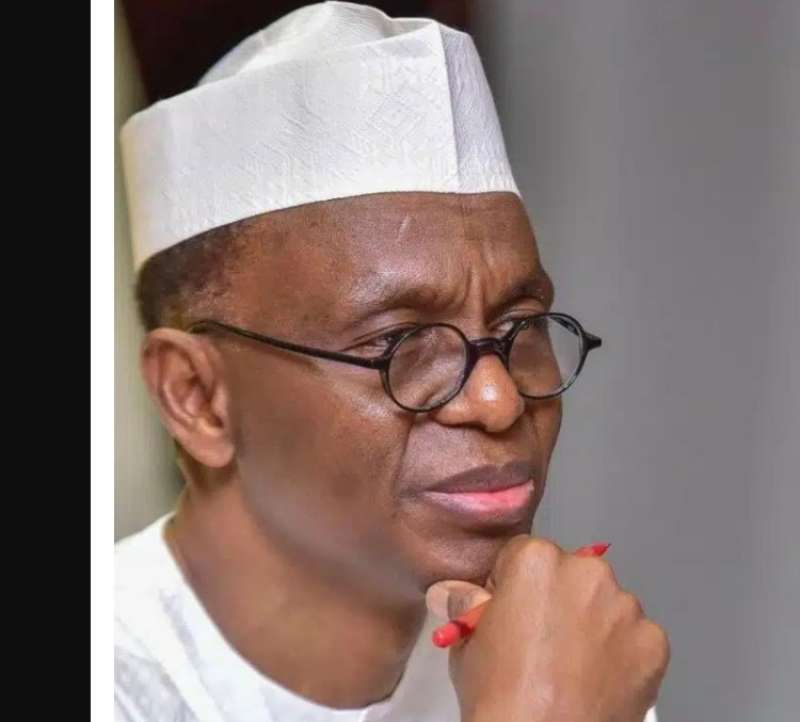
On this page, I have praised former Minister Nasir el-Rufai for his work in the Federal Capital Territory.
As governor, I praised some of his work, including when he fired state teachers. I also criticised him when he became arrogant and presumptuous.
Powerful people tend to misjudge distance, in terms of how long they will remain powerful, as well as the depth of their relevance, measuring how power, once in the hands of others, can remain in their favour.
El-Rufai made both miscalculations. Following over two decades of untouchability in power from Olusegun Obasanjo to Muhammadu Buhari, he has now spent 200 days in pre-trial detention on ICPC and DSS charges.
This should not happen to a citizen, any citizen. But some citizens, when fate grants them the winning lottery ticket, become Cronus, the Titan in Greek mythology who, to maintain his power, swallowed five of his six children soon after birth.
But not Zeus, his youngest son, who miraculously survived and, becoming the supreme ruler of the Olympian gods and the “Father of Gods and Men, “would exact vengeance.
In power, el-Rufai forgot not only the principle of right and wrong, but also the concept of justice.
But it was right there the whole time: on the flip side of injustice. The truth is that wearing glasses to be able to see arms, nobody to see through clouds.
Last Tuesday’s disruption by political thugs of the visit to Benue State of Peter Obi, the presidential candidate of the Nigeria Democratic Congress, is an early reminder of the temptations of power in a Nigerian election year.
The ruling party controls the state, which is in the thick of Nigeria’s insecurity crisis. Its governor, Hyacinth Alia, is a Catholic priest. Having, in 2025, been involved in trying to prevent the same Obi from a humanitarian visit, claiming that his intervention was purely on security grounds, Mr Alia is trying to persuade the country that his are not the hands behind the crude attempt to stop, particularly Mr Obi, from travelling freely and safely in the state.
As Minister Festus Keyamo wisely said, this kind of menace is not a part of our democracy. Mr Alia, show the world your strengths, not your limitations.
Big news: the 2024 Auditor-General’s Non-Compliance report, published last month, identified over N1.34trn in audit lapses.
It found that the National Cash Transfer Office paid N33.751 billion to 3,295,207 households in 35 states in 2023 with no evidence that the money reached genuine beneficiaries.
The Office could not produce REMITA records to authenticate the payments. SERAP has written to President Tinubu demanding a published audit trail and investigation of the flagged N78.8bn in total irregularities.
Similarly, Femi Falana (SAN) has called on the EFCC to investigate and prosecute officials.
Given that we are dealing with a specific regime of governance coated in colours of ruthlessness, it is doubtful that these calls will yield anything.
The truth is that the situation is worse than what we know so far, and so, I have a different call: that Nigerians pay close attention to what is actually a long-running looting spree of our poorest and most vulnerable. There is a scorched-earth assault going on.
I begin in 2019, the start of the second term of the fake anti-corruption champion Muhammadu Buhari:
The Auditor-General’s 2019 report on the FGN Consolidated Financial Statements discovered that 36 MDAs made individual transfer payments,totalingN15,534,467,561.26, without identifying the beneficiaries, ignoring the relevant budget lines for “Transfers–Payment to Unemployed” and “Transfers–Payment to Aged/Vulnerable Group.” The Auditor-General flagged the risk of “diversion of public funds” and “misapplication of funds.”
The 2020 report is more curious. In the MDA-by-MDA budget-performance schedule, the National Social Investment Office shows: Approved Budget N0.00, Supplementary Budget N0.00, Total Budget N0.00, but the actual spending is N275,010,764,595.02! That is, the NSIO somehow recorded spending N275bn with no budgetary authorisation at all.
Surely, somebody has an explanation?
The 2021 Non-Compliance report, Volume II, found under the Ministry of Humanitarian Affairs that N54,630,000,000 in N-Power Batch C1 stipends (the August–December 2021 backlog) was recorded as paid but, per the Auditor-General’s own field visits, “was not actually effected to the beneficiaries.”
The same section found N2,617,090,786 paid for the National Home-Grown School Feeding Programme (COVID-19 period), the Auditor-General recommending full recovery to the Treasury: a combined N58.05bn flagged in that one ministry in that one year.
Surely, somebody has an explanation?
The 2022 Non-Compliance file is titled as Volumes I and II merged, but despite that filename, Volume II appears to be absent, as it excludes Humanitarian Affairs, NSIPA, NCTO or NASSCO, meaning that their work was either not audited at all, or that that specific audit has yet to be published.
Again, and similarly, despite examining the two volumes of the 2023 Non-Compliance report, neither the Ministry of Humanitarian Affairs, NSIPA, NCTO, NASSCO, N-Power, GEEP nor school feeding appears anywhere, although many other agencies were thoroughly audited.
Surely, somebody has an explanation?
That brings us to the 2024 itemised findings SERAP has publicized: N33.751bn in cash transfers with no beneficiary confirmation; N36.744bn paid in December 2023 without prepayment audit; N4.616bn in unsupported expenditure which the Auditor-General says “may have been diverted”; N350.18m in enrolment payments to state coordinators with no supporting documentation; N89.51m for store items never delivered or logged; N17.42m in diesel cash advances with no traceable purchases; and at NASSCO, N2.24bn paid through 158 vouchers without prepayment audit.
These appear to be the patterns that Nigerian MDAs exhibit in their work every year, with vulnerable Nigerians exploited every year.
But the first challenge is for journalists to track Humanitarian Affairs/NSIPA through every audit year to establish the full carnage.
There is another crisis: that despite all of this, a lot of MDAs still fail to submit audited accounts to the Auditor-General, representing one of Nigeria’s worst accountability challenges. This is a problem that worsened significantly under the Buhari administration despite his anti-corruption rhetoric. According to the Auditor-General, the 2016 audit year saw the highest number of non-submissions (324) in modern Nigerian history: more than double the previous 22-year high of 148. In 2016-2017 alone, 436 agencies failed to submit accounts. Think about that.
President Bola Tinubu is in the middle of a three-week foreign trip, departing without formally informing the National Assembly or handing over to Vice President Shettima, violating the constitution.
For a man who is seeking a second term of office, this is a stark reminder of how little the rules, or for that matter, Nigeria, really matter to Mr Tinubu. Keep in mind that when he headed north, Mr Shettima headed south, to Angola.
The general debate of the 81st United Nations General Assembly will begin on 22 September. Mr Tinubu is scheduled to speak the following morning.
At a time of chaos and doubt in his leadership, and in democracy under his watch, he will confront the theme: “Restoring trust, managing transformation: a United Nations that delivers for all.”
By Sonala Olumhense