















The Ministry of Justice has refuted criticisms by Transparency International (TI), saying it is not treating with kid's gloves, the recovery of loots by Nigeria's former Military dictator Sanni Abacha as alleged by the organisation.
According to the Chief Press Secretary to the Honourable Attorney General of the Federation and Minister of Justice, Ambrose Momoh, in a statement released on Thursday that its attention has been drawn to the recent statement by Transparency International (TI) criticizing the very robust efforts of the Jonathan administration towards the recovery of stolen assets from the Abacha family and its associates.
Momoh described TI's statement as false and an "unfortunate rush to judgment without the benefit of facts that nothing could be further from the truth."
He revealed that the Federal Government is currently pursuing recovery proceedings against the Abacha family and its associates in Liechtenstein, Luxemburg, and the United Kingdom.
He disclosed that the Federal Government of Nigeria has also made a request for Mutual Legal Assistance in Criminal matters to the United States of America in respect of the stolen assets within that jurisdiction.
"Government is also working assiduously with the Department of Justice of the United States in respect of the forfeiture proceedings it commenced against the Abacha family and its associates," Momoh said.
"The proceedings will make it possible for the Abacha family and its associates to forfeit over $550million and £95,910 Pounds sterling in 10 accounts and six investment portfolios linked to the Abachas in France, Britain, British Virgin Islands and the United States."
He said it is unfortunate that a respected international body like TI can ignore the clear facts of the ministry's recent history and the Jonathan administration’s track record on the matter to engage in baseless criticism.
"It is beyond doubt that the Jonathan administration has handled cases involving the so-called “Abacha loot” in a manner that protects the best interests of the country, while adhering to international best practices applicable to such cases," he said.
"The incontrovertible facts are that the efforts to retrieve the “Abacha loot” predate this administration and have been on going over 16 years with varying degrees of success."
Momoh said that as a result of the effective strategies adopted by the current administration and the pressure brought to bear on the Abacha family and its associates through sustained recovery proceedings in various jurisdictions, a significant increase, both in the quantum and rate of recoveries has been recorded.
"The criminal proceedings instituted against the family and their associates have forced them to back down from contesting the cases filed by the Federal Government of Nigeria to recover stolen assets in Liechtenstein, Luxemburg, the United Kingdom and the United States of America," he revealed
"The Abacha family has also withdrawn their appeal before the European Court of Human Rights in Strasburg seeking to set aside the forfeiture orders made against them and their associates in Liechtenstein."
He also disclosed the efforts of the government has led to the recovery of 226.3 million US Dollars from Liechtenstein in addition to the 7.5 Million Euros that was recovered from an associated company of the Abachas’ in Liechtenstein in 2011.
"It will also be recalled that in 2011, the Federal Government was able to recover and repatriate through negotiated settlement with the Jersey, the sum of 22.5 million pounds confiscated from an associate of the Abacha family by the Island of Jersey," he said.
He said it is pertinent to state that the recent withdrawal of the criminal proceedings against Mohammed Abacha in Nigeria will facilitate the recovery of the sum of $380 Million US Dollars from the Luxembourg proceedings and $550 Million US Dollars from forfeiture proceedings instituted by the US Department of Justice.
"This is because the Abacha family has not only undertaken not to contest the proceedings, but to also cooperate fully with the Federal Government of Nigeria in the recovery proceedings," Momoh said.
"It is therefore clear from the foregoing that the suggestion that “the Abachas have been allowed to get away with little loss” is totally false and at variance with the facts."
Momoh explained that a key objective in the prosecution of corruption cases is the deprivation of the criminal offender of the proceeds of crime.
"This is achieved by the taking away of such proceeds of crime by the State (regurgitation and restitution)," he explained.
"This principal objective has been achieved to a very significant degree in the Abacha proceedings. While the yearnings for criminal sanctions in form of custodial sentences against the Abacha family is understandable, it should be appreciated that this is a case that has lingered for over 16 years."
He asserted that the facts made it important to understand that the loot case can not be handled like regular fraud cases because it is not a "straightforward case where conviction is assured".
"The standard of proof in criminal cases of this nature, which is “proof beyond reasonable doubt” poses great difficulty for the prosecution as any shadow of doubt is resolved in favour of the accused person," Momoh said.
"This much was appreciated by the administration of President Olusegun Obasanjo, GCFR when it entered into a Global Settlement Agreement with the Abacha family."
He explained that the current administration has ensured that government gets the best deal it can get, in the circumstance, saying the administration has worked closely and consulted widely with experts, international partners including global development agencies on these criminal proceedings and it is clear from the feedback received, that the Jonathan administration has done its best to protect the interest of the country.
Momoh concluded that the blanket criticism by TI, which has little bearing on the facts, is therefore unfortunate.
He said the singling out of Nigeria for criticism by TI for adopting measures, which are globally used in cases of this nature and which have produced good results for the country is unfair.
"The federal Ministry of Justice therefore wishes to assure the Nigerian public that it will at all times be guided by national Interest, the need to promote transparency and accountability and international best practices in the Ministry’s dealings with the Abacha family and indeed, all such recovery proceedings," he concluded.
 |
|

INEC Removes 1.6m Invalid Voter Records, Fingers 54 Officials in Registration Scandal
The Independent National Electoral Commission (INEC) has removed 1,608,660 invalid voter registrations from Nigeria’s preliminary voters’ register following a nationwide verification exercise ahead of the 2027 general elections.
The commission also disclosed that 1,749 records belonging to deceased persons had been identified and removed, while 54 individuals across ten states were implicated in alleged violations of established voter registration procedures.
INEC Chairman, Prof. Joash Amupitan (SAN), announced the development on Monday during a briefing with journalists on the outcome of the review of the preliminary register generated from the 2025/2026 Continuous Voter Registration (CVR) exercise.
Amupitan said the commission received 11,088,238 registration records from the three phases of the exercise but subsequently uncovered millions of questionable entries during its verification process.
He explained that the commission’s Automated Biometric Identification System initially flagged 1,545,052 records for further investigation, stressing that the automated flagging did not automatically invalidate the registrations.
According to him, 1,277,052 registrations were confirmed invalid and excluded before the preliminary register was published.
The commission subsequently reviewed additional cases following complaints, claims and objections submitted by Nigerians during the seven-day public display of the register between October 9 and 15.
Amupitan said 268,000 cases were subjected to adjudication, resulting in 217,722 registrations being declared invalid and removed, while 50,278 were cleared and retained.
He added that further screening identified another 113,886 invalid registrations, bringing the additional removals to 331,608 and the overall number of invalid records removed to 1,608,660.
The chairman said the exercise also uncovered serious irregularities involving duplicate registrations, suspicious photographs, unusual names and entries belonging to deceased persons.
He disclosed that INEC’s technical assessment revealed deliberate attempts to circumvent established registration procedures, including the misuse of provisions designed for exceptional registration circumstances, particularly those relating to persons with disabilities.
“Fifty-four persons across ten states have been identified as complicit, and necessary disciplinary action will be taken against them, including possible prosecution,” he said.
Amupitan said the affected records had been identified and subjected to verification and remediation, while personnel allegedly connected with the infractions had been marked for further administrative investigation.
He, however, warned that the latest clean-up had not completely resolved the integrity concerns surrounding the national voters’ register, noting that several irregularities predated the latest registration exercise.
According to him, many of the complaints involving multiple registrations and suspicious photographs circulating on social media relate to historical records captured between 2011 and 2023.
He explained that the national register had evolved through successive registration and continuous voter registration exercises since 2011, with biometric and demographic information captured using different technologies, operational arrangements and quality standards.
Although the register had undergone previous cleansing and biometric comparisons, he said significant historical integrity concerns remained and required a systematic response.
The INEC chairman also clarified that the commission’s decision to postpone its proposed nationwide voter revalidation exercise until after the 2027 elections did not suspend its existing mechanisms for identifying and removing invalid registrations.
He said the commission had resolved to address outstanding duplications in the historical register, directing that records flagged through public complaints and obvious cases identified internally should be removed after proper verification.
The clean-up followed public outrage over alleged irregularities in the preliminary register, with some Nigerians and civil society organisations questioning the credibility of entries containing suspected artificial intelligence-generated photographs, duplicate identities and records of deceased persons.
Citing Section 19(2) of the Electoral Act, 2026, Amupitan said INEC was required to receive and consider objections, claims and complaints submitted by members of the public following the display of the preliminary register.
The commission is expected to publish the cleaned-up National Register of Voters in December ahead of the 2027 general elections.
News
Elumelu: Africa’s Next Growth Story Must Be Owned by Africans – and Women
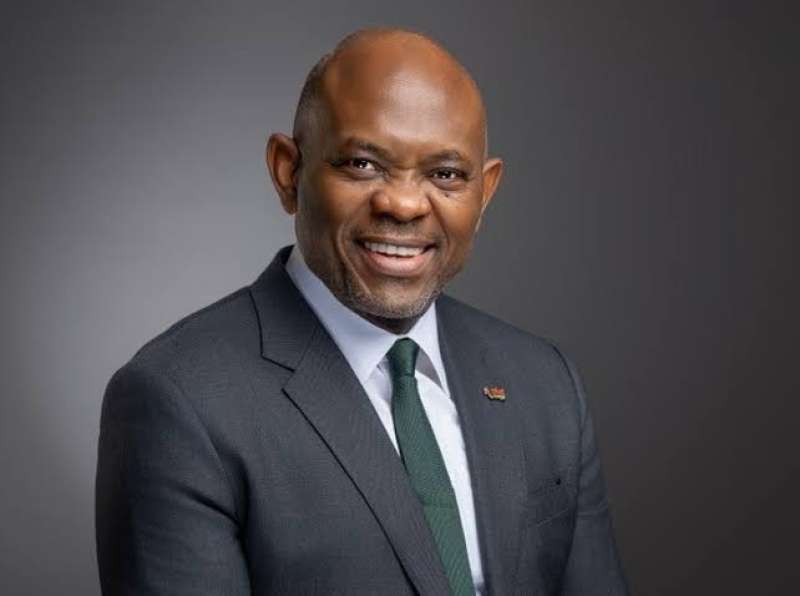
Africa’s next economic transformation must be financed by Africans, driven by private enterprise and powered by women, Tony Elumelu, Chairman of Heirs Holdings, has declared.
Delivering the keynote address at the 25th Annual Conference of the Women in Management, Business and Public Service (WIMBIZ), Elumelu challenged African business leaders, investors and policymakers to move beyond conversations about the continent’s potential and take ownership of its economic future.
“The world needs what Africa has,” he told delegates, insisting that the continent’s greatest asset is not its oil, lithium, agricultural land or mineral wealth, but its people.
And women, he argued, represent one of Africa’s most underutilised economic assets.
Speaking on the conference theme, _“Rooted, Rising, Ready: Born in Africa, Built for the World,”_ Elumelu identified African capital formation, reliable electricity, industrialisation, regional trade and strong institutions as critical pillars for unlocking the continent’s economic opportunities.
He also delivered a pointed message to corporate leaders: Africa cannot compete globally while systematically underutilising half its talent.
Africa’s opportunity – and the ownership question
Elumelu described Africa’s demographic advantage, mineral resources and expanding consumer market as one of the greatest commercial opportunities of the century.
By 2050, the continent’s working-age population will have expanded significantly, positioning Africa as a major source of global labour, consumption and economic growth.
But he warned that natural resources and demographic advantages alone would not deliver prosperity.
Drawing comparisons with Singapore and South Korea, he argued that economic transformation comes from building institutions, developing human capital and converting resources into productive industries.
He identified three major constraints holding Africa back: inadequate electricity, limited domestic value addition and insufficient investment capital.
“Factories cannot run without electricity. Hospitals and schools cannot function without it. And the AI economy everyone is talking about has two basic ingredients: power and connectivity,” he said.
On industrialisation, he challenged African countries to stop exporting raw commodities and importing finished products.
“Why ship raw lithium, raw cocoa, raw crude out of this continent? Refine it. Process it. Brand it. Then sell it to the world.”
He said Africa must transition from being a supplier of raw materials to becoming an active participant in global value chains.
African capital must finance African businesses
A central message of Elumelu’s address was the urgent need to mobilise domestic savings and institutional investment to finance African enterprises.
He argued that aid, while historically important in supporting vulnerable populations, cannot substitute for investment capable of creating businesses, jobs and ownership.
“The future is investment and trade, not aid,” he declared.
He called on African pension funds, insurance companies, banks and family offices to increase their investment in businesses across the continent.
However, he stressed that capital formation requires a supportive business environment, consistent economic policies, trusted financial institutions and growing domestic savings.
“Africa will not just offer solutions, but finance those solutions,” he said.
Citing Heirs Holdings’ investment in Seplat Energy, the London- and Nigerian-listed energy company, Elumelu highlighted the potential of African investment to create value for African investors.
He noted that Seplat’s share price had risen from approximately £3 to £9 since his investment, with its market capitalisation reaching about $7 billion at the time of his address.
He also referenced Aliko Dangote’s efforts to mobilise African retail investors around the proposed Dangote Refinery public offering as evidence of growing domestic participation in major African businesses.
For Elumelu, the objective is clear: African capital must increasingly finance African ambition.
The $120m investment in African entrepreneurs
Making a strong case for inclusive economic growth, Elumelu presented the results of the Tony Elumelu Foundation, which he co-founded with his wife, Dr Awele Elumelu.
Over 15 years, the Foundation has deployed more than $120 million in seed capital to 24,633 entrepreneurs across all 54 African countries.
Women account for 48 per cent of beneficiaries.
According to Elumelu, these entrepreneurs have collectively created more than 1.5 million jobs and generated over $4.2 billion in revenue.
He emphasised that the Foundation's selection process is merit-based, with entrepreneurs assessed on the quality of their business proposals rather than gender quotas.
He highlighted three women whose businesses demonstrate the commercial impact of relatively modest seed investments.
Princess Adeyinka Tekenah received $5,000 in 2015 and built Happy Coffee, an integrated coffee business sourcing beans from women farmers in Taraba State. Her enterprise has created more than 1,000 jobs and is positioning itself as a potential publicly listed Nigerian coffee brand.
Olamide Ayeni-Babajide, another $5,000 beneficiary in 2016, built a recycling enterprise focused on converting tyre waste into commercial value. Her business has recorded more than twenty-fold revenue growth and trained 15,000 people, most of them women and girls.
Nkem Okocha used her $5,000 seed funding to build Mama Moni, a financial technology social enterprise providing access to finance for low-income female entrepreneurs in rural and urban communities.
For Elumelu, their achievements reinforce a fundamental economic argument: women are not merely beneficiaries of development; they are drivers of enterprise, employment and wealth creation.
He disclosed that 265,529 young Africans applied to the Foundation's entrepreneurship programme this year, but only 3,200 could be funded.
That means just one in every 83 applicants received support.
The scale of unmet demand, he argued, exposes Africa's real problem.
“It is not a shortage of entrepreneurial talent; it is a shortage of capital.”
Women must move from participation to ownership
Elumelu also challenged corporate Nigeria to accelerate women's representation in executive leadership and boardrooms.
Using his own business group as evidence, he highlighted the leadership roles occupied by women across Heirs Holdings and its portfolio companies.
His wife, Dr Awele Elumelu, co-founded Heirs Holdings and chairs several businesses, including Avon HMO, Avon Medical, Heirs Insurance Brokers, Transcorp Hotels and Heirs Energies.
He also cited Owen Omogiafo, whom he supported for appointment as President and Group Chief Executive of Transcorp Group in 2020, making her the first woman to lead the conglomerate.
Under her leadership, he said, Transcorp strengthened its presence in power, hospitality and energy.
Following her elevation, Uzo Oshogwe became Managing Director and Chief Executive of Transcorp Hotels, while Awele Elumelu serves as chairperson.
He further highlighted the leadership of Somachi Chris-Asoluka at the Tony Elumelu Foundation, alongside other female executives across the Heirs Holdings portfolio.
At UBA Group, he pointed to women leading subsidiaries and regional operations across several African markets.
His message to business leaders was direct: appointing women to leadership positions should be driven by competence and commercial performance, not public relations.
“Women’s economic leadership is not a concession to fairness. It is a requirement for competitiveness,” he said.
“No serious economy can afford to systematically underutilise half its talent.”
Intra-African trade: The next frontier
Beyond investment and women's economic participation, Elumelu identified regional integration as another critical driver of Africa's growth.
He lamented that moving goods from Lagos to Liverpool can be easier than moving them from Lagos to Luanda, reflecting the persistent infrastructure and regulatory barriers limiting intra-African commerce.
He called for greater investment in roads, railways, ports, payment systems and efficient customs procedures to make the African Continental Free Trade Area commercially meaningful.
African businesses, he argued, must begin to see the continent as their natural home market rather than remain confined by national boundaries.
He cited UBA's expansion into 20 African countries as evidence that cross-border African business is achievable.
“We cannot build a continental market merely by signing documents,” he said.
He called for African banks to finance regional expansion, manufacturers to develop cross-border supply chains and technology companies to build solutions that serve the entire continent.
Strong institutions, stronger economies
On governance and institutional development, Elumelu said investors consistently assess markets based on the reliability of contracts, predictability of regulation, effectiveness of the courts and availability of infrastructure.
“Capital goes where it is safe, and it stays where it is respected,” he said.
He urged African governments to focus less on international investment roadshows and more on creating the conditions that attract and retain capital.
But he also challenged the private sector to accept responsibility for building strong institutions.
Businesses, he said, cannot demand accountability from governments while tolerating poor governance within their own organisations.
Paying taxes, publishing accurate accounts, promoting employees on merit and maintaining effective corporate boards are all part of institution-building.
'Do not wait'
Concluding his address, Elumelu returned to the central message of the WIMBIZ conference: the geography of opportunity is changing, and Africans must take ownership of that transformation.
He urged women entrepreneurs and professionals to pursue leadership, deploy capital, build businesses and create opportunities for the next generation.
“No one but us will develop Africa. Not the donors. Not the multilaterals. Not the partners, however welcome they are. Us.”
Addressing younger women in the audience, he challenged them to see themselves as the next generation of corporate leaders and business owners.
He also called on WIMBIZ to make its next 25 years even more ambitious, arguing that while advocacy had helped women gain access to decision-making spaces, capital was now essential to moving them into positions of ownership and influence.
“Advocacy got women into the room. Capital will get them to the head of the table,” he said.
His closing message captured the central argument of his address:
“Born in Africa. Built for the world. The world needs what Africa has. And what Africa has, more than oil, more than lithium, more than land, is you.”
Editorial note: Before publication, I recommend verifying the Seplat share-price and market-cap figures, the Foundation's cumulative funding and impact statistics, the 2026 application figures, and the executive titles and production figures. These are material business claims and should be independently substantiated.
Business
In The Spotlight
2027: Is Tinubu Fit to Run? The APC's Evasive Response to Nigerians' Questions
When the health of a sitting president becomes a national political controversy, party propaganda cannot replace public confidence. Nigeria deserves more than political declarations, campaign theatrics and dancing on stage._
There are questions that politics cannot silence. There are concerns that party loyalty cannot bury. And there are national conversations that no amount of political gymnastics can make disappear.
One of them is now staring Nigeria in the face: **Is President Bola Ahmed Tinubu fit to seek another four years in Aso Rock in 2027?**
The question has become so politically uncomfortable that the All Progressives Congress (APC) appears determined to answer it before Nigerians even finish asking it.
Enter Professor Nentawe Yilwatda, the party's national chairman, with a categorical declaration that Tinubu is fit to go. His argument? The President is capable, and his appearance dancing at an APC rally in Akwa Ibom is apparently enough to silence those questioning his health.
But hold on!
Is Nigeria's presidency now a dancing competition? Has the threshold for presidential fitness been reduced to the ability to shake one's shoulders before an enthusiastic crowd? Is the capacity to dance at a political rally the new qualification for governing a country of over 200 million people?
If that is the APC's standard, Nigerians have every reason to be worried.
A dancing president is not necessarily a working president. A smiling president is not necessarily a healthy president. And a president who can mount a campaign stage must still demonstrate the capacity to discharge the enormous responsibilities of his office.
Let us not pretend that the question emerged from nowhere. Tinubu's health and physical capacity have been subjects of public discussion, particularly in the context of his foreign medical trips, public appearances and occasional absence from important political engagements. Such developments have generated questions, speculation and competing political narratives.
But rather than confront the issue with maturity, some voices within the ruling party seem more interested in dismissing the questioners than addressing the underlying concern.
That is a political mistake.
Nigeria is not a private estate belonging to the APC. The presidency is not a party trophy. And the health of the man occupying the highest political office in the country is not an inconsequential subject that can be brushed aside with a wave of the hand.
Of course, Tinubu is entitled to dignity, privacy and the presumption that he is capable of performing his duties. No responsible person should turn unverified rumours into established medical facts. But the public also has a legitimate interest in knowing whether its president can sustain the demands of the office.
There is a difference between invading someone's privacy and demanding accountability from someone entrusted with the destiny of a nation.
The APC chairman should understand that difference.
THE DANCE THAT RAISED MORE QUESTIONS
Yilwatda's reference to Tinubu dancing at the Akwa Ibom rally may have been intended to project confidence and political strength. But it also exposes the weakness of an argument that attempts to answer a serious question with a theatrical demonstration.
Dancing for a few minutes is not the same as presiding over marathon cabinet meetings, confronting national emergencies, managing complex international relations and making consequential decisions under enormous pressure.
The presidency is not a weekend recreational activity. It is a 24-hour national responsibility.
Nigeria needs more than occasional appearances. It needs sustained leadership.
And this is where the APC must stop playing politics with a subject that deserves seriousness.
If the President is fit, the party should have the confidence to address legitimate questions without turning every inquiry into an opposition conspiracy. If the President is capable of another term, Nigerians should be able to evaluate that claim through credible information and his record in office.
Political declarations cannot manufacture public confidence.
BUT IS THE APC RUNNING AWAY FROM THE BIGGER QUESTION?
Perhaps the more important issue is not simply whether Tinubu can contest in 2027. It is what Nigerians are being asked to endorse if he does.
What has the President achieved since May 2023? What has happened to the purchasing power of ordinary Nigerians? Have the economic reforms delivered the relief citizens were promised? Has insecurity been brought under control? Are millions of struggling families better off today?
These are not opposition talking points. They are questions arising from the everyday experiences of Nigerians.
For many households, the cost of living is not a political debate. It is a daily battle. For communities threatened by banditry, terrorism and kidnapping, security is not a campaign slogan. It is a matter of survival.
For unemployed young people, the future cannot be measured by the number of political rallies attended by the President.
The APC must therefore resist the temptation to turn 2027 into a referendum on Tinubu's ability to withstand political criticism. The real referendum should concern his performance, policies, leadership and the future he offers the country.
A second term is not an entitlement. It is a request for another mandate.
And no incumbent, however powerful, should expect Nigerians to surrender their right to question that request.
THE OPPOSITION MUST ALSO BE HONEST
Yet, the opposition should not celebrate this controversy as though raising questions about Tinubu's health automatically disqualifies him from seeking another term.
That would be equally irresponsible.
Political opponents must distinguish between documented facts and speculation. They must resist the temptation to weaponise personal health issues or exploit unverified claims for electoral advantage.
If there are credible concerns, they should be raised responsibly. If there is evidence, it should be presented. Nigeria's political discourse is already drowning in propaganda; it does not need another flood of conjecture.
The country deserves an honest debate, not a political wrestling match over the President's body.
2027 MUST BE ABOUT NIGERIA, NOT JUST TINUBU
There is something profoundly troubling about a political establishment that appears more preoccupied with defending its leader than explaining its record to the people.
The APC chairman can declare Tinubu fit to go. Party loyalists can sing his praises. Supporters can celebrate his dancing, his speeches and his political survival.
But none of these things answers the most fundamental question: What does another four years of Tinubu mean for Nigeria?
That is the question that should dominate the political conversation.
Nigerians must not be distracted by the theatre of political declarations. They must demand a serious account of the administration's performance, its failures, its achievements and its plans for the future.
The President, too, must recognise that public confidence is not secured by the volume of applause at party rallies. It is earned through transparency, performance and the ability to inspire confidence in the country's future.
The APC cannot turn a national question into a party chant. It cannot dance away public concerns. And it cannot expect Nigerians to confuse political loyalty with evidence.
So, is Tinubu fit to go in 2027?
Yilwatda says yes. The opposition has its doubts. Nigerians must assess the available facts without surrendering to propaganda or speculation.
But perhaps the most important question is this: Is Nigeria getting the leadership it deserves?
Because, at the end of the day, the country does not need a president who can merely dance through campaign rallies. It needs one who can confront its problems, shoulder its responsibilities and deliver a better future for its citizens.
Aso Rock is not a dance floor. The presidency is not a talent show. And the future of more than 200 million Nigerians is too important to be decided by political choreography.
In 2027, the real test must be leadership, not theatrics; performance, not propaganda; and accountability, not applause.
The APC should remember one thing: Nigerians are watching. And this time, they want answers, not another dance.
By Emmanuel Emeke Asiwe(EEA), Publisher/Editor-in-Chief
In The Spotlight
US election fallout: Democrats may impede; will they impeach?
For millions of Americans, life under President Donald Trump has become an arduous struggle against the relentless pressures of economic survival. Despite the great promises made by the American president at the advent of his second term cycle, from the cost of groceries to the price of gasoline, from hospital bills to housing payments, the American household is confronting a financial squeeze that political rhetoric cannot wish away.
For these Americans, economic prosperity is not measured by the bullish exuberance of Wall Street but by the ability to put food on the family table without breaking the bank. The ordinary citizen is less concerned about the thunderous declarations emanating from Washington than about the dwindling purchasing power of the dollar in his pocket. No one pays mortgages with presidential proclamations or settles hospital bills with partisan propaganda. Ordinary Americans cannot eat political promises on the dinner table. It was in anger and frustration that the people went to the polls last Tuesday to demand a change in the disturbing dynamics of government as Trump faced significant dissatisfaction over his handling of the economy, immigration, healthcare, foreign policy and presidential power. The midterm election was effectively a referendum on Trump’s second term as president. The American President became the central issue.
Many Americans believe their cost of living has not improved under his leadership. In his second coming as president, Trump had promised economic improvement, but many voters feel that the benefits have not reached their homes.
And then came the war with Iran. Many nations around the world largely agree that Iran must not have a nuclear weapon. But as millions of Americans grappled with the excruciating pressures of economic survival, the war with Iran became the isolating icing on an already crumbling economic cake. It was a military adventure that threatened to estrange America from its international partners while deepening disaffection among citizens at home. At a time when ordinary Americans were demanding economic succor, Washington appeared more preoccupied with flexing military muscles abroad than alleviating financial misery at home. Voters questioned the human, financial and strategic costs of the war with Iran. Others worry about continued military involvement abroad. Many believe that the war was not worth its cost.
Although border security remains popular, critics argue that Trump’s immigration enforcement has become excessively aggressive. Americans were increasingly repulsed by the implementation of Trump’s hardline immigration policies. Armed to the teeth and operating under the banner of national security, the sight of gun-toting immigration enforcement agents stirred outrage and apprehension across communities. They became symbols of fear as fatal encounters raised haunting questions about whose lives were being protected and whose were being imperiled. Reports of eerie encounters involving federal immigration personnel intensified public anger, raising disturbing questions about excessive force, constitutional protections, and the sanctity of human life. What was ostensibly designed to secure America’s borders became a troubling spectacle of fear, intimidation, and government overreach in the eyes of many critics.
Many Americans believe Trump has exercised presidential authority too aggressively and worry about democratic institutions, accountability and checks and balances. Trump’s frequent confrontational rhetoric and political approach were seen as divisive, and his leadership perceived as provoking national polarization and divisiveness.
On Tuesday, Democrats tore through the seemingly impregnable, ironclad strongholds of the Republican Party. From Maine to Mississippi, from Texas to Kansas, the electoral landscape trembled under the weight of an extraordinary inevitable political revolt. An unmistakable message was sent that affordability matters, putting food on the family table matters, keeping businesses afloat matters, and economic survival matters more than partisan grandstanding and presidential garrulousness. The election produced astonishing upsets, shattered longstanding political barriers, and rewrote chapters of American electoral history. In Georgia, Keisha Lance Bottoms became the first Black woman ever elected governor of an American state. In my backyard of Wisconsin, David Crowley made history as the state’s first Black governor. In the Republican bastion of Texas, Gina Hinojosa shattered another political glass ceiling, becoming the first Latina elected governor of the Lone Star State.
And the political earthquake did not stop there. In Texas, James Talarico demolished a Republican stranglehold on a US Senate seat that Democrats had not won in nearly four decades. The young Democrat garnered more than five million votes, delivering a stunning rebuke to a political establishment that had long considered Texas an impregnable Republican fortress.
These were not ordinary electoral victories. They were political thunderbolts reverberating across America’s political landscape and rattling the foundations of Republican dominance. Americans may tolerate political theatrics for a season, but when economic hardship begins to threaten their survival, even the strongest partisan loyalties can buckle under the weight of daring discontent and strangulating disenchantment.
The ballot box became the battleground where economic anguish overwhelmed political allegiance, and the once-impregnable Republican fortresses crumbled under the weight of metastatic malcontent.
Will Democrats use their newly acquired congressional power to impeach Trump, impede his agenda, or improve the lives of struggling Americans? Under the US Constitution, the House needs only a simple majority to impeach a president. The Senate requires a two-thirds majority of senators present to convict. Why would Democrats bother impeaching President Trump when they know they are unlikely to secure the 67 Senate votes necessary to convict and remove him? Why embark on an impeachment voyage when the destination is already known? If the Senate cannot muster the votes to convict, is impeachment a constitutional necessity, a political spectacle, or merely an exercise in legislative futility? Perhaps the opposition would accomplish more by checking presidential excesses than by chasing an impeachment conviction it cannot secure. Democrats must decide whether their priority is to punish Trump’s alleged misconduct through constitutional proceedings or to constrain his policies through congressional oversight and legislative power. The power of the purse is one of Congress’s most formidable weapons. Under Article I, Section 9 of the Constitution, federal money generally cannot be withdrawn from the Treasury without appropriations authorised by law. A Democratic-controlled House could refuse to approve funding for certain Trump administration initiatives, demand spending restrictions, or negotiate changes to federal programs. Democrats could refuse to pass Trump’s proposed legislation on taxation, immigration, energy, healthcare, and other domestic policies.
A president can win the White House and still lose the legislative cooperation necessary to implement his agenda. A Democratic House could investigate alleged misconduct, conflicts of interest, misuse of public funds, or questionable administrative decisions. Such investigations could expose problems, generate public pressure, and force the administration to defend its actions. Congressional Oversight does not require impeachment. Committees could examine the activities of federal agencies, investigate implementation of executive orders, and question cabinet officials about their policies. Will democrats choose only to impede Trump’s agenda but not impeach the president? We keep our fingers crossed.
By Fola Ojo