








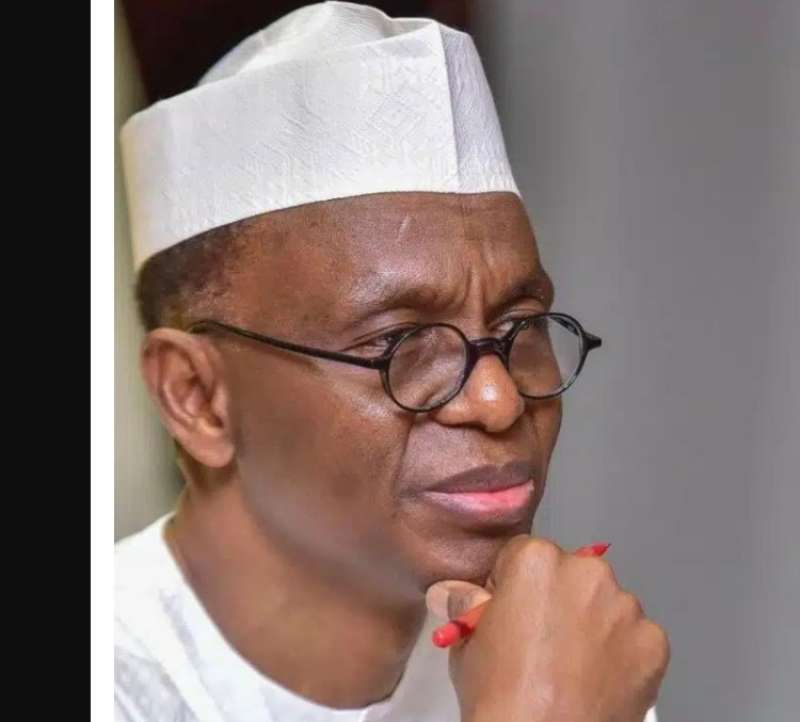




Huhuonline.com has obtained the report of the Financial Reporting Council of Nigeria recommending the suspension of former Governor Central Bank of Nigeria Governor, Sanusi Lamido.
Issued on 7th June 2013, the report followed the council’s appraisal of the response of the ex-CBN governor to President Goodluck Jonathan’s query on the bank’s financial statement of 2012.
Sanusi had replied the president on 20th May 2013, but the council deemed the explanation “a clear display of incompetence, nonchalance, fraud, wastefulness, and abuse of due process and deliberate efforts to misrepresent facts on the part of the leadership of the CBN”.
It advised the president to exercise his powers based on Section 11(2)(f) of the CBN Act 2007 or invoke Section 11(2)(c) of the said Act and “cause the governor and the deputy governors to cease from holding office in the CBN”, in order for it to conduct further independent investigations on CBN’s activities.
In a part of the report, CBN, under Sanusi’s watch, was accused of persistent refusal and/or negligence to comply with the Public Procurement Act in its procurement practices.
By virtue of Section 15 (1)(a) of the Public Procurement Act, the provisions of the Act are expected to comply to ‘all procurement of goods, works and services carried out by the Federal Government of Nigeria and all procurement entities.’ This definition clearly includes the Central Bank of Nigeria”, a part of the report read.
“It is however regrettable that the Central Bank of Nigeria, under his leadership, has refused and/or neglected to comply with the provisions of the Public Procurement Act (PPA). You will recall that one of the primary reasons for the enactment of the PPA was the need to promote transparency, competitiveness, cost of effectiveness and professionalism in the public sector procurement system.
“Available information indicates that the Central Bank has over the years engaged in procurement of goods, works and services worth billions of Naira each year without complying with the express provisions of the PPA.
“By deliberately refusing to be bound by the provisions of the Act, the CBN has not only decided to act in an unlawful manner, but has also persisted in promoting a governance regime characterised by financial recklessness, waste and impunity, as demonstrated by the contents of its 2012 Financial Statements”.
Another part cited unlawful expenditure by CBN on intervention projects across the country.
“The unacceptable level of financial recklessness displayed by the leadership of the Central Bank of Nigeria is typified by the execution of ‘Intervention Projects’ across the country. From available information, the bank has either executed or is currently executing about 63 such projects across the country and has committed over N163billion on them.
“It is inexcusable and patently unlawful for any agency of government to deploy huge sums of money as the CBN has done in this case, without appropriation and outside CBN’s statutory mandate. It is trite that the expenditure of public funds by any organ of government must be based on clear legal mandates, prudent costing and overriding national interest”.
There were also allegations of financial infractions and acts of financial recklessness, as reflected in CBN’s audited financial statements of 2012, while the bank was also accused of inability to prepare its financial statements in accordance with global best practice.
“In a most ironical manner, it has become obvious that the CBN is not able to prepare its financial statements using applicable International Financial Reporting Standards (IFFS) whereas Deposit Money Banks that the CBN is supervising have complied with this national requirement since 2012.
“Undoubtedly, this laxity on the part of our apex bank, apart from calling to question its capacity for proper corporate governance, is capable of sending wrong signals to both domestic and international investors on the state of the Nigerian economy.
“The provisions of the Memorandum of Understanding (MOU) signed by the CBN and other Deposit Money Banks on Banking Resolution Sinking Fund have been breached in a material manner. For example, a Board of Trustees (BOT) to manage the Fund has not been constituted since 2010 when it was established. The CBN has however continued to utilise the Fund for certain operations without approval of the said BOT.
“Contrary to Section 34 (b) of the CBN Act 2007 which provides that the CBN shall not, except as provided in Section 31 of the Act, inter alia, purchase the shares of any corporation of company, unless an entity set up by the approval or authority of the Federal Government, CBN in 2010, acquired 7% shares of International Islamic Management Corporation of Malaysia to the tune of N0.743 billion. This transaction was neither brought to Mr. President’s attention nor was a board approval obtained before it was entered into.
“The CBN has failed or refused to implement the provisions of the Personal Income Tax (Amendment) Act 2007. Accordingly the Pay-As-You-Earn (PAYE) deductions of its staff are still being computed in accordance with the defunct Personal Income Tax Act 2004, thus effectively assisting its staff to evade tax despite the generous wage package in the CBN, relative to other sectors of the economy.
“The CBN had an additional brought forward to General Reserve Fund of N16.031bn in 2012 but proceeded on a voyage of indefensible expenses in 2012 characterised by inexplicable increases in some heads of expenditure during the year. Examples include:
1. The bank spent N3.086bn on “promotional activities” in 2012 (up from N1.084bn in 2011). The bank spent this sum even when it is not in competition with any other institution in Nigeria;
2. The CBN claimed to have expended N20.202bn on ‘Legal and Professional Fees’ in 2011 beyond all reasonable standards of prudence and accountability;
3. Between expenses on ‘Private Guards’ and ‘Lunch for Policemen’, the CBN claimed to have spent N1.257 billion in 2012;
“While Section 6(3)(c) of the CBN Act 2007 provides that the board of the CBN is to make recommendations to Mr. President on the rate of renumeration to Auditors, the bank has consistently observed this provision in breach and even went to the extent of changing one of the Joint External Auditors without notifying the office of the President.
“In the explanations offered by the CBN pursuant to presidential directives, it offered a breakdown of ‘Currency Issue Expenses’ for 2011 and 2012. Interestingly, it claimed to have paid N38.233bn to the Nigerian Security Printing and Minting. Company Limited (NSPMC) in 2011 for ‘Printing of Banknotes.’ Paradoxically however, in the same 2011, NSPMC reported a total turnover of N29.370bn for all its transactions with all clients (including the CBN).
“It is significant to note that the external audit revealed balances of sundry foreign currencies without physical stock of foreign currencies in the CBN Head Office”.
The report further mentioned questionable write-off of N40bn loans of a bank, adding:
“The CBN also claimed that it paid Air Charter, such as payments to Emirate Airline (N0.511bn), Wing Airline (N0.425bn) and Associated Airline (N1.025bn) to distribute currency by air nationwide. Emirate Airline does not fly local charter in Nigeria, Wing Airline is not registered with Nigeria Civil Aviation Authority and Associated Airline does not have a billion turnover for 2011 because upon enquiry, the management claimed that they have no financial statements and have not had any significant operations for the past two years that will warrant preparation of financial statements”.
The bank was also accused of wastefulness for putting training and travel expenses at N9.24bn in 2012 (up from N7.65bn in 2011), expenses on ATM offsite policy change at N1.045bn, expenses on Non Interest Banking at N1.359bn in 2012 (up from N0.977bn in 2011), being very heavy on expenses on “Project Eagles” spending at N0.606bn in 2012 (up from N63m in 2011), expense on newspapers, books and periodicals (excluding CBN’s publications) at N1.678 billion in 2012 (up from N1.670bn in 2011), and the cost of facility management atN7.034bn in 2012 (up from N5.751bn in 2011).
Meanwhile, it has emerged that suspended Sanusi began getting into the bad books of President Goodluck Jonathan from as far back as January 2012, when, in an interview with the Financial Times, he delivered a scathing review of the government’s handling of the Boko Haram insurgence and linked the spate of violence in the North to uneven distribution of resources.
“There is clearly a direct link between the very uneven nature of distribution of resources and the rising level of violence”, Sanusi had told the London-based paper.
“When you look at the figures and look at the size of the population in the North, you can see that there is a structural imbalance of enormous proportions. Those states simply do not have enough money to meet basic needs while some states have too much money. The imbalance is so stark because the state still depends on oil for more than 80 per cent of its revenues”.
Clearly unimpressed by the comment and the analysis that the paper curled out from that interview, the president directed then National Security Adviser, late General Andrew Owoye Azazi to issue a query to the then CBN president.
Your recent statements in an interview with the Financial Times is the subject of this correspondence”, Azazi wrote to Sanusi in a query dated 2nd February 2012 and titled, ‘recent Interview With Financial Times’.
“In the interview, you were alleged to have made statements to the following effects:
“That, the uneven pattern of distribution of resources is directly linked to the rising level of violence in Nigeria.
“That, it is now necessary to focus funds on regenerating other regions of Nigeria, other than the Niger Delta.
“That, the additional federal funds allocation to the Niger Delta states has created ‘a structural imbalance of enormous proportions’, with some states not having enough money and others having too much.
“That, when the theft of oil by profiteers is considered, this imbalance between oil producing states in the South-South (or Niger Delta States) and states in the North is compounded.
“That, the supplemental distribution of funds to the oil producing states, on top of the standard federal allocations, which was effected to reduce inequity in resources in the first place, has now created new disparity in the state resource, fostered resentment in the poorest states, and encouraged the despicable terrorist activities of the Boko Haram sect.
“Your alleged assertions directly attribute the activities of the Boko Haram sect to the current formula for allocating funds from the federal account. Not only is there no empirical evidence to support such a statement, conventional wisdom in Nigeria refutes that assertion. Experts obviously have provided numerous explanations for the emergence of Boko Haram activities and the general consensus is that there are no silver bullets.
“Your statements to the Financial Times do not only have no basis in fact, but they are divisive, inflammatory, inciting and inappropriate of a senior Officer of the federal Government whose responsibility includes the national stability and state continuity. This statement has already caused a lot of angst among the populace and raised significant questions as to your intent and motives. These statements bring disrepute to the administration and current and past leadership of Nigeria. While I understand your right to free speech and some of the independence your office enjoys, I must also caution you that an officer of the government of Nigeria and one entrusted to promote state stability, your utterances through this interview are not in the interest of Nigeria’s national security.
“I encourage you to explore and peruse approaches that will ameliorate the problems that your statements have caused, including a retraction or clarifying statements, possibly through the same me”.
Documents Right Click for Pdf Download
 |
|

Tinubu Meets Bolloré in Paris Over Expanded Investment in Nigeria’s Creative, Digital Economy
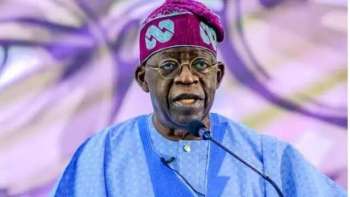
President Bola Ahmed Tinubu has held talks with French businessman Vincent Bolloré in Paris on plans to expand investment in Nigeria’s creative and digital economy.
The meeting, held during the President’s working vacation, focused on opportunities to deepen the localisation of operations by the Bolloré Group and increase investment in sectors including film, entertainment, fibre-optic infrastructure and digital services, according to a statement issued by the presidency.
Bolloré and members of his executive team outlined proposed investments centred on Nigeria, highlighting the country’s growing influence in global entertainment through Nollywood and Afrobeats.
The group also expressed interest in expanding its operations and local presence in Nigeria, with the presidency saying the plans could support increased production, investment and employment opportunities in the country.
Tinubu reaffirmed his administration’s focus on economic growth, job creation and digitalisation, while welcoming the group’s reported plans to deepen its activities in Nigeria.
The President said the government would continue to support investments aimed at developing the creative and digital economy, strengthening infrastructure and creating opportunities for Nigerian talent.
According to the statement, Tinubu also emphasised the potential for Nigeria to serve as a base for companies seeking to operate across Africa and international markets.
The meeting comes as Nigeria continues to promote its entertainment and technology sectors as areas of economic opportunity, with the government seeking to attract investment while expanding employment opportunities for young Nigerians.
Tinubu said his administration’s Renewed Hope Agenda seeks to harness Nigeria’s talent, entrepreneurship and growing global cultural influence to create greater economic opportunities and improve livelihoods.
News
Banks Shut 476 Branches as Nigeria’s Banking Landscape Goes Digital
Nigeria’s banks are rapidly abandoning the traditional banking model, shutting down hundreds of branches and cash centres as customers increasingly move to digital and electronic channels.
Data from the Central Bank of Nigeria show that banks closed a net 476 branches and cash centres between 2022 and 2025, cutting the country’s physical banking network by 8.8 per cent in just three years.
The number of bank branches and cash centres plunged from 5,410 in 2022 to 4,934 in 2025, signalling a dramatic shift away from brick-and-mortar banking.
The contraction has gathered pace in recent years.
Banks closed 37 locations in 2023, followed by a much steeper reduction of 229 locations in 2024. Another 210 branches and cash centres disappeared in 2025.
In effect, more than nine out of every 10 locations lost during the three-year period were closed in 2024 and 2025.
The figures, contained in the CBN’s 2025 Statistical Bulletin for the Financial Sector, cover branches and cash centres operated by commercial, merchant and non-interest banks. The data were sourced from the CBN and the Nigeria Deposit Insurance Corporation.
Lagos bears the biggest hit Lagos, Nigeria’s financial powerhouse, recorded the largest decline.
The state had 1,602 bank branches and cash centres in 2022. That figure dropped to 1,532 in 2023, 1,521 in 2024 and just 1,444 in 2025.
That represents a loss of 158 locations, or nearly 10 per cent, in three years.
Despite the closures, Lagos remains overwhelmingly dominant, accounting for almost 29 per cent of all physical banking locations in Nigeria.
The Federal Capital Territory also suffered a significant contraction. Abuja went from 400 locations in 2022 to 362 in 2025, a decline of 38, or 9.5 per cent.
But some states experienced far more dramatic cuts.
Ekiti lost almost half of its banking locations, falling from 107 in 2022 to just 57 in 2025 — a staggering 46.7 per cent decline.
Enugu lost 44 locations, dropping from 162 to 118, while Oyo shed 41, falling from 237 to 196.
Other notable declines were recorded in Ondo, Plateau, Osun, Cross River and Rivers.
Northern banking centres also feel the squeeze
The contraction was not confined to the South.
Kano, for instance, initially expanded its banking footprint, rising from 164 locations in 2022 to 183 in 2024. But the reversal was sharp in 2025, when the figure crashed to 157.
Kaduna followed a similar pattern. Its locations climbed from 148 in 2022 to 164 in 2024 before falling back to 146 in 2025.
Yet not every state is losing branches.
Delta recorded the strongest expansion among the states highlighted, adding 23 locations and rising from 173 in 2022 to 196 in 2025.
Edo added 10, while Jigawa and Kogi gained six and five locations respectively.
A widening banking divide
The figures expose a striking disparity in access to physical banking infrastructure across Nigeria.
While Lagos had 1,444 branches and cash centres in 2025, Yobe had only 23, Taraba 26 and Zamfara 28.
Bayelsa and Gombe had 31 each, while Ebonyi had 32.
The imbalance underscores how heavily physical banking infrastructure remains concentrated in Nigeria’s major commercial and economic centres.
The bank branch may be losing its battle
The shrinking branch network comes despite the number of banks operating in Nigeria initially increasing.
The country had 32 banks in 2022, 33 in 2023 and 35 in 2024, before the figure slipped slightly to 34 in 2025.
That means the branch closures cannot simply be explained by a shrinking number of banks.
Instead, the figures point to a much bigger transformation: Nigerian banking is moving away from physical locations and towards digital platforms.
The CBN has itself been pushing greater adoption of alternative payment channels, particularly among farmers, traders, small businesses and informal-sector operators who may have limited access to conventional banking services.
Speaking at the 2026 CBN Fair in Lokoja, the Acting Director of Corporate Communications and Investor Relations, Hakama Sidi-Ali, stressed the importance of alternative payment channels in expanding financial access and stimulating economic activity.
The message from the numbers is even clearer.
The era of banking halls on every major street may be fading.
With hundreds of branches disappearing in just three years — and the pace of closures accelerating — Nigeria’s banking industry is betting increasingly on phones, apps, electronic payments and other digital channels rather than physical walls and counters.
For millions of Nigerians, the next bank branch may no longer be a building. It may be sitting in their hands.
Business
In The Spotlight
Dangote: OPM Made You 36th Globally—How Many Investors Will Become Billionaires?
Alhaji Aliko Dangote has done what very few Africans have ever done. He has built a business empire of extraordinary scale, crossed the $50 billion mark in personal wealth, and reportedly risen to the 36th position among the world’s 3,397 billionaires.
That is an achievement Nigerians can acknowledge. But today, I want to ask a different question. Alhaji Dangote, how many of the Nigerians who are now investing their hard-earned money in your businesses will you help turn into millionaires—and eventually billionaires? That, in my view, is the more important question. Because behind every great fortune is an army of people whose money, labour, patronage, trust and participation helped create that wealth. And that brings us to OPM—Other People’s Money.
Other People's Money Built More Than One Fortune
Let us be honest: no business empire is built by one person alone. Investors provide capital. Banks provide financing. Workers provide labour. Consumers provide revenue. Suppliers provide goods and services. Governments provide infrastructure and an operating environment. And ordinary Nigerians have been buying Dangote products for decades. Now, Nigerians are being invited to take another step—from being customers to becoming owners.
The public offering of shares in the Dangote Petroleum Refinery gives ordinary Nigerians an opportunity to put their money into one of the country's biggest industrial projects. That opportunity comes with risk, of course. Nobody should invest money they cannot afford to lose, and nobody should assume that buying shares automatically guarantees wealth.
But there is a bigger principle here.If Nigerians are going to put their money into Dangote's business, Nigerians should also have a meaningful opportunity to participate in the wealth that business creates.
Don't Take Nigerians for Granted
Alhaji Dangote, Nigerians have supported your businesses.They have bought your cement.They have bought your sugar. They have bought your flour. They have bought countless other products connected to your business empire.Nigerian workers have built factories, transported products, operated plants, sold products and provided services.
Now, ordinary Nigerians are being asked to invest directly. That creates a responsibility—not merely to shareholders, but to the broader Nigerian public.
Don't take Nigerians for granted. Treat the small investor with the same seriousness you would give the institutional investor. Give shareholders transparency. Give them accountability. Give them information. Give them confidence that their money is being managed responsibly. And when the business succeeds, shareholders should have the opportunity to benefit from that success.
Your Greatest Legacy Should Be Bigger Than Your Net Worth
There is nothing wrong with becoming extraordinarily wealthy by building successful businesses.But there comes a point when the conversation should move beyond “How much is Dangote worth?" The more interesting question becomes:How many people became wealthy because Dangote built these businesses?
Imagine the impact if hundreds of thousands of Nigerians who invest today eventually build substantial wealth from their investments. Imagine a young Nigerian who starts with a modest investment and, over decades, builds an investment portfolio capable of paying school fees, buying a home, funding a business or securing retirement. Imagine Nigerian families passing shares from one generation to another. That is how an ownership culture is created.And Nigeria desperately needs an ownership culture.
We Need More Than One Dangote
Nigeria does not simply need another Dangote. Nigeria needs 10,000 Dangotes in different industries.
We need Nigerians who build technology companies, manufacturing companies, agricultural businesses, energy companies, financial institutions, pharmaceutical companies and global brands.But we also need millions of Nigerians who can become shareholders in those businesses. A country becomes economically stronger when wealth creation spreads beyond a handful of extraordinarily wealthy individuals.
The refinery therefore presents an interesting test. Can a Nigerian industrial giant create not just a massive fortune for its founder, but also a new generation of Nigerian investors? Can ordinary Nigerians who put their money into the company eventually look back and say:I was there when it started, and I benefited from its growth”?
That would be a powerful story.
From Billionaire to Wealth Creator
Dangote has already demonstrated that he knows how to create enormous corporate value. The next challenge is different.Can he help create enormous shareholder value for ordinary Nigerians?That is where the conversation about his $51.3 billion fortune becomes relevant.
If one man's wealth can grow by tens of billions of dollars, Nigerians are entitled to ask whether the people who invest alongside him can also experience meaningful wealth creation. Not necessarily overnight.Not necessarily without risk. But over time.That is what investing is supposed to be about.
The Question Nigerians Should Keep Asking
So, Alhaji Dangote, congratulations on reaching another extraordinary milestone.But don't stop at building your own fortune. Build an ecosystem in which others can build theirs. Don't let Nigerians remain merely consumers of Dangote products. Make them owners. Don't let the story end with one Nigerian becoming one of the world's richest people. Let the next chapter be about thousands, perhaps millions, of Nigerians building meaningful wealth through ownership and investment. Because the real measure of an economic giant is not only how high the founder climbs. It is how many people rise because of the platform he created.
So here is the question Nigerians should be asking: Aliko Dangote, OPM has helped take you to the 36th richest person in the world. Now that Nigerians are putting their own money into your empire, how many of those investors will you help turn into millionaires—and, ultimately, billionaires? That is the legacy question.
By Emmanuel Emeke Asiwe (EEA) Publisher/Editor-in- Chief)
In The Spotlight
Mixed metaphors: Eating them young
On this page, I have praised former Minister Nasir el-Rufai for his work in the Federal Capital Territory.
As governor, I praised some of his work, including when he fired state teachers. I also criticised him when he became arrogant and presumptuous.
Powerful people tend to misjudge distance, in terms of how long they will remain powerful, as well as the depth of their relevance, measuring how power, once in the hands of others, can remain in their favour.
El-Rufai made both miscalculations. Following over two decades of untouchability in power from Olusegun Obasanjo to Muhammadu Buhari, he has now spent 200 days in pre-trial detention on ICPC and DSS charges.
This should not happen to a citizen, any citizen. But some citizens, when fate grants them the winning lottery ticket, become Cronus, the Titan in Greek mythology who, to maintain his power, swallowed five of his six children soon after birth.
But not Zeus, his youngest son, who miraculously survived and, becoming the supreme ruler of the Olympian gods and the “Father of Gods and Men, “would exact vengeance.
In power, el-Rufai forgot not only the principle of right and wrong, but also the concept of justice.
But it was right there the whole time: on the flip side of injustice. The truth is that wearing glasses to be able to see arms, nobody to see through clouds.
Last Tuesday’s disruption by political thugs of the visit to Benue State of Peter Obi, the presidential candidate of the Nigeria Democratic Congress, is an early reminder of the temptations of power in a Nigerian election year.
The ruling party controls the state, which is in the thick of Nigeria’s insecurity crisis. Its governor, Hyacinth Alia, is a Catholic priest. Having, in 2025, been involved in trying to prevent the same Obi from a humanitarian visit, claiming that his intervention was purely on security grounds, Mr Alia is trying to persuade the country that his are not the hands behind the crude attempt to stop, particularly Mr Obi, from travelling freely and safely in the state.
As Minister Festus Keyamo wisely said, this kind of menace is not a part of our democracy. Mr Alia, show the world your strengths, not your limitations.
Big news: the 2024 Auditor-General’s Non-Compliance report, published last month, identified over N1.34trn in audit lapses.
It found that the National Cash Transfer Office paid N33.751 billion to 3,295,207 households in 35 states in 2023 with no evidence that the money reached genuine beneficiaries.
The Office could not produce REMITA records to authenticate the payments. SERAP has written to President Tinubu demanding a published audit trail and investigation of the flagged N78.8bn in total irregularities.
Similarly, Femi Falana (SAN) has called on the EFCC to investigate and prosecute officials.
Given that we are dealing with a specific regime of governance coated in colours of ruthlessness, it is doubtful that these calls will yield anything.
The truth is that the situation is worse than what we know so far, and so, I have a different call: that Nigerians pay close attention to what is actually a long-running looting spree of our poorest and most vulnerable. There is a scorched-earth assault going on.
I begin in 2019, the start of the second term of the fake anti-corruption champion Muhammadu Buhari:
The Auditor-General’s 2019 report on the FGN Consolidated Financial Statements discovered that 36 MDAs made individual transfer payments,totalingN15,534,467,561.26, without identifying the beneficiaries, ignoring the relevant budget lines for “Transfers–Payment to Unemployed” and “Transfers–Payment to Aged/Vulnerable Group.” The Auditor-General flagged the risk of “diversion of public funds” and “misapplication of funds.”
The 2020 report is more curious. In the MDA-by-MDA budget-performance schedule, the National Social Investment Office shows: Approved Budget N0.00, Supplementary Budget N0.00, Total Budget N0.00, but the actual spending is N275,010,764,595.02! That is, the NSIO somehow recorded spending N275bn with no budgetary authorisation at all.
Surely, somebody has an explanation?
The 2021 Non-Compliance report, Volume II, found under the Ministry of Humanitarian Affairs that N54,630,000,000 in N-Power Batch C1 stipends (the August–December 2021 backlog) was recorded as paid but, per the Auditor-General’s own field visits, “was not actually effected to the beneficiaries.”
The same section found N2,617,090,786 paid for the National Home-Grown School Feeding Programme (COVID-19 period), the Auditor-General recommending full recovery to the Treasury: a combined N58.05bn flagged in that one ministry in that one year.
Surely, somebody has an explanation?
The 2022 Non-Compliance file is titled as Volumes I and II merged, but despite that filename, Volume II appears to be absent, as it excludes Humanitarian Affairs, NSIPA, NCTO or NASSCO, meaning that their work was either not audited at all, or that that specific audit has yet to be published.
Again, and similarly, despite examining the two volumes of the 2023 Non-Compliance report, neither the Ministry of Humanitarian Affairs, NSIPA, NCTO, NASSCO, N-Power, GEEP nor school feeding appears anywhere, although many other agencies were thoroughly audited.
Surely, somebody has an explanation?
That brings us to the 2024 itemised findings SERAP has publicized: N33.751bn in cash transfers with no beneficiary confirmation; N36.744bn paid in December 2023 without prepayment audit; N4.616bn in unsupported expenditure which the Auditor-General says “may have been diverted”; N350.18m in enrolment payments to state coordinators with no supporting documentation; N89.51m for store items never delivered or logged; N17.42m in diesel cash advances with no traceable purchases; and at NASSCO, N2.24bn paid through 158 vouchers without prepayment audit.
These appear to be the patterns that Nigerian MDAs exhibit in their work every year, with vulnerable Nigerians exploited every year.
But the first challenge is for journalists to track Humanitarian Affairs/NSIPA through every audit year to establish the full carnage.
There is another crisis: that despite all of this, a lot of MDAs still fail to submit audited accounts to the Auditor-General, representing one of Nigeria’s worst accountability challenges. This is a problem that worsened significantly under the Buhari administration despite his anti-corruption rhetoric. According to the Auditor-General, the 2016 audit year saw the highest number of non-submissions (324) in modern Nigerian history: more than double the previous 22-year high of 148. In 2016-2017 alone, 436 agencies failed to submit accounts. Think about that.
President Bola Tinubu is in the middle of a three-week foreign trip, departing without formally informing the National Assembly or handing over to Vice President Shettima, violating the constitution.
For a man who is seeking a second term of office, this is a stark reminder of how little the rules, or for that matter, Nigeria, really matter to Mr Tinubu. Keep in mind that when he headed north, Mr Shettima headed south, to Angola.
The general debate of the 81st United Nations General Assembly will begin on 22 September. Mr Tinubu is scheduled to speak the following morning.
At a time of chaos and doubt in his leadership, and in democracy under his watch, he will confront the theme: “Restoring trust, managing transformation: a United Nations that delivers for all.”
By Sonala Olumhense