















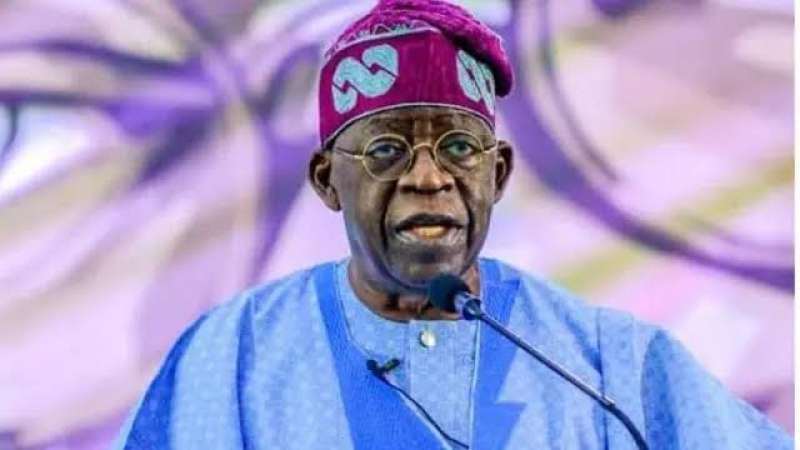


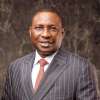


National President of the Academic Staff Union of Universities (ASUU), Nasir Issa-Fagee has explained the specific reasons for which the union embarked on its current industrial action.
According to Fagee, the Federal Government has not only been insincere in its dealings with the union over matters of critical importance to the education sector, it has only honoured two of the nine commitments contained in its 2009 Agreement with the union.
Below is a full statement of ASUU’s grievances against the Federal Government, contained in a press release by Fagee
Gentlemen of the Press,
At the National Executive Council (NEC) meeting of the Academic Staff Union of Universities (ASUU) held at the Olabisi Onabanjo University (OOU), Ago-Iwoye between 29th and 30th June 2013, a number of issues were raised on developments affecting the country’s education system and the Nigerian nation as a whole. These include the lingering crisis at the Rivers State University of Science and Technology (RSUST), the continued violation of the rights of the re-engaged 49 academics at the University of Ilorin, and the non-release of the White Paper on Special Visitation to the University of Abuja. Others include the parlous state of the economy, and Government’s disregard for its agreements with our Union.
The Nigerian Educational Logjam
Gentlemen of the Press, the crisis affecting the Nigerian education sector stems largely from the failure of Nigerian governments, over the years, to boldly address the suffocating challenges, which have stymied the development of the sector. It seems that while the Government is fully aware of the enormity of the infrastructural, personnel and other forms of decay at all levels, it does not have the courage to tackle these challenges for the good of the nation. This attitude on the part of Government has given critics the impression that perhaps Government is more comfortable with the uneducated class than it is with the educated one.
To compound this problem, the impression is often given that we are not in control of our educational policies, as external and other influences have tended to show a national inclination to a weakened intellectual class, which in turn prognosticates a desire for an ideologically barren, colonially dependent and financially deprived structure that is not primed for the growth and development of the system. ASUU challenges the Federal and State Governments, and other stakeholders who have responsibility for the education of the Nigerian people, to show great courage in implementing decisions, policies and agreements produced over time so as to put Nigerian education back on the fast lane. This should lead to the liberation of the Nigerian education system from the cloud of despair and despondency.
Gentlemen of the Press, you will recall that ASUU recently issued a Press Release over the untimely death of some Student Union leaders who were on their way to the University of Uyo. We used the opportunity to call for the common struggle to enthrone democratic governance in our tertiary institutions, with full respect for the rights of students to unionize. While this must be invigorated, we wish to note the unfortunate situation on our campuses today wherein most Student Union leaders, especially at the level of NANS, are possible drop-outs, government agents, Youth Corp members, and other questionable characters being foisted on genuine undergraduates in our universities by politicians and other officials of the state.
As a Union with a stake in the future of our youth and our nation, ASUU shall use her networks to monitor and identify the true status of those who currently parade themselves as student leaders nationwide. We are determined to indigenize student unionism on our campuses. This is the only way the Student Union Movement can genuinely engage issues of non-commercial education with access to all; allocation of at least 26 per cent of yearly budgets to education; declaration of emergency on the whole education system, revitalization of University system, etc.
The Crisis at RSUST
Gentlemen of the Press, you will recall that the crisis at River State University of Science and Technology, Port Harcourt, has become a recurring decimal at our interactions with the media since August 2012 because it is an issue that is very close to our hearts. We remain steadfast in our support and solidarity with our members at RSUST in their principled struggle against poor governance and maladministration being perpetrated by the vice-chancellor and the Governing Council of the University.
It has become more evident that Visitor to RSUST, Governor Rotimi Chibuike Amaechi is brazenly adamant in his refusal to respect the laws establishing the university. The assault and harassment of our members in that university has continued unabated since, because of his determination to stick with the re-appointment of Prof. B. B. Fakae as Vice-Chancellor, after serving an undeserved first term which did not follow due process. The most worrisome dimension is the scandalous involvement of security agents in this show of shame.
Today, at RSUST, there is widespread abuse of university statutes and mind-boggling illegalities: unqualified lecturers teach postgraduate courses while examinations are conducted without respect for requisite requirements. It is disheartening to observe that the Nigerian Universities Commission (NUC) has been playing an active role as an accomplice in the desecration of our University system by giving its approval to these despicable acts at RSUST. NUC’s continued disregard for its statutory responsibility as a regulatory agency, with the responsibility of maintaining the highest level of ethical and academic standard in Nigerian universities, as evident in RSUST, creates a grave cause for concern among the membership of our Union. We call on the National Assembly, through its oversight functions, to conduct a comprehensive investigation into the role of NUC in the shameless acts of executive obduracy at play in RSUST.
Re-engaged University of Ilorin Lecturers
You would recall that 49 lecturers of the University of Ilorin were unjustly sacked for participation in a nationwide strike action of our Union in 2001. Despite the Supreme Court judgment, which revalidated their right to unionize and removed the toga of criminality woven around union activities by Unilorin authorities, their entitlements are still denied them. Three years after the landmark judgment, the University still withholds the salary and allowances of some of the affected staff while their entitlements for sabbatical leave and promotions have not been addressed.
We, once again, call on authorities at Unilorin to desist from gagging our members and pitching academics against themselves. A university scholar cannot creatively engage knowledge in an atmosphere of rancour and sponsored bitterness. Neither can they auspiciously fulfil their obligations as agents of change and transformation in their micro community and the wider context of humanity. We shall, therefore, continue to use all legitimate means available to us to protect and defend the interests of academics at the University of Ilorin.
The Seemingly Intractable University of Abuja Crisis
Gentlemen of the Press, it is becoming crystal clear that the Government is insincere in resolving the crisis at the University of Abuja. As you are possibly aware, the Special Visitation Panel that looked into the monumental crisis that engulfed the university last year submitted its report in September 2012. However, the visitor to the university, President Goodluck Jonathan has continued to vacillate on what to do with the report of the panel. Meanwhile, Uniabuja’s Vice Chancellor, Prof. Samuel Adelabu continues to operate like a lord and master whose words are laws!
ASUU-NEC calls on the Visitor to Uniabuja to release the White Paper on Special Visitation to Uniabuja without further delay. It is only by doing so and implementing the recommendations of the Visitation Panel that the university can be given a new lease of life that befits a 25-year old university.
IMF/World Bank and Nigeria’s Economic Development
Gentlemen of the Press, as you are well aware, the Nigerian economy is fraught with contradictions and inconsistencies. Unfortunately, it is glaringly under the jugular clutches of Western economists, experts and interests who promote an exogenous (external) instead of endogenous (internal) model of development. This model took a firm root when, in “the early 2005 a group of economists, mainly from the Breton Woods Institutions introduced the concept of Inclusive Growth (IG) to replace the erstwhile notion of Growth and Development (GD).” What is most significant about the IG model is its “attempt to run away from the need to accelerate economic development through deliberate policy interventions so as to move millions of humanity out of poverty”.
Having imposed the IG on the country by agents of the World Bank and IMR, it is little surprising that today “economic growth” does not equate to “Nigeria’s development” and prosperity of Nigerians. Key sectors that ought to provide the planks for development and prosperity such as education, power/energy, agriculture and health are in dire state. Government at all levels rather hoists frivolities over the essentials. As recently observed by Prof. Akpan Ekpo, “The implementation of the Transformation Agenda does not preclude the fact that the economy today is characterized by high and rising rate of unemployment particularly among the youths, decayed public school system at all levels, lack of quality public health system, massive corruption, security challenges, among others”.
ASUU-NEC rejects externally imposed models of economic growth that discounts human elements in the equation. The Bretton Woods experts can only further under-develop Nigeria and pauperize her citizens. This is because IG “stresses productive employment rather than income redistribution”; implying that the tiny rich Nigerians will continue to get richer while the mass poor will become poorer.
A non-insulated economy will only be a subservient economy. The solutions to our problems as a nation must be wholly Nigerian-based, Nigerian-driven and Nigerian-centred. The current reliance on the veiled but obvious drivers of our “envelop economy” being presided over and supervised by agents of the IMF/World Bank will only leave us in a worse state than the IBB era. The current jigsaw dilemma of economic blueprints of NEPAD, Vision 20 2020, Transformational Agenda, etc. are bound to fail in so far as they are not based on any indigenous economic paradigm.
2009 FGN/ASUU Agreement
You will recall that ASUU declared a total, indefinite and comprehensive strike on 4th December 2011 in order to prevail on government to sincerely and judiciously implement the 2009 Agreement it freely entered into with our Union. Specifically, ASUU identified the following key areas that were yet to be implemented:
i. Funding requirements for Revitalization of the Nigerian Universities
ii. Federal Government Assistance to State Universities
iii. Establishment of NUPEMCO
iv. Progressive increase in Annual Budgetary Allocation to Education to 26 per cent between 2009 and 2020
v. Earned Allowances
vi. Amendment of the Pension/Retirement Age of Academics on the Professorial cadre from 65 to 70 years
vii. Reinstatement of prematurely dissolved Governing Councils
viii. Transfer of Federal Government Landed Property to Universities
ix. Setting up of Research Development Council and Provision of Research Equipment to laboratories and classrooms in our universities.
However, the strike was suspended on 2nd February 2012. As our Union noted then, “NEC decision had been taken in the interest of the revitalization of the Nigerian Universities. To achieve these goals, ASUU expects the government to fulfil its obligation in respect of funding and all other matters contained in its offers.” When the strike was suspended, ASUU drew attention to the fact that the unimplemented agreement was due for renegotiation in June 2012.
Following the suspension of the strike, government responded by setting up a Committee via TETFund to assess the needs of Nigerian Universities in terms of infrastructure and required quantum of fund. Government also mandated the Implementation Monitoring Committee (IMC) to document and compute the financial implication of implementing the 2009 FGN/ASUU Agreement. At ASUU’s insistence, many of these conditions have now been met. Yet, Government has continued to dilly-dally on the implementation.
Out of nine items earlier highlighted, only two of the commitments — reinstatement of Governing Councils and the Amendment of Retirement Age Act — were met. For the past 16 months, several steps, including formal and informal consultations, meetings, personal contacts, have been employed to avert resumption of the suspended action. We seem to have now exhausted all available options. Our members cannot understand why a government finds it difficult to fulfil an Agreement voluntarily entered into with the Union in 2009 as well as the MoU that was introduced following ASUU’s protest against government’s demonstration of bad faith in 2012.
Gentlemen of the Press, one key aspect of the Agreement where Government has demonstrated insincerity is on the Earned Academic Allowances (EAA). Components of these allowances include responsibility allowances to Heads of Department, Deans of Faculties and other functionaries of the university system.
After the MoU of 26th January 2012, Government accepted in principle to pay EAA. As if to demonstrate its commitment, the IMC under the chairmanship of Dr. Wale Babalakin, was assigned the responsibility of working out practical and sustainable ways to do this. When the IMC submitted its recommendations on this aspect of the Agreement, which has run into almost four years, however, the Government suddenly began to give excuses. And, finally, it set aside the recommendations of the IMC on the account of financial difficulties; these were recommendations that came out of serious engagements with officials from relevant Ministries, Departments and Agencies (MDAs). Our Union sees this sudden reversal of gears as a betrayal of trust.
From all indications, it appears Government is yet unprepared to address the challenges facing the Nigerian university system with the urgency that is required. This trend is dangerous, as it constitutes a threat to the relative peace in Nigerian universities. There can be no justification for Government’s position given what all Nigerians know about the management of the nation’s resources. It is evident that Government is highly deceptive and is not interested in sustaining relative stability in our universities. If Government can betray our Union on the 2009 Agreement, where is the basis of trust for the impending review that was due for 2012?
It is in the light of the above, especially having exhausted all other options, that ASUU-NEC at its meeting in Olabisi Onabanjo University, Ago-Iwoye, between 29th and 30th June 2013 resolved to call out all its members on a nationwide strike action beginning from Wednesday, 3rd July, 2013. The strike action is comprehensive and total. Our members shall withdraw their services until Government fully implements all the outstanding aspects of the 2009 Agreement, and commences the process of review of the same Agreement.
Concluding Remarks
Gentlemen of the Press, the time has come to rise in defence of the true liberation of our country. We believe this liberation must begin with education, which is a veritable weapon for socioeconomic transformation. The IMF/World Bank and their local collaborators would make Nigerians believe that “basic” or little education is good enough for the children of the poor. It is a ruse.
Our Union counts on the renewed support of the media in challenging agents of underdevelopment who deny less-privileged Nigerians quality higher education, health, employment and other life-transforming elements of development. We equally invite labor activists, students, traders, professional groups, civil society organizations and other progressive segments of the public to join our determined efforts to save Nigeria from her captors.
Thank you for your kind attention.
Nasir Issa-Fagee
National President, ASUU
 |
|

Shettima at UNGA: Africa Demands a Seat at the Global Table
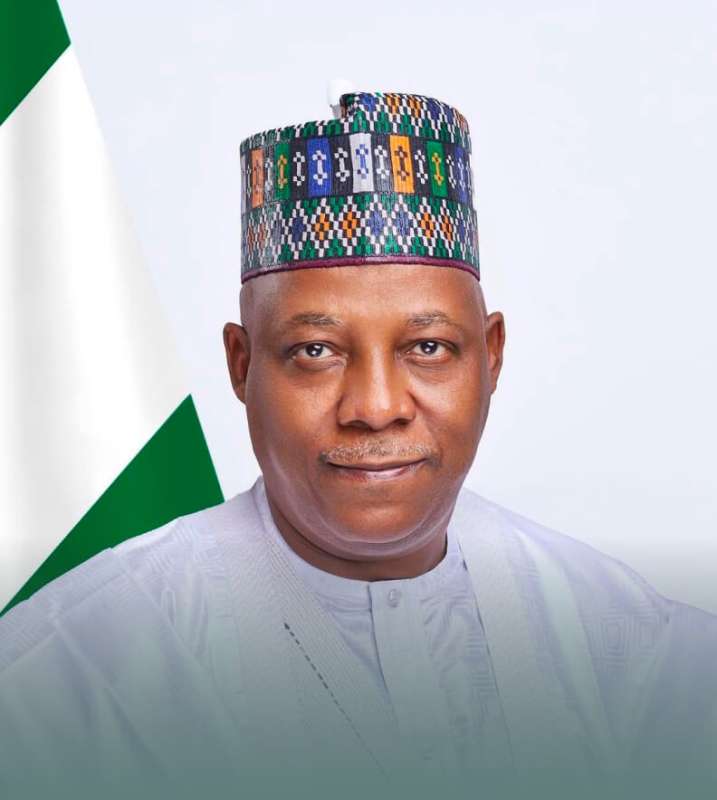
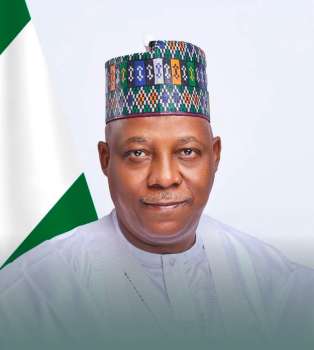
Nigeria has taken its campaign for a bigger African voice in global affairs to the heart of the United Nations, with Vice President Kashim Shettima demanding sweeping reform of the UN Security Council and permanent representation for Africa.
Delivering President Bola Ahmed Tinubu’s address at the **81st United Nations General Assembly** in New York on Thursday, Shettima said the international system created after World War II could no longer adequately reflect the realities of the modern world.
Nigeria called for **at least two permanent seats for Africa**, with the full rights and responsibilities of permanent membership, including veto rights for as long as the veto remains part of the Security Council, alongside **five non-permanent African seats**.
The demand puts Africa's long-standing campaign for greater representation at the centre of Nigeria's message to world leaders.
1945 cannot define 2026’
The Nigerian delegation argued that the distribution of power established in 1945 has left Africa under-represented in the institution responsible for some of the world's most consequential decisions on peace and security.
For Abuja, the issue is not simply about seats at the UN. It is about giving African countries a greater role in decisions that directly affect the continent.
Nigeria anchored its position on the **Ezulwini Consensus**, the African Union's common position on Security Council reform.
CONFLICTS: NIGERIA CALLS FOR DIPLOMACY
Shettima's address also turned to the conflicts confronting the international community.
Nigeria called for stronger diplomacy, respect for international law and protection of civilians, while urging greater international efforts to resolve conflicts, including the crisis in Sudan.
The Nigerian position was that lasting peace cannot be secured solely through military action and that diplomacy, dialogue and negotiated settlements remain essential tools for resolving conflicts.
TERRORISM: ‘NO COUNTRY CAN FIGHT ALONE’
With Nigeria continuing to confront terrorism and other forms of transnational crime, the address placed international security cooperation high on the agenda.
Nigeria called for stronger intelligence-sharing, action against terrorist financing and greater cooperation to prevent illicit weapons from crossing borders.
But Abuja also linked security to development, pointing to education, economic opportunity, accountable governance and protection of citizens** as important elements of long-term stability.
AFRICA’S WEALTH: FROM RAW MATERIALS TO INDUSTRIAL POWER
The Nigerian message went beyond politics and security.Tinubu's address, delivered by Shettima, called for Africa to transform its vast natural resources into industrial and economic opportunities by expanding **local processing, manufacturing, technology and value-added production**.
Nigeria also highlighted the African Continental Free Trade Area as an opportunity to expand intra-African trade and build stronger regional supply chains.
The message was clear: Africa's resources should generate greater value, jobs and investment within the continent rather than being exported largely in raw form.
CLIMATE AND DEVELOPMENT
Nigeria also reaffirmed its commitment to climate action, including its 2060 net-zero target, while stressing the need for financing, technology transfer and international support for developing countries.
Abuja argued that climate action and economic development should be pursued together, particularly in countries still struggling to provide reliable energy and economic opportunities for rapidly growing populations.
THE NIGERIAN MESSAGE
From the UN podium in New York, Shettima delivered a message that combined Nigeria's foreign-policy priorities with its wider vision for Africa: **greater representation, stronger security cooperation, economic transformation and a more inclusive international system.**
For Nigeria, the Security Council reform campaign remains a central part of that agenda.
The demand from Abuja is straightforward: **Africa should have a permanent voice in the room when decisions affecting international peace, security and global governance are made. And Nigeria says it intends to keep making that case.
News
CBN Slashes Interest Rate to 23% in Major Policy Adjustment
The Central Bank of Nigeria (CBN) has reduced its benchmark interest rate from 26.5 per cent to 23 per cent, marking a significant shift in its monetary policy direction.
CBN Governor, Olayemi Cardoso, announced the decision on Tuesday following the conclusion of the Monetary Policy Committee’s (MPC) 307th meeting in Abuja.
According to Cardoso, the committee reviewed developments in both the global and domestic economies, assessed emerging risks and considered their potential implications for monetary policy before reaching its decision.
“The Committee decided as follows: reset the monetary policy rate at 23 per cent,” the governor said.
The latest move represents a 350-basis-point reduction in the Monetary Policy Rate (MPR). It follows two consecutive MPC meetings at which the rate was left unchanged, after the committee lowered it by 50 basis points in February 2026.
In addition to cutting the MPR, the committee adjusted the standing facility corridor to +50 and -300 basis points around the new benchmark rate.
However, the CBN retained existing Cash Reserve Requirement (CRR) levels at 45 per cent for deposit money banks, 16 per cent for merchant banks and 75 per cent for non-TSA public-sector deposits.
Cardoso explained that the changes were designed to improve the effectiveness of monetary policy by strengthening the transmission of policy decisions through the financial system.
He said the adjustment was also part of efforts to restore the MPR as the primary signal of the CBN’s monetary policy and improve the operation of the monetary policy framework.
According to the governor, the MPC viewed the recalibration as an operational adjustment rather than a fundamental shift in the bank’s monetary policy stance.
“The Committee emphasized that the duration of the corridor does not constitute a change in the current monetary policy stance, but rather an operational reset to enhance the effectiveness of monetary policy and support the transition to an inflation targeting framework,” he said.
The committee also noted ongoing efforts by the CBN to strengthen its monetary policy implementation framework. Cardoso said transaction-based operational benchmarks had improved the transparency of money-market operations.
The MPC consequently concluded that resetting the MPR and adjusting the policy corridor would bring the monetary policy framework more closely in line with prevailing market conditions.
The committee said the changes are expected to improve policy transmission and reinforce the MPR’s role as the central benchmark for monetary policy.
Members further maintained that the latest adjustments should be viewed primarily as an operational realignment of the framework and not, in themselves, as a change in the underlying monetary policy stance.
Business
In The Spotlight
Editorial:Trump @ UNGA: Power Is Not a Substitute for Strategy
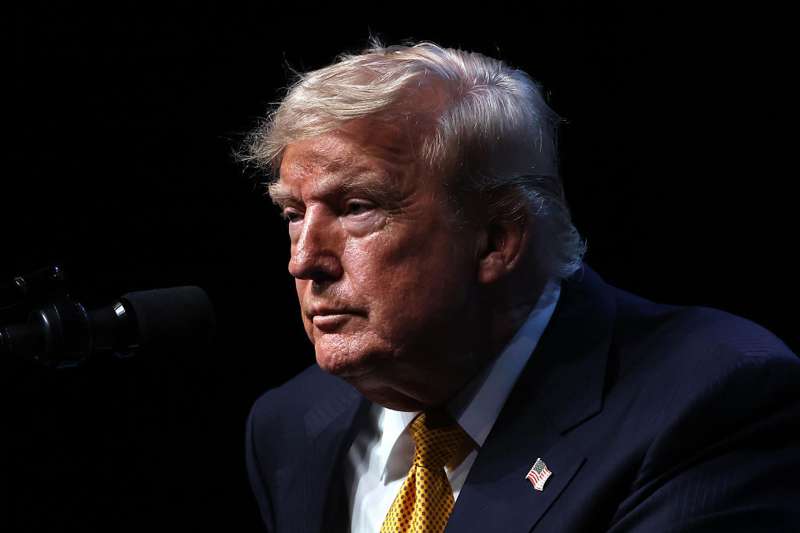
President Donald Trump came before the United Nations this week with a message that has defined much of his second presidency: The United States is powerful, it intends to use that power, and it will not permit international institutions to place limits on American sovereignty.
There was little ambiguity in the message. Trump celebrated military strength, demanded greater control over America’s borders, challenged international institutions and portrayed American technological leadership as a strategic necessity. On Iran, Gaza, immigration, the International Criminal Court and artificial intelligence, the president returned repeatedly to the same principle: Nations must defend their own interests, and the United States must remain free to act.
That is a coherent philosophy. But coherence is not the same as effectiveness.
The question raised by this speech is not whether America should be strong. No serious foreign policy can begin from the premise that American power is irrelevant. The question is what that power is for — and whether it is being used in ways that make the United States more secure over the long term.
Trump's remarks on Iran illustrated the dilemma.
He reaffirmed that Iran cannot be allowed to obtain a nuclear weapon and paired the possibility of diplomacy with warnings of devastating military consequences.
Deterrence has always depended partly on credibility. But credibility is not measured only by the willingness to threaten force. It is also measured by the ability to achieve a political outcome once force has been used.
Wars can begin with clear objectives and end with consequences no government anticipated. The history of American foreign policy offers ample evidence that military superiority does not automatically translate into political control.
That is why diplomacy cannot simply be regarded as the alternative to strength. At its best, diplomacy is one of the instruments through which strength is converted into durable agreements.
The same distinction matters in Trump's approach to the United Nations.
The president has argued that international institutions have become too costly, too bureaucratic and too willing to intrude upon national sovereignty. His administration has pursued reductions in America's financial and institutional commitments to the United Nations.
There is nothing inherently wrong with demanding accountability from an international organization. The United Nations deserves scrutiny. Its bureaucracy can be inefficient, its member states often disagree and its institutions can fail to prevent the very conflicts they were created to address.
But the choice is not simply between an ineffective United Nations and an unconstrained America.
International institutions exist in part because some problems cannot be solved effectively by individual nations acting alone. Nuclear proliferation is one. Global pandemics are another. Artificial intelligence increasingly belongs on that list.
Trump's comments about AI therefore deserve particular attention. He emphasized American technological leadership and warned against international regulation that could restrain innovation.
The United States has obvious reasons to remain at the forefront of AI development. But technological leadership and international coordination are not necessarily opposing objectives. The challenge is to develop rules that protect security without freezing innovation.
That requires American leadership, not American isolation.
The president's immigration argument followed the same pattern. He presented control of the border as an essential expression of national sovereignty and rejected the notion that international norms should prevent governments from determining who may enter their territory.
A sovereign nation plainly has an interest in controlling its borders. But sovereignty also carries responsibilities. The United States, like other countries, must reconcile border enforcement with its legal and humanitarian obligations.
The difficult work of governing begins where slogans end.
That is ultimately what was missing from the most sweeping parts of Trump's speech: not conviction, but attention to the institutional machinery required to turn conviction into lasting results.
America can impose costs on adversaries. It can withdraw from agreements. It can reduce contributions to international organizations. It can threaten overwhelming force. It can use its enormous economic and technological advantages.
But power has a second dimension that is easier to overlook: the ability to persuade allies, maintain coalitions, preserve diplomatic channels and build institutions capable of surviving changes in leadership.
The United States did not become the world's leading power merely because it possessed the world's strongest military. It built alliances. It established institutions. It cultivated economic relationships. It persuaded other countries that American leadership could serve interests beyond America's own.
Trump's speech represents a different emphasis.
It places sovereignty before institutions, pressure before accommodation and national interest before international consensus.
There is a legitimate debate to be had over whether the postwar international system has become too cumbersome, too expensive or insufficiently accountable. But reforming that system and weakening it are not the same thing.
The distinction will matter greatly in the years ahead.
A stronger America is not necessarily an America that stands alone. Nor is international cooperation synonymous with surrendering sovereignty.
The enduring challenge of American foreign policy is to combine power with restraint, independence with alliances and national interest with the recognition that American security is inseparable from the wider world.
Trump's speech made clear which side of that debate he occupies.The more consequential question is what happens next.
History will not ultimately judge the speech by its applause lines, its threats or its declarations of American strength. It will judge the policy that follows — and whether that policy produces a world in which the United States is not merely more powerful, but more secure.
Power matters. But power, by itself, is not a strategy.
In The Spotlight
Who Is in Charge? Tinubu Is in Paris, Shettima Is in New York
By now, Nigerians deserve more than explanations. They deserve clarity. President Bola Ahmed Tinubu is in Paris. Vice President Kashim Shettima is in New York.
And Nigeria is in Abuja, Lagos, Kano, Port Harcourt, Maiduguri and everywhere else Nigerians are dealing with the daily business of surviving, working and waiting for government to deliver. So, a simple question is becoming increasingly difficult to avoid:Who is in charge?
Before anyone dismisses that question as opposition politics, let us establish the facts. Tinubu left Nigeria on August 30 for what the Presidency described as a working vacation. He subsequently moved from London to Paris and, on September 21, the Presidency announced that he had extended his stay by a few days and would return at the weekend.
Shettima left Nigeria on September 20 for New York, where he is representing the President and leading Nigeria's delegation to the 81st United Nations General Assembly.
The government says there is no vacuum. It says Tinubu remains in contact with officials at home and continues to direct the affairs of government. It also says Shettima has been given the President's mandate to represent Nigeria at the UN.
Fine. But that does not make the question disappear.It makes the question more important.
A country cannot run on “trust us”
Government is not supposed to operate on whispers, assumptions or political reassurance.It operates through institutions.
It operates through constitutional authority. It operates through clearly defined responsibilities. And when the President is abroad for an extended period while the Vice President is also outside the country, Nigerians have every right to ask where executive authority is located and who is exercising it.
This is particularly relevant because Nigeria's Constitution provides a specific mechanism for a President who is proceeding on vacation or otherwise unable to discharge the functions of office.
That mechanism exists for a reason.It is designed to prevent uncertainty.It is designed to prevent a vacuum.It is designed toensure that, at every moment, Nigerians know who is constitutionally responsible for the presidency.
So why should Nigerians have to debate the issue?
The Presidency says everything is fine
The government insists that there is no disruption to governance.The Presidency says Tinubu has remained engaged from abroad. It points to decisions taken by the President while away and says the Vice President's trip to New York is an official assignment.
There is nothing inherently unusual about a Nigerian president travelling abroad.There is nothing unusual about a vice president representing the country at the United Nations.
The problem is the combination.The President is away. The Vice President is away. And the country is being told that everything is perfectly normal.
Perhaps it is.But if it is, then proving it should be easy.Tell Nigerians clearly who is exercising presidential authority.
Tell Nigerians whether the constitutional procedure has been followed.Tell Nigerians who is accountable for presidential decisions while both men are outside the country.This should not be difficult.
Leadership is also about presence
There is a difference between saying government is functioning and demonstrating that leadership is present.Nigeria is not short of challenges.
The cost of living remains a major concern. Security remains a national issue. Unemployment and economic hardship continue to affect households. Nigerians are demanding better public services and greater accountability.
At such a moment, leadership cannot be reduced to whether instructions can be transmitted from one continent to another.
Leadership is also about visibility. It is about being present when the country needs reassurance. It is about being accessible when difficult questions arise. It is about giving citizens confidence that somebody is firmly in control. A president does not have to sit permanently in Aso Rock to govern Nigeria. But Nigerians should never be left wondering whether anyone is sitting firmly at the controls.
Paris is not Abuja
There is another uncomfortable truth.Nigeria's political class has become remarkably comfortable governing from airports, hotel suites, foreign capitals and conference rooms.The rest of the country does not have that luxury.
The Nigerian worker cannot take a working vacation from inflation.The small business owner cannot take annual leave from electricity costs.The parent struggling with school fees cannot postpone the bills until the President returns. The young graduate without a job cannot simply wait for the government to reconnect with reality.
For ordinary Nigerians, the country does not go on vacation.That is why the optics matter.While the President is in Paris and the Vice President is in New York, millions of Nigerians remain at home confronting the consequences of government policy every day.
This is bigger than Tinubu
The danger is that this debate becomes another partisan shouting match. Supporters will say the President is working.
Opponents will say the government has abandoned its responsibilities. Both sides can shout themselves hoarse.
But the Constitution does not work by volume. The question is not whether Tinubu's supporters are satisfied.The question is not whether his opponents are outraged.The question is whether the constitutional chain of executive authority is clear. That is an institutional question, not a party question. And the National Assembly has a role to play in ensuring that Nigerians are not left guessing.
Nigeria deserves an answer
There is something deeply unhealthy about a democracy in which citizens have to ask social media, political parties and television commentators who is exercising presidential power.
The answer should be official.It should be constitutional.It should be unambiguous.If Tinubu is fully exercising the powers of President from Paris, say so.If Shettima is exercising presidential functions under the constitutional provisions governing presidential absence, say so.If there is no constitutional problem, explain precisely why.
But please, stop treating a legitimate question as an attack on the government.A government confident in its constitutional position should welcome clarity.
Who is in charge?
This is ultimately not about Paris.It is not about New York.It is not even primarily about Tinubu or Shettima. It is about the Nigerian presidency. A republic of more than 200 million people should not have an invisible question mark hanging over its executive authority.
Tinubu can travel.Shettima can travel.Government can continue. But constitutional responsibility must remain visible.
Because when both the President and Vice President are outside the country, Nigerians should not have to look at a map to figure out where their government is.
They should be able to look at the Constitution.And the answer should be unmistakable.Who is in charge? Nigeria deserves to know.
By Emmanuel Emeke Asiwe, Publisher/Editor-in-Chief