



















There has been an outpouring of varied reactions since yesterday’s announcement of a state of emergency in Adamawa, Borno and Yobe states by President Goodluck Jonathan.
Opposition Action Congress of Nigeria (ACN) described it as lacking in original thinking and therefore asked the National Assembly to reject it. It argued that while the president was right in expressing outrage over the mindless killings and wanton destruction by the insurgents, he was wrong in proposing more of the same measures that have failed to yield results.
”If the medicine given to a patient has not cured his or her illness, is it not futile to prescribe more of the same medicine for the patient? If the declaration of a state of emergency in 15 local government areas in four states in 2011 has not curbed the activities of the insurgents, why extend such measure to other areas? If the use of force in the affected states has failed to curtail the activities of the insurgents, why send in more troops?” ACN’s National Publicity Secretary, Alhaji Lai Mohammed queried in a statement issued in Abuja on Wednesday.
”There is nothing new in the president’s action. It is more of the same: deployment of more troops to the affected states and the use of tougher, scorched-earth tactics against the insurgents. In the first instance, this stepped-up militarization of the states amounts to an asymmetric use of force in an environment where the insurgents operate within a civilian population, hence it will ultimately be counterproductive as the death toll will continue to mount while the civilian population — who will be caught in the cross fire — will be alienated.
”Secondly, the president should go ahead and disband the committee he recently inaugurated and saddled with reaching out to the insurgents, because by opting to flood the states with more troops under an ill-advised emergency rule, he has succeeded in pulling the carpet from under the committee’s feet. Who negotiates genuinely with a gun to his head? The committee’s job is over; the members can as well pack up and go home.
”Thirdly, one hopes the president’s action is not linked to the politics of 2015. With the three states militarized, there can neither be electioneering campaign nor voting there. We had warned earlier that as 2015 approaches, the Jonathan Administration will increasingly take measures that will make it impossible to hold election in many states The over militarization of some states in the north, the plan to destabilise the South-west using slush funds from the so-called oil pipeline protection contract and the infantile threats from some Niger Delta militants seem to be part of this plan.
”Fourthly, what happens if and when the declaration of emergency rule fails to stem the violence, now that the president has gone for broke and played his last card? In view of the reasons stated above, we hereby reject the declaration of emergency rule in the three states of Adamawa, Borno and Yobe, and we call on the National Assembly to also reject it and not allow itself to be used to rubber stamp a declaration that is largely cosmetic.
ACN reiterated earlier statements that the Boko Haram crisis has its roots in years of bad governance that have produced an army of unemployed,
unemployable, disenchanted and demoralized youths who are now ready hands and willing tools for those seeking to perpetrate violence.“The unprecedented corruption across the land, as well as injustice and extra-judicial killings are also fuelling this crisis,” it added.
“While the short-term solution to the Boko Haram crisis should be a combination of dialogue and a minimal use of force, the long-term measure to deny Boko Haram of willing recruits and make the sect unattractive to anyone is to ensure that the State can adequately meet the yearnings and aspirations of its citizens.
“And the only way to do this is through good governance that delivers the dividends of democracy to the citizens; stamps out corruption and ensures a just and equitable society. Boko Haram is like a bad tree. To kill it, it must be uprooted, instead of trimming its branches. The measures announced by President Jonathan on Tuesday will not deliver the killer punch to this reprehensible sect. There is need to think out of the box.”
Responding, the Peoples Democratic Party described the reaction of the Action Congress of Nigeria to the declaration of state of emergency in three states of the North East as that of a political party speaking from either a diseased and confused state of mind: a blackmailer who doesn’t mind doing the trifle to remain relevant, or a political party actively conniving at this mindless war on Nigeria.
Chief Olisa Metuh in a press statement, said,“Yesterday, the ACN, the sole repository of Solomonic wisdom, who was against Amnesty to insurgents, who indeed described the Federal Government in unprintables has today turned a proselyte of amnesty and dialogue.”
“Few things are possible. The ACN and their cohorts in the opposition are behind insurgents and therefore must subvert every measure taken by government to tackle escalating insurgency. We recall that the opposition boasted recently that they would end the Boko Haram scourge within two months of their presidency. There is no smoke without fire.”
“The other is that the opposition sees the escalating terror as short-cut to power. Recall also that the statements of the leaders of the opposition at the eve 2011 presidential election gave birth to violence which has snowballed today into terrorism.”
“We therefore call on the leaders of the opposition to remove the mask on their faces and publicly declare their stand,” a statement from the National Publicity Secretary of the PDP, Chief Olisa Metuh, said.
“But we must educate the ACN,” the statement continued. “The state of emergency does not run contra to the spirit and the assignment of the presidential committee on amnesty. The committee will take the job to its logical, fruitful end while the deployment of more troops under the emergency is an irreducible necessity to stem a determined war on the nation.”
” May we also educate the ACN that a just and equitable society cannot be achieved over night in the same manner, good governance is not an already- made commodity waiting on the counter. We wish to emphasize that in over a decade, the PDP has not only rebuilt the decayed fabrics of the nation but has taken recognizable and commendable steps in the direction of good governance. We shall remain committed to that despite distractions.”
“What is new in what the President has done if we must again tell the ACN, is that President Jonathan is a core democrat, who appreciates the core values of democracy and who believes firmly that democracy must be practiced in Nigeria in its undiluted form. (Perhaps the ACN had waited for the dissolution of political structures so as to stretch further it’s blackmail) What is new is that the President by offering amnesty has opened the window for insurgents with genuine agitations to access redress while stopping intransigent criminality from consuming the nation.”
In his own reaction, President of the Christian Association Nigeria (CAN), Pastor Ayo Oritsejafor has described the declaration as a justified action and a vindication of CAN’s position that negotiation with terrorists will always end up a futile exercise.
“We are being vindicated that no reasonable agreement can be reached with terrorists,” he said in a statement release by Kenny Ashaka, his spokesperson.
According to Oritsejafor, not dissolving the political structures coupled with the retention of the office of the governors are signposts that President Goodluck Jonathan is a democrat and that the action of the president is also an indication that he is primarily concerned with the issue of human rights abuses and the need to secure the territorial integrity of Nigeria.
While saying that the state of emergency declared in the three states is not unexpected, he called on the three governors to reciprocate the kind gesture by cooperating with those charged with the responsibility of bringing down the insurgency, just as he called on all Nigerians of goodwill, in and outside the three states, to join hands with the Federal Government in dealing with the Boko Haram issue.
Also reacting, Deputy President of the Senate, Ike Ekweremadu argued that the president's declaration was a necessary step to curtail the excesses of the Boko Haram insurgents.
He commended President Jonathan for following the constitutional prescriptions that provided that all elected structures should remain in cases of emergency. He said the Jonathan example would correct previous misinformation concerning state of emergency as it was implemented unconstitutionally before now.
“Importantly, I commend the president for abiding strictly with constitutional provisions on State of Emergency by taking only the requisite extraordinary measures to contain the insurgence and insecurity in the States without dismantling the elected democratic structures,” he said.
“While a State of Emergency is welcome as a first aid in tackling the security challenges, my stand has always been that we have to reappraise how we organize our national security as a federal entity, especially our policing system to guarantee the security of lives and property in every part of the country.”
Human rights lawyer, Barrister Festus kenyamo, who was one of the first to react to the president’s declaration, described it as a step that has long been overdue.
“The bloodletting in these states left the president with no other option but to take this extraordinary step. This step must be appreciated in the light of the refusal of the insurgents to even dialogue with the Federal Government,” Kenyamo wrote in a statement to Huhuonline.com.
“The primary duty of any government is to protect lives and properties and it is only right that government should dig deep to find a lasting solution to this ceaseless carnage.”
However, he argued that there are strong caveats that must be issued to government in respect of the extraordinary action:
“That government must not in any way politicize this action. It is constitutionally correct that the President did not attempt to suspend the Governors from office as nothing in Section 305 of the 1999 Constitution (as amended) gives him such a power.
“What Obasanjo did in the past in suspending governors through a declaration of a State of Emergency was illegal, unconstitutional, null and void. Unfortunately, none of the governors had the mettle to challenge him in court.”
He urged the Military to be careful at all times not to trample on the fundamental rights of innocent citizens in these states, so that they do not become the scourge rather than solution.
“The president must follow all the steps required in Section 305 of the 1999 Constitution as amended to legitimize his action,” he added.
“That the moment calm is restored, the troops must return to the barracks so as not to give the Military unholy ideas about their role in our democracy. We all owe it a duty to assist government to restore law and order in the country. It is for our overall benefit.”
Also, the public Interest Lawyers League described the move as a welcome idea. In a statement by its president, Abdul Mahmud, the group argued that although the declaration has come on the heels of the declaration of state of emergency in 15 local government areas across the North-East almost two years now, it came almost too late considering the insecurity challenges ordinary citizens contend with.
“The declaration of state of emergency by the president, which in the purview of Section 305 (2), (3) (c), (d) and (f) of the Constitution of the Federal Republic of Nigeria, 1999 (as amended) guarantees the president the powers to so declare, will allow our soldiers to gain footholds on those parts of our sovereign territory that have been seized by insurgents in Borno and Yobe states, for instance,” he said.
“We would however be disturbed if in discharging their combat remits, soldiers abuse the fundamental rights and liberties of citizens of states affected by the declaration as we have seen in Baga and Bama.”
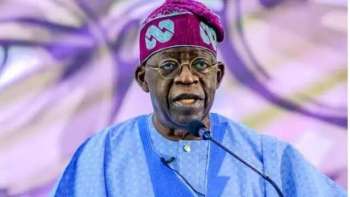
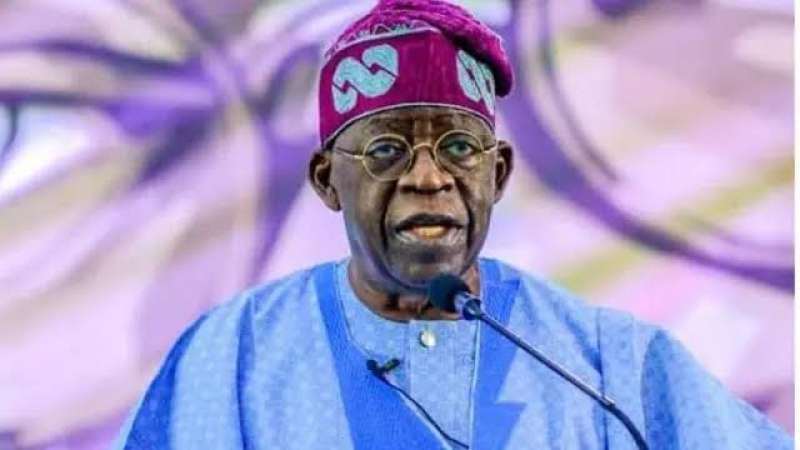
However, National Leader of ACN and former Governor of Lagos State, Chief Bola Ahmed TinubuIt disagreed, saying it is now abundantly clear that President Goodluck Jonathan has finally bared his fangs confirming what was widely speculated.
“By declaring a state of emergency in Borno, Yobe and Adamawa, he has intimidated and emasculated the governors of these states. We are witnessing a dangerous trend in the art of governance and a deliberate ploy to subvert constitutional democracy,” he said.
“The body language of the Jonathan administration leads any keen watcher of events with unmistakable conclusion of the existence of a surreptitious but barely disguised intention to muzzle the elected governments of these states for what is clearly a display of unpardonable mediocrity and diabolic partisanship geared towards 2015.
“Borno and Yobe states have been literally under armies of occupation with the attendant excruciating hardship experienced daily by the indigenes and residents of these areas. This government now wants to use the excuse of the security challenges faced by the Governors to remove them from the states considered hostile to the 2015 PDP/Jonathan project.”
He further stated that this administration will be setting in motion a chain of events the end of which nobody can predict, adding that experience has shown clearly that actions, such as this one under consideration, often give root to radical ideologies and extremist tendencies, a direct opposite of the intended outcome of unwarranted and unintelligent meddlesomeness.
“The present scenario playing out in the country reminds one of the classical case of a mediocre craftsman who continually blames the tools of his trade for his serial failure but refuses to look at his pitiable state with a view to adjusting,” he added.
“It has become crystal clear, even to the most incurable optimist, that the country is adrift. That the ship of the Nigerian state is rudderless is clearly evident in the consistent and continual attacks ferociously executed by elements often referred to as the insurgents in some northern states of the federation, particularly Borno and Yobe states respectively. Indeed, no part of the country is immune from the virulent but easy attacks, veritable indices of a failing state.
“Unfortunately, the tenuous and uncoordinated approach adopted by this government betrays a grossly incompetent disposition which stands at variance with current realities in the country, nay the international community where acts of terrorism are engaged and contained. No Governor of a state in Nigeria is indeed the Chief Security Officer. Putting the blame on the Governors, who have been effectively emasculated, for the abysmal performance of the government at the centre which controls all these security agencies, smacks of ignorance and mischief.
“Terrorist acts are perpetrated routinely and the government at the centre appears incapable of stemming the tide of the horrendous crimes unleashed on the hapless populace. The considerable ease, with which lives and property are destroyed on a daily basis, should excite deep introspection on the part of a government truly desirous of finding a lasting solution. The Constitution provides that the safety and welfare of citizens shall be the primary purpose of having that structure of any political leadership in the first instance. This Government, through acts of omission and commission, has fallen far short of expectation. It actively encourages schisms and all manner of divisive tendencies for parochial expediency. Ethnicity and religion become handy weapons of domination. Things have never been this bad.”
Tinubu described the response to the pervasive chaos in the Northern region of the country as characterised by militarisation, mass arrests and extra judicial killings by the Joint Task Force (JTF), a convenient euphemism for an army of occupation seemingly set loose on the people of the localities concerned. He added that the tenor of the State of Emergency declared by the Federal Government portends danger for the polity.
“The full militarisation of security operations in these states will compound the already tense situation. Both local and international media are awash with news of reckless attitudes of the invading forces. The fact that security operatives are killed cheaply and reprisals from the state find expressions in organised pogroms in the immediate communities is sure evidence of a government, which lacks basic understanding to appreciate the enormity of the current security challenges. If development is about the people, all measures put in place for the sustenance and maintenance of the super-structure of the society must take into cognisance local contents.
“It is evident from the grim experiences in recent times that this government has failed, or does not know that it is necessary for it to avail itself of the benefits accruable from exchange of ideas and notes on the latest in terms of technology and human resources among nations of the modern world, especially those which have been fighting terrorist organisations over the years, on the most effective mode of combating this menace.
“Technologically advanced countries of the world will never discard the idea on the need for the establishment of an effective local intelligence outfit. Our suggestions along this path have always been met with suspicion and acerbic criticisms from both the informed and the ignorant alike. A government which stoutly defends its opposition to the decentralisation of the police force from its present over-centralised command structure is already experimenting with all manner of means patently extra-legal.
“The massacres of local communities attendant upon the attacks on security agents by unknown elements will further alienate the people who should, ordinarily, partner with the government in securing their immediate environments. An army which invades a community maiming, raping and killing defenceless civilians will end up radicalising the youths whose parents and young ones have been wiped out most cowardly and recklessly.
“This government should concentrate more on encouraging the development of local intelligence which will, inexorably, lead to the practice of true federalism. Adopting the use of excessive force against those perceived as harbouring terrorists does not portray this government as possessing the wherewithal to find abiding solutions to the lingering security challenges.”
He went on to brand the president’s pronouncement as seeking to abridge or having the potential of totally scuttling the constitutional functions of governors and other elected representatives of the people, which will be counterproductive in the long run.
“A State of Emergency already exists in the states where JTF operates. Residents of these communities live in constant fear. Their rights are violated with impunity under the guise of searching for terrorists in their respective domains. Hiding under some nebulous claims which border on the intractability of the security challenges posed by Boko Haram or some acclaimed traditionalists who have killed some policemen to render ineffective the constitutional powers vested in elected Governors and other representatives of the people, perceived as not amenable to manipulation for the 2015 project amounts to reducing serious issues bordering on the survival of the country to partisan politics.,” he added.
“Let all those who love this country genuinely advise the federal government not to tinker with the mandates of these Governors under any guise. It is a potentially destructive path to take. If security of a society is about the protection of lives and property of the citizenry, the involvement of the people is a sine qua non to effective intelligence gathering. Any measures put in place which alienate the people, in particular their elected representatives, should be considered as fundamentally defective by every right thinking person in the country.”
 |
|

Shettima at UNGA: Africa Demands a Seat at the Global Table
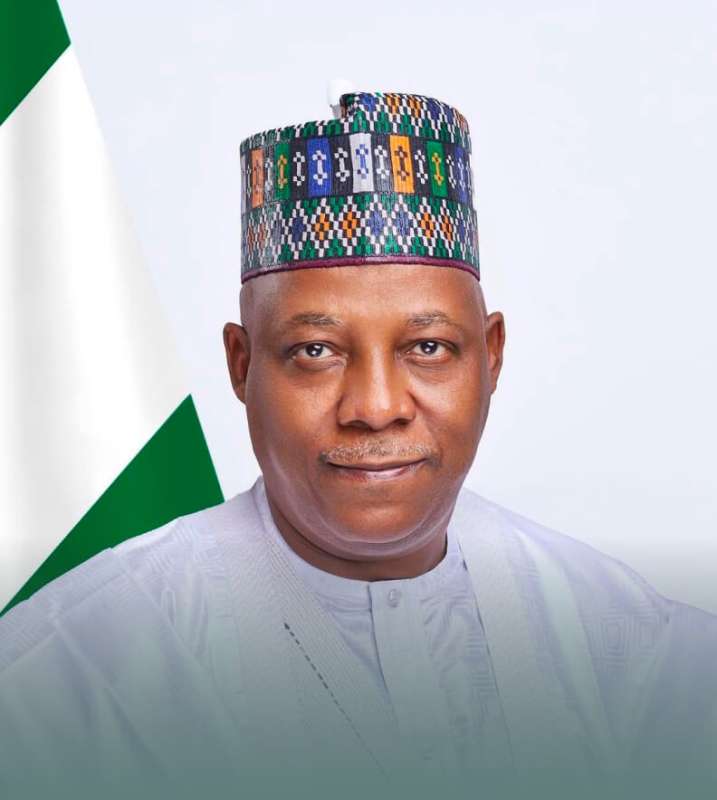
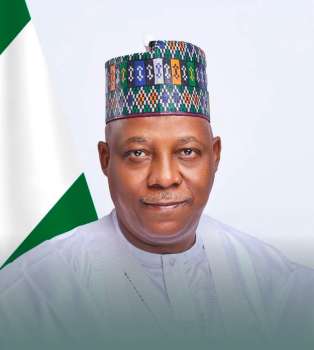
Nigeria has taken its campaign for a bigger African voice in global affairs to the heart of the United Nations, with Vice President Kashim Shettima demanding sweeping reform of the UN Security Council and permanent representation for Africa.
Delivering President Bola Ahmed Tinubu’s address at the **81st United Nations General Assembly** in New York on Thursday, Shettima said the international system created after World War II could no longer adequately reflect the realities of the modern world.
Nigeria called for **at least two permanent seats for Africa**, with the full rights and responsibilities of permanent membership, including veto rights for as long as the veto remains part of the Security Council, alongside **five non-permanent African seats**.
The demand puts Africa's long-standing campaign for greater representation at the centre of Nigeria's message to world leaders.
1945 cannot define 2026’
The Nigerian delegation argued that the distribution of power established in 1945 has left Africa under-represented in the institution responsible for some of the world's most consequential decisions on peace and security.
For Abuja, the issue is not simply about seats at the UN. It is about giving African countries a greater role in decisions that directly affect the continent.
Nigeria anchored its position on the **Ezulwini Consensus**, the African Union's common position on Security Council reform.
CONFLICTS: NIGERIA CALLS FOR DIPLOMACY
Shettima's address also turned to the conflicts confronting the international community.
Nigeria called for stronger diplomacy, respect for international law and protection of civilians, while urging greater international efforts to resolve conflicts, including the crisis in Sudan.
The Nigerian position was that lasting peace cannot be secured solely through military action and that diplomacy, dialogue and negotiated settlements remain essential tools for resolving conflicts.
TERRORISM: ‘NO COUNTRY CAN FIGHT ALONE’
With Nigeria continuing to confront terrorism and other forms of transnational crime, the address placed international security cooperation high on the agenda.
Nigeria called for stronger intelligence-sharing, action against terrorist financing and greater cooperation to prevent illicit weapons from crossing borders.
But Abuja also linked security to development, pointing to education, economic opportunity, accountable governance and protection of citizens** as important elements of long-term stability.
AFRICA’S WEALTH: FROM RAW MATERIALS TO INDUSTRIAL POWER
The Nigerian message went beyond politics and security.Tinubu's address, delivered by Shettima, called for Africa to transform its vast natural resources into industrial and economic opportunities by expanding **local processing, manufacturing, technology and value-added production**.
Nigeria also highlighted the African Continental Free Trade Area as an opportunity to expand intra-African trade and build stronger regional supply chains.
The message was clear: Africa's resources should generate greater value, jobs and investment within the continent rather than being exported largely in raw form.
CLIMATE AND DEVELOPMENT
Nigeria also reaffirmed its commitment to climate action, including its 2060 net-zero target, while stressing the need for financing, technology transfer and international support for developing countries.
Abuja argued that climate action and economic development should be pursued together, particularly in countries still struggling to provide reliable energy and economic opportunities for rapidly growing populations.
THE NIGERIAN MESSAGE
From the UN podium in New York, Shettima delivered a message that combined Nigeria's foreign-policy priorities with its wider vision for Africa: **greater representation, stronger security cooperation, economic transformation and a more inclusive international system.**
For Nigeria, the Security Council reform campaign remains a central part of that agenda.
The demand from Abuja is straightforward: **Africa should have a permanent voice in the room when decisions affecting international peace, security and global governance are made. And Nigeria says it intends to keep making that case.
News
CBN Slashes Interest Rate to 23% in Major Policy Adjustment
The Central Bank of Nigeria (CBN) has reduced its benchmark interest rate from 26.5 per cent to 23 per cent, marking a significant shift in its monetary policy direction.
CBN Governor, Olayemi Cardoso, announced the decision on Tuesday following the conclusion of the Monetary Policy Committee’s (MPC) 307th meeting in Abuja.
According to Cardoso, the committee reviewed developments in both the global and domestic economies, assessed emerging risks and considered their potential implications for monetary policy before reaching its decision.
“The Committee decided as follows: reset the monetary policy rate at 23 per cent,” the governor said.
The latest move represents a 350-basis-point reduction in the Monetary Policy Rate (MPR). It follows two consecutive MPC meetings at which the rate was left unchanged, after the committee lowered it by 50 basis points in February 2026.
In addition to cutting the MPR, the committee adjusted the standing facility corridor to +50 and -300 basis points around the new benchmark rate.
However, the CBN retained existing Cash Reserve Requirement (CRR) levels at 45 per cent for deposit money banks, 16 per cent for merchant banks and 75 per cent for non-TSA public-sector deposits.
Cardoso explained that the changes were designed to improve the effectiveness of monetary policy by strengthening the transmission of policy decisions through the financial system.
He said the adjustment was also part of efforts to restore the MPR as the primary signal of the CBN’s monetary policy and improve the operation of the monetary policy framework.
According to the governor, the MPC viewed the recalibration as an operational adjustment rather than a fundamental shift in the bank’s monetary policy stance.
“The Committee emphasized that the duration of the corridor does not constitute a change in the current monetary policy stance, but rather an operational reset to enhance the effectiveness of monetary policy and support the transition to an inflation targeting framework,” he said.
The committee also noted ongoing efforts by the CBN to strengthen its monetary policy implementation framework. Cardoso said transaction-based operational benchmarks had improved the transparency of money-market operations.
The MPC consequently concluded that resetting the MPR and adjusting the policy corridor would bring the monetary policy framework more closely in line with prevailing market conditions.
The committee said the changes are expected to improve policy transmission and reinforce the MPR’s role as the central benchmark for monetary policy.
Members further maintained that the latest adjustments should be viewed primarily as an operational realignment of the framework and not, in themselves, as a change in the underlying monetary policy stance.
Business
In The Spotlight
Editorial:Trump @ UNGA: Power Is Not a Substitute for Strategy
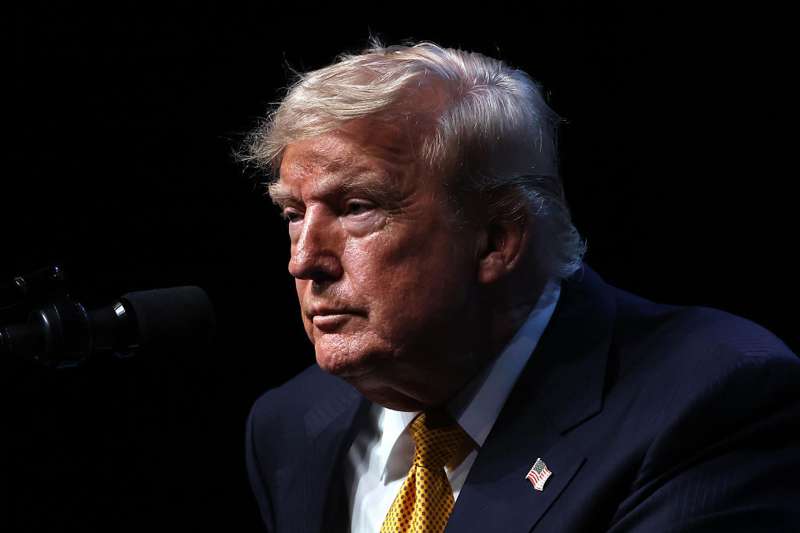
President Donald Trump came before the United Nations this week with a message that has defined much of his second presidency: The United States is powerful, it intends to use that power, and it will not permit international institutions to place limits on American sovereignty.
There was little ambiguity in the message. Trump celebrated military strength, demanded greater control over America’s borders, challenged international institutions and portrayed American technological leadership as a strategic necessity. On Iran, Gaza, immigration, the International Criminal Court and artificial intelligence, the president returned repeatedly to the same principle: Nations must defend their own interests, and the United States must remain free to act.
That is a coherent philosophy. But coherence is not the same as effectiveness.
The question raised by this speech is not whether America should be strong. No serious foreign policy can begin from the premise that American power is irrelevant. The question is what that power is for — and whether it is being used in ways that make the United States more secure over the long term.
Trump's remarks on Iran illustrated the dilemma.
He reaffirmed that Iran cannot be allowed to obtain a nuclear weapon and paired the possibility of diplomacy with warnings of devastating military consequences.
Deterrence has always depended partly on credibility. But credibility is not measured only by the willingness to threaten force. It is also measured by the ability to achieve a political outcome once force has been used.
Wars can begin with clear objectives and end with consequences no government anticipated. The history of American foreign policy offers ample evidence that military superiority does not automatically translate into political control.
That is why diplomacy cannot simply be regarded as the alternative to strength. At its best, diplomacy is one of the instruments through which strength is converted into durable agreements.
The same distinction matters in Trump's approach to the United Nations.
The president has argued that international institutions have become too costly, too bureaucratic and too willing to intrude upon national sovereignty. His administration has pursued reductions in America's financial and institutional commitments to the United Nations.
There is nothing inherently wrong with demanding accountability from an international organization. The United Nations deserves scrutiny. Its bureaucracy can be inefficient, its member states often disagree and its institutions can fail to prevent the very conflicts they were created to address.
But the choice is not simply between an ineffective United Nations and an unconstrained America.
International institutions exist in part because some problems cannot be solved effectively by individual nations acting alone. Nuclear proliferation is one. Global pandemics are another. Artificial intelligence increasingly belongs on that list.
Trump's comments about AI therefore deserve particular attention. He emphasized American technological leadership and warned against international regulation that could restrain innovation.
The United States has obvious reasons to remain at the forefront of AI development. But technological leadership and international coordination are not necessarily opposing objectives. The challenge is to develop rules that protect security without freezing innovation.
That requires American leadership, not American isolation.
The president's immigration argument followed the same pattern. He presented control of the border as an essential expression of national sovereignty and rejected the notion that international norms should prevent governments from determining who may enter their territory.
A sovereign nation plainly has an interest in controlling its borders. But sovereignty also carries responsibilities. The United States, like other countries, must reconcile border enforcement with its legal and humanitarian obligations.
The difficult work of governing begins where slogans end.
That is ultimately what was missing from the most sweeping parts of Trump's speech: not conviction, but attention to the institutional machinery required to turn conviction into lasting results.
America can impose costs on adversaries. It can withdraw from agreements. It can reduce contributions to international organizations. It can threaten overwhelming force. It can use its enormous economic and technological advantages.
But power has a second dimension that is easier to overlook: the ability to persuade allies, maintain coalitions, preserve diplomatic channels and build institutions capable of surviving changes in leadership.
The United States did not become the world's leading power merely because it possessed the world's strongest military. It built alliances. It established institutions. It cultivated economic relationships. It persuaded other countries that American leadership could serve interests beyond America's own.
Trump's speech represents a different emphasis.
It places sovereignty before institutions, pressure before accommodation and national interest before international consensus.
There is a legitimate debate to be had over whether the postwar international system has become too cumbersome, too expensive or insufficiently accountable. But reforming that system and weakening it are not the same thing.
The distinction will matter greatly in the years ahead.
A stronger America is not necessarily an America that stands alone. Nor is international cooperation synonymous with surrendering sovereignty.
The enduring challenge of American foreign policy is to combine power with restraint, independence with alliances and national interest with the recognition that American security is inseparable from the wider world.
Trump's speech made clear which side of that debate he occupies.The more consequential question is what happens next.
History will not ultimately judge the speech by its applause lines, its threats or its declarations of American strength. It will judge the policy that follows — and whether that policy produces a world in which the United States is not merely more powerful, but more secure.
Power matters. But power, by itself, is not a strategy.
In The Spotlight
Who Is in Charge? Tinubu Is in Paris, Shettima Is in New York
By now, Nigerians deserve more than explanations. They deserve clarity. President Bola Ahmed Tinubu is in Paris. Vice President Kashim Shettima is in New York.
And Nigeria is in Abuja, Lagos, Kano, Port Harcourt, Maiduguri and everywhere else Nigerians are dealing with the daily business of surviving, working and waiting for government to deliver. So, a simple question is becoming increasingly difficult to avoid:Who is in charge?
Before anyone dismisses that question as opposition politics, let us establish the facts. Tinubu left Nigeria on August 30 for what the Presidency described as a working vacation. He subsequently moved from London to Paris and, on September 21, the Presidency announced that he had extended his stay by a few days and would return at the weekend.
Shettima left Nigeria on September 20 for New York, where he is representing the President and leading Nigeria's delegation to the 81st United Nations General Assembly.
The government says there is no vacuum. It says Tinubu remains in contact with officials at home and continues to direct the affairs of government. It also says Shettima has been given the President's mandate to represent Nigeria at the UN.
Fine. But that does not make the question disappear.It makes the question more important.
A country cannot run on “trust us”
Government is not supposed to operate on whispers, assumptions or political reassurance.It operates through institutions.
It operates through constitutional authority. It operates through clearly defined responsibilities. And when the President is abroad for an extended period while the Vice President is also outside the country, Nigerians have every right to ask where executive authority is located and who is exercising it.
This is particularly relevant because Nigeria's Constitution provides a specific mechanism for a President who is proceeding on vacation or otherwise unable to discharge the functions of office.
That mechanism exists for a reason.It is designed to prevent uncertainty.It is designed to prevent a vacuum.It is designed toensure that, at every moment, Nigerians know who is constitutionally responsible for the presidency.
So why should Nigerians have to debate the issue?
The Presidency says everything is fine
The government insists that there is no disruption to governance.The Presidency says Tinubu has remained engaged from abroad. It points to decisions taken by the President while away and says the Vice President's trip to New York is an official assignment.
There is nothing inherently unusual about a Nigerian president travelling abroad.There is nothing unusual about a vice president representing the country at the United Nations.
The problem is the combination.The President is away. The Vice President is away. And the country is being told that everything is perfectly normal.
Perhaps it is.But if it is, then proving it should be easy.Tell Nigerians clearly who is exercising presidential authority.
Tell Nigerians whether the constitutional procedure has been followed.Tell Nigerians who is accountable for presidential decisions while both men are outside the country.This should not be difficult.
Leadership is also about presence
There is a difference between saying government is functioning and demonstrating that leadership is present.Nigeria is not short of challenges.
The cost of living remains a major concern. Security remains a national issue. Unemployment and economic hardship continue to affect households. Nigerians are demanding better public services and greater accountability.
At such a moment, leadership cannot be reduced to whether instructions can be transmitted from one continent to another.
Leadership is also about visibility. It is about being present when the country needs reassurance. It is about being accessible when difficult questions arise. It is about giving citizens confidence that somebody is firmly in control. A president does not have to sit permanently in Aso Rock to govern Nigeria. But Nigerians should never be left wondering whether anyone is sitting firmly at the controls.
Paris is not Abuja
There is another uncomfortable truth.Nigeria's political class has become remarkably comfortable governing from airports, hotel suites, foreign capitals and conference rooms.The rest of the country does not have that luxury.
The Nigerian worker cannot take a working vacation from inflation.The small business owner cannot take annual leave from electricity costs.The parent struggling with school fees cannot postpone the bills until the President returns. The young graduate without a job cannot simply wait for the government to reconnect with reality.
For ordinary Nigerians, the country does not go on vacation.That is why the optics matter.While the President is in Paris and the Vice President is in New York, millions of Nigerians remain at home confronting the consequences of government policy every day.
This is bigger than Tinubu
The danger is that this debate becomes another partisan shouting match. Supporters will say the President is working.
Opponents will say the government has abandoned its responsibilities. Both sides can shout themselves hoarse.
But the Constitution does not work by volume. The question is not whether Tinubu's supporters are satisfied.The question is not whether his opponents are outraged.The question is whether the constitutional chain of executive authority is clear. That is an institutional question, not a party question. And the National Assembly has a role to play in ensuring that Nigerians are not left guessing.
Nigeria deserves an answer
There is something deeply unhealthy about a democracy in which citizens have to ask social media, political parties and television commentators who is exercising presidential power.
The answer should be official.It should be constitutional.It should be unambiguous.If Tinubu is fully exercising the powers of President from Paris, say so.If Shettima is exercising presidential functions under the constitutional provisions governing presidential absence, say so.If there is no constitutional problem, explain precisely why.
But please, stop treating a legitimate question as an attack on the government.A government confident in its constitutional position should welcome clarity.
Who is in charge?
This is ultimately not about Paris.It is not about New York.It is not even primarily about Tinubu or Shettima. It is about the Nigerian presidency. A republic of more than 200 million people should not have an invisible question mark hanging over its executive authority.
Tinubu can travel.Shettima can travel.Government can continue. But constitutional responsibility must remain visible.
Because when both the President and Vice President are outside the country, Nigerians should not have to look at a map to figure out where their government is.
They should be able to look at the Constitution.And the answer should be unmistakable.Who is in charge? Nigeria deserves to know.
By Emmanuel Emeke Asiwe, Publisher/Editor-in-Chief