



















Erstwhile General Manager (Operations) of the defunct Nigerian Telecommunications (NITEL), Engr. S. O. Ogundele has absolved former Director General of the Bureau of Public Enterprise (BPE), Mallam Nasir El Rufai of blame in the ruin of the telco, instead identifying former President Olusegun Obasanjo, former Vice President Atiku Abubakar and former members of the NITEL Board as those culpable by their direct and indirections.
In a treatise emailed to Huhuonline.com, Ogundele also claimed that the collapse was unrelated in any way to the appointment of Messrs. Pentascope to manage the government telecom company.
The treatise, in full reads:
The Nigerian Newspapers, hard copies and online, and several web blogs and social media were awash on Tuesday April 2, 2013 with reports and comments, on the claims and counterclaims by the former Vice President of Nigeria, Alhaji Atiku Abubakar and Malam Nasir El Rufai the former Director General of the BPE on who or what ran NITEL aground. Nigerians will not forget in a hurry that the Nigerian Telecommunications Ltd. (NITEL) was Nigeria’s only telecommunications provider for almost half a century and by the time it was run aground more than six billion US Dollars that was invested in NITEL by the Nigerian tax payers through various governments went down the drain. Since NITEL became comatose, the Federal Government has behaved as if nothing has happened! Nigerians were left to be entertained by two of the dramatis personae in the NITEL saga dancing naked in the market place.
I wish to emphasize without any fear of contradiction that despite the irregularities that may have surrounded the appointment of Messrs. Pentascope to manage NITEL or the competence of Pentascope to undertake such an assignment at a point in time, Pentascope was not responsible for the bankruptcy of NITEL as being widely orchestrated to undiscerning Nigerians and divert attention from the real culprits, the criminal gang in the Nigerian telecom sector. The bankruptcy of NITEL was initiated by the criminal gang in the Nigerian Telecommunications sector long before the Management Contract of Pentascope to manage NITEL. Members of the criminal gang are mainly in the Nigerian Communications Commissions (NCC) and NITEL with some of them being failed NITEL Contractors. Their paymasters are the private telecommunications operators especially MTN. NITEL was already on the path to financial bankruptcy since 2001 because of the acts of commission and omission of this group.
Professor Bajoga the former Managing Director of NITEL and I were actually retired from service mainly because the criminal gang in the Nigerian telecommunications sector wanted us out of the way for refusing to play ball in allowing NITEL networks to be used free of charge by the Private telecommunications operators the same way Nigeria Airways was destroyed when Private Operators were introduced into that sector and used Nigerian Airways call sign and other aviation service facilities free of charge until Nigerian Airways went bankrupt. The NITEL saga is however more serious because the criminal gang in the telecommunications sector knew that they were deliberately undermining National security in the process.
International financial institutions are aware of the way and manner the Nigerian telecommunications criminal gang was scamming NITEL. This was why the consortium, International Investors Limited of London (IIL} and Transcorp had difficulties in raising funds to pay for NITEL transactions. The irony however is that the consultant to transcorp was the same consultant that produced the misleading and unintelligent report for NCC equating Interconnection as Termination for a reported fee of ten million Naira in late 1999 which formed the bedrock of the criminal gang’s scamming of NITEL.
I was the NITEL Deputy General Manager / General Manager (Operations) heading NITEL technical team on regulatory issues with NCC from 1994 until April 2000, I was fully aware of the criminal intent of the criminal gang against NITEL in flagrant violation of explicit Nigerian Laws and International Telecommunications Union (ITU) Recommendations on the issue of Interconnection. With my direct participation on the telecommunications regulatory issue I could predict NITEL’s bankruptcy since 2001. It is therefore morally reprehensible for anybody to blame Pentascope for an event already preprogrammed. Pentascope or their sponsors merely walked into the trap. A forensic analysis of the so called 100 billion Naira that Pentascope is being called to account for will be found to have been spent in part to settle the Private telecommunications Operators fraudulent invoices that NITEL was not in a position to certify albeit forced to pay against all the norms of commercial transactions.
The GSM operator, MTN was reported to the former President of South Africa, Thabo Mbeki for corrupting the Nigerian Polity by Chief Obasanjo. Of Course, Thabo Mbeki insulted Nigerians and Nigeria by giving the former President Chief Obasanjo the diplomatic cold shoulder. Unknown to Obasanjo, at about the same time, MTN submitted a controversial bill of three (3) billion Naira to NITEL for settlement. NITEL correctly refused to settle the fraudulent so called traffic exchange bill based on call termination. Low and behold, MTN rubbed salt on injury of Nigerians with Tabo Mbeki’s rebuff of Obasanjo’s complaints by making Nigeria’s presidency MTN marketing and debt collecting officer! MTN routed the same bill that NITEL refused to settle through the PRESIDENCY which promptly acted like MTN debt collecting agency by sending the bill through the Ministry of Communications to compel NITEL to pay. Of course NITEL staff to please “the Oga on Top” promptly parted with three billion Naira. What the Presidency that should lead the nation in patriotic example did not know was that at the time MTN submitted the questionable bill of 3 billion Naira for NITEL to settle MTN was using 22 E1 (2x2MB) NITEL leased circuits to connect its Radio Base Stations in Abuja to Lagos where it had the Mobile switching Centre (MSC).without paying a single kobo to NITEL for those services. But NITEL provided same services to NNPC and other corporate bodies which they were paying for.
Presently corporate bodies that need the same E1 from MTN are charged N300,000 to N750,000 as monthly rental and there is the distance charge as well. On the basis of Current MTN charges which are much less than NITEL charges ten years ago, the amount that MTN owed NITEL for the 22 E1s from Abuja to Lagos was N(22x300,000x700x24) which amounts to 46.20 billion Naira or N(22x750,000x700x24) which amounts to 277.20 billion Naira assuming Abuja is approximately 700 Kilometers from Lagos and for a period of about 24 months as at 2003 when MTN used the Presidency to collect payment of about 3 billion Naira that should never have been paid to them.
Readers should please note that MTN did not need 22 E1 from NITEL to connect its network from Abuja to Lagos when MTN launched gsm services in 2001. Five or six E1s would have been enough but the criminal gang in NCC did not compel MTN to Install a Mobile Switching Center (MSC) in Abuja, the Federal Capital of Nigeria. Abuja had to depend then and possibly up till now, on REMOTE gsm numbers from Lagos just because MTN was given free use of NITEL E1s and Nigerians can now appreciate the huge loss of revenue to NITEL. ECONET had 18 E1s and Glo 15 E1s for the same purpose from NITEL with NITEL not earning a kobo because of the atrocities of the telecommunications criminal gang in NITEL and NCC. The example above is just for Abuja to Lagos. NITEL carrier network was used in a similar manner all over the country. Nigerians should appreciate the mind boggling loss to NITEL which is in excess of one trillion Naira!
Sections 17 1 an subsection (c) of the Corrupt Practices and Other Related Act 2000 states “Any person who corruptly knowingly gives to any agent or being an agent knowingly uses with intent to deceive his principal, any receipt, account or other document in respect of which the principal is interested and which contains any statement which is false or erroneous or defective in any material particular, and which, to his knowledge, is intended to mislead his principal or any other person, is guilty of an offence and SHALL ON CONVICTION BE LIABLE TO FIVE 5 YEARS IMPRISONMENT”
The criminal gang in NITEL and NCC contravened this section of the ICPC act by corruptly:
1. Abandoning the 1997 Interconnection Agreement in 2001 without due process or lawful authority and deceitfully substituting another based on termination only, in flagrant violation of Section 15 (j) of Decree 75 of 1992 with the sole intention of defrauding NITEL having been compromised or corrupted by the Private telecommunications operators.
2. Deliberately misleading the NCC board with Interconnect Rate Determination Memo of 2nd December 2003, The Memo to the Board of NCC clearly and appropriately concluded that the Operator handling SINGLE TANDEM or DOUBLE TANDEM switching of telephony calls, which only NITEL the Dominant Operator was providing, should be entitled to 51% or 96% of the call charges. The Memo however deceitfully and deliberately left out prayers on the areas of benefit to NITEL thereby willfully allowing the Private Operators to withhold the 51% to 96% of the call charges that should have been handed over to NITEL. This created a huge treasure chest for MTN and others resulting in massive capital flight which did not escape the notice of Professor Soludo the former Cenral Bank Governor who raised an alarm in 2003. It is this capital flight that on round tripping the criminal gang in NCC orchestrate to Nigerians as foreign investment in the telecom sector. The criminal gang in the telecom sector really made big “Mugu” of Nigerians especially the Federal Government of Nigeria.
3. NCC was not competent by Decree 75 of 1992 to licence NITEL, a publicly owned company since NCC was empowered to licence only private telecommunications companies. The criminal gang in NCC however blackmailed NITEL into paying $200 million dollars for a National Carrier Licence along with Glo in 2002 with an EXCLUSIVITY PERIOD OF FIVE YEARS. Less than six months after NITEL and Glo paid about 20 billion Naira each for National Carrier Licence NCC unlawfully permitted MTN to install National Optic fiber network thus deliberately and deceitfully making MTN a National Carrier without paying a Kobo! MTN Optic fibre national network is therefore unlawful and illegal. No amount of manipulations by NCC can cure the illegality and Nigeria is the only country in the world where a major telecom operator flagrantly operate illegally and proud of it. This action of NCC has caused huge loss of revenues to NITEL and Glo and they both have the option of going to court to recoup their losses. It is pertinent to point out the after almost two decades of Operations in South Africa the South African Government did not approve of MTN as the Second National Operator when it decided to licence a Second National Operator. But the same MTN became a National Carrier in Nigeria within two years of operation as a result of unbridled and barefaced corruption carried out with impunity.
Some NITEL Board members have been using the Pentascope Management contract to orchestrate a campaign of calumny against Malam El Rufai to call a dog a bad name in order to hang it. But the real grudge the NITEL Board Members have against El Rufai was that El Rufai patriotically prevented NITEL from borrowing more than seven hundred (700) billion Naira under the guise of strengthening NITEL networks which the criminal gang were again to let Private Operators use free of charge in exchange for personal gratification. Where were the same NITEL Board members when NCC allowed MTN to encroach without paying a Kobo on the National Carrier License for which NITEL paid more than 20 billion Naira of borrowed money? Where was NITEL Board when Interconnection was being fraudulently interpreted as termination only to criminally shortchange NITEL?
NITEL Board must apologize to Nigerians and El Rufai and admit that it was not Pentascope Management contract that ruined NITEL but the criminal negligence and greed of its members that turned NITEL networks into free handouts to Private Operators for personal gratification. All patriotic Nigerians should support El Rufai for not allowing NITEL Board borrow additional 700 billion Naira only to be used as handouts to Private Operators for personal gratification or bribery and corruption in plain language. Nowhere in the world has deregulation caused a dominant operator like NITEL to go bankrupt. It is the criminal greed and corruption of NITEL and NCC Board members that RUINED NITEL. NOT PENTASCOPE!
Alhaji Atiku Abubakar as the then Vice President was fully in charge of Parastatals including NITEL and NCC so he should accept responsibly for the bankruptcy of NITEL. It was under his watch the presidency was used as the debt collecting agency for controversial and questionable MTN bills. It was also under Atiku’s watch that MTN was unlawfully allowed to set up National Optic fibre network free of charge the same Service NITEL and Glo paid more than 20 billion Naira for and was to enjoy EXCLUSIVITY PERIOD OF FIVE YEARS which MTN unlawfully and illgaly encroached on and STILL ENCROACHING! Dr. Ojeba another former Managing Director of NITEL was retired just when he was resisting the unauthorized abandonment of the 1997 Interconnection Agreement for the fraudulent one.
Alhaji Atiku Abubakar as the then vice president was the Chairman of the National Council on Privatization. On page 32 (PENSION Page) of THE NATION Newspapers of Monday, October 23, 2006 under the Caption “Govt. to pay NITEL’s N60b pension deficit”, the paper reported that the council at its 42nd meeting held on October 10, 2006 decided that the Federal Government will assume all historical and outstanding liabilities of 60 billion Naira arising from Pension Fund Deficit for NITEL and M-tel. It is expected that the BPE should have demanded the 60 billion from the Head of Service of the Federation. NITEL staff did not enjoy any part of the 60 billion. From the recent revelation surrounding Pension Fund Administration it is hoped that the 60 billion was not released by the HOS and diverted by unscrupulous elements in the HOS office or BPE leaving NITEL Pensioners to continue to wallow and die in poverty.
For the record, I have never met Alhaji Atiku Abubakar or Mallam El Rufai.
The current diversion of public attention by NCC from the consequences of the unstructured telecom network Nigerians are saddled with, is the Mobile Number Portability (MNP). Nigerians should note that it is the same NCC that supplied the World Telephone Numbering Guide with the following information about Telephone Numbering Format in Nigeria. Area Code, 1 – 2 digits; Subscriber Number, 5 – 7 digits; Trunk Prefix, 0; International Prefix, 009.
Only the 5 - 7 digits, which are the actual Subscriber Number, can be “Ported”. The Trunk Code and Area Code, which in Nigeria’s gsm network has been turned by NCC into Network Operator Code is actually 3 digits, cannot be “Ported” unless Nigeria wants to become the only country in the world without Area or Trunk Codes. This clarification is essential because the impression NCC has given Nigerians so far is that ALL THE DIGITS IN A GSM NUMBER can be “Ported” It is for this reason that all other countries that have implemented MNP insist it can only be effected in the Home Area of the Number so that the Area Code remains the same.
A Judicial Commission of Inquiry was set up into the administration of the Nigerian Airways when it was run aground like NITEL. Why not same for NITEL where the loss of public funds is much greater?
Nigerians are watching!
Engr. S. O,Ogundele
Former General Manager (Operations}, NITEL
 |
|

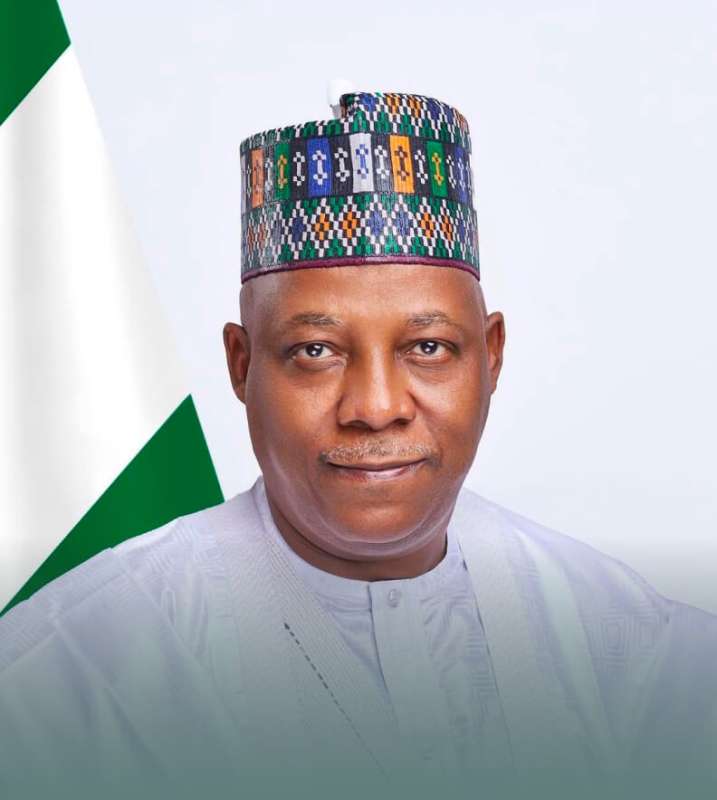
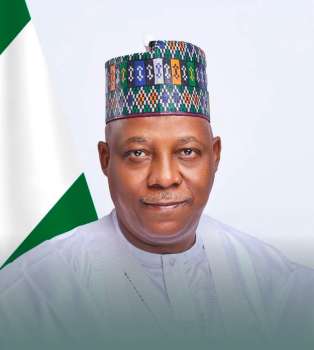
Shettima at UNGA: Africa Demands a Seat at the Global Table
Nigeria has taken its campaign for a bigger African voice in global affairs to the heart of the United Nations, with Vice President Kashim Shettima demanding sweeping reform of the UN Security Council and permanent representation for Africa.
Delivering President Bola Ahmed Tinubu’s address at the **81st United Nations General Assembly** in New York on Thursday, Shettima said the international system created after World War II could no longer adequately reflect the realities of the modern world.
Nigeria called for **at least two permanent seats for Africa**, with the full rights and responsibilities of permanent membership, including veto rights for as long as the veto remains part of the Security Council, alongside **five non-permanent African seats**.
The demand puts Africa's long-standing campaign for greater representation at the centre of Nigeria's message to world leaders.
1945 cannot define 2026’
The Nigerian delegation argued that the distribution of power established in 1945 has left Africa under-represented in the institution responsible for some of the world's most consequential decisions on peace and security.
For Abuja, the issue is not simply about seats at the UN. It is about giving African countries a greater role in decisions that directly affect the continent.
Nigeria anchored its position on the **Ezulwini Consensus**, the African Union's common position on Security Council reform.
CONFLICTS: NIGERIA CALLS FOR DIPLOMACY
Shettima's address also turned to the conflicts confronting the international community.
Nigeria called for stronger diplomacy, respect for international law and protection of civilians, while urging greater international efforts to resolve conflicts, including the crisis in Sudan.
The Nigerian position was that lasting peace cannot be secured solely through military action and that diplomacy, dialogue and negotiated settlements remain essential tools for resolving conflicts.
TERRORISM: ‘NO COUNTRY CAN FIGHT ALONE’
With Nigeria continuing to confront terrorism and other forms of transnational crime, the address placed international security cooperation high on the agenda.
Nigeria called for stronger intelligence-sharing, action against terrorist financing and greater cooperation to prevent illicit weapons from crossing borders.
But Abuja also linked security to development, pointing to education, economic opportunity, accountable governance and protection of citizens** as important elements of long-term stability.
AFRICA’S WEALTH: FROM RAW MATERIALS TO INDUSTRIAL POWER
The Nigerian message went beyond politics and security.Tinubu's address, delivered by Shettima, called for Africa to transform its vast natural resources into industrial and economic opportunities by expanding **local processing, manufacturing, technology and value-added production**.
Nigeria also highlighted the African Continental Free Trade Area as an opportunity to expand intra-African trade and build stronger regional supply chains.
The message was clear: Africa's resources should generate greater value, jobs and investment within the continent rather than being exported largely in raw form.
CLIMATE AND DEVELOPMENT
Nigeria also reaffirmed its commitment to climate action, including its 2060 net-zero target, while stressing the need for financing, technology transfer and international support for developing countries.
Abuja argued that climate action and economic development should be pursued together, particularly in countries still struggling to provide reliable energy and economic opportunities for rapidly growing populations.
THE NIGERIAN MESSAGE
From the UN podium in New York, Shettima delivered a message that combined Nigeria's foreign-policy priorities with its wider vision for Africa: **greater representation, stronger security cooperation, economic transformation and a more inclusive international system.**
For Nigeria, the Security Council reform campaign remains a central part of that agenda.
The demand from Abuja is straightforward: **Africa should have a permanent voice in the room when decisions affecting international peace, security and global governance are made. And Nigeria says it intends to keep making that case.
News
CBN Slashes Interest Rate to 23% in Major Policy Adjustment
The Central Bank of Nigeria (CBN) has reduced its benchmark interest rate from 26.5 per cent to 23 per cent, marking a significant shift in its monetary policy direction.
CBN Governor, Olayemi Cardoso, announced the decision on Tuesday following the conclusion of the Monetary Policy Committee’s (MPC) 307th meeting in Abuja.
According to Cardoso, the committee reviewed developments in both the global and domestic economies, assessed emerging risks and considered their potential implications for monetary policy before reaching its decision.
“The Committee decided as follows: reset the monetary policy rate at 23 per cent,” the governor said.
The latest move represents a 350-basis-point reduction in the Monetary Policy Rate (MPR). It follows two consecutive MPC meetings at which the rate was left unchanged, after the committee lowered it by 50 basis points in February 2026.
In addition to cutting the MPR, the committee adjusted the standing facility corridor to +50 and -300 basis points around the new benchmark rate.
However, the CBN retained existing Cash Reserve Requirement (CRR) levels at 45 per cent for deposit money banks, 16 per cent for merchant banks and 75 per cent for non-TSA public-sector deposits.
Cardoso explained that the changes were designed to improve the effectiveness of monetary policy by strengthening the transmission of policy decisions through the financial system.
He said the adjustment was also part of efforts to restore the MPR as the primary signal of the CBN’s monetary policy and improve the operation of the monetary policy framework.
According to the governor, the MPC viewed the recalibration as an operational adjustment rather than a fundamental shift in the bank’s monetary policy stance.
“The Committee emphasized that the duration of the corridor does not constitute a change in the current monetary policy stance, but rather an operational reset to enhance the effectiveness of monetary policy and support the transition to an inflation targeting framework,” he said.
The committee also noted ongoing efforts by the CBN to strengthen its monetary policy implementation framework. Cardoso said transaction-based operational benchmarks had improved the transparency of money-market operations.
The MPC consequently concluded that resetting the MPR and adjusting the policy corridor would bring the monetary policy framework more closely in line with prevailing market conditions.
The committee said the changes are expected to improve policy transmission and reinforce the MPR’s role as the central benchmark for monetary policy.
Members further maintained that the latest adjustments should be viewed primarily as an operational realignment of the framework and not, in themselves, as a change in the underlying monetary policy stance.
Business
In The Spotlight
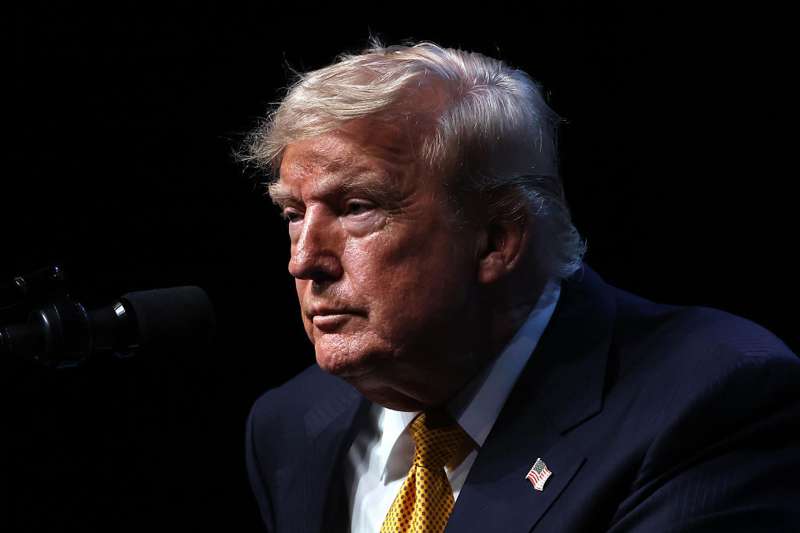
Editorial:Trump @ UNGA: Power Is Not a Substitute for Strategy
President Donald Trump came before the United Nations this week with a message that has defined much of his second presidency: The United States is powerful, it intends to use that power, and it will not permit international institutions to place limits on American sovereignty.
There was little ambiguity in the message. Trump celebrated military strength, demanded greater control over America’s borders, challenged international institutions and portrayed American technological leadership as a strategic necessity. On Iran, Gaza, immigration, the International Criminal Court and artificial intelligence, the president returned repeatedly to the same principle: Nations must defend their own interests, and the United States must remain free to act.
That is a coherent philosophy. But coherence is not the same as effectiveness.
The question raised by this speech is not whether America should be strong. No serious foreign policy can begin from the premise that American power is irrelevant. The question is what that power is for — and whether it is being used in ways that make the United States more secure over the long term.
Trump's remarks on Iran illustrated the dilemma.
He reaffirmed that Iran cannot be allowed to obtain a nuclear weapon and paired the possibility of diplomacy with warnings of devastating military consequences.
Deterrence has always depended partly on credibility. But credibility is not measured only by the willingness to threaten force. It is also measured by the ability to achieve a political outcome once force has been used.
Wars can begin with clear objectives and end with consequences no government anticipated. The history of American foreign policy offers ample evidence that military superiority does not automatically translate into political control.
That is why diplomacy cannot simply be regarded as the alternative to strength. At its best, diplomacy is one of the instruments through which strength is converted into durable agreements.
The same distinction matters in Trump's approach to the United Nations.
The president has argued that international institutions have become too costly, too bureaucratic and too willing to intrude upon national sovereignty. His administration has pursued reductions in America's financial and institutional commitments to the United Nations.
There is nothing inherently wrong with demanding accountability from an international organization. The United Nations deserves scrutiny. Its bureaucracy can be inefficient, its member states often disagree and its institutions can fail to prevent the very conflicts they were created to address.
But the choice is not simply between an ineffective United Nations and an unconstrained America.
International institutions exist in part because some problems cannot be solved effectively by individual nations acting alone. Nuclear proliferation is one. Global pandemics are another. Artificial intelligence increasingly belongs on that list.
Trump's comments about AI therefore deserve particular attention. He emphasized American technological leadership and warned against international regulation that could restrain innovation.
The United States has obvious reasons to remain at the forefront of AI development. But technological leadership and international coordination are not necessarily opposing objectives. The challenge is to develop rules that protect security without freezing innovation.
That requires American leadership, not American isolation.
The president's immigration argument followed the same pattern. He presented control of the border as an essential expression of national sovereignty and rejected the notion that international norms should prevent governments from determining who may enter their territory.
A sovereign nation plainly has an interest in controlling its borders. But sovereignty also carries responsibilities. The United States, like other countries, must reconcile border enforcement with its legal and humanitarian obligations.
The difficult work of governing begins where slogans end.
That is ultimately what was missing from the most sweeping parts of Trump's speech: not conviction, but attention to the institutional machinery required to turn conviction into lasting results.
America can impose costs on adversaries. It can withdraw from agreements. It can reduce contributions to international organizations. It can threaten overwhelming force. It can use its enormous economic and technological advantages.
But power has a second dimension that is easier to overlook: the ability to persuade allies, maintain coalitions, preserve diplomatic channels and build institutions capable of surviving changes in leadership.
The United States did not become the world's leading power merely because it possessed the world's strongest military. It built alliances. It established institutions. It cultivated economic relationships. It persuaded other countries that American leadership could serve interests beyond America's own.
Trump's speech represents a different emphasis.
It places sovereignty before institutions, pressure before accommodation and national interest before international consensus.
There is a legitimate debate to be had over whether the postwar international system has become too cumbersome, too expensive or insufficiently accountable. But reforming that system and weakening it are not the same thing.
The distinction will matter greatly in the years ahead.
A stronger America is not necessarily an America that stands alone. Nor is international cooperation synonymous with surrendering sovereignty.
The enduring challenge of American foreign policy is to combine power with restraint, independence with alliances and national interest with the recognition that American security is inseparable from the wider world.
Trump's speech made clear which side of that debate he occupies.The more consequential question is what happens next.
History will not ultimately judge the speech by its applause lines, its threats or its declarations of American strength. It will judge the policy that follows — and whether that policy produces a world in which the United States is not merely more powerful, but more secure.
Power matters. But power, by itself, is not a strategy.
In The Spotlight
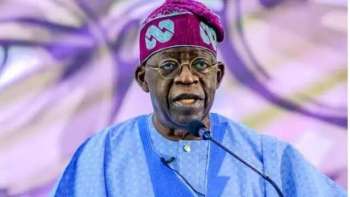
Who Is in Charge? Tinubu Is in Paris, Shettima Is in New York
By now, Nigerians deserve more than explanations. They deserve clarity. President Bola Ahmed Tinubu is in Paris. Vice President Kashim Shettima is in New York.
And Nigeria is in Abuja, Lagos, Kano, Port Harcourt, Maiduguri and everywhere else Nigerians are dealing with the daily business of surviving, working and waiting for government to deliver. So, a simple question is becoming increasingly difficult to avoid:Who is in charge?
Before anyone dismisses that question as opposition politics, let us establish the facts. Tinubu left Nigeria on August 30 for what the Presidency described as a working vacation. He subsequently moved from London to Paris and, on September 21, the Presidency announced that he had extended his stay by a few days and would return at the weekend.
Shettima left Nigeria on September 20 for New York, where he is representing the President and leading Nigeria's delegation to the 81st United Nations General Assembly.
The government says there is no vacuum. It says Tinubu remains in contact with officials at home and continues to direct the affairs of government. It also says Shettima has been given the President's mandate to represent Nigeria at the UN.
Fine. But that does not make the question disappear.It makes the question more important.
A country cannot run on “trust us”
Government is not supposed to operate on whispers, assumptions or political reassurance.It operates through institutions.
It operates through constitutional authority. It operates through clearly defined responsibilities. And when the President is abroad for an extended period while the Vice President is also outside the country, Nigerians have every right to ask where executive authority is located and who is exercising it.
This is particularly relevant because Nigeria's Constitution provides a specific mechanism for a President who is proceeding on vacation or otherwise unable to discharge the functions of office.
That mechanism exists for a reason.It is designed to prevent uncertainty.It is designed to prevent a vacuum.It is designed toensure that, at every moment, Nigerians know who is constitutionally responsible for the presidency.
So why should Nigerians have to debate the issue?
The Presidency says everything is fine
The government insists that there is no disruption to governance.The Presidency says Tinubu has remained engaged from abroad. It points to decisions taken by the President while away and says the Vice President's trip to New York is an official assignment.
There is nothing inherently unusual about a Nigerian president travelling abroad.There is nothing unusual about a vice president representing the country at the United Nations.
The problem is the combination.The President is away. The Vice President is away. And the country is being told that everything is perfectly normal.
Perhaps it is.But if it is, then proving it should be easy.Tell Nigerians clearly who is exercising presidential authority.
Tell Nigerians whether the constitutional procedure has been followed.Tell Nigerians who is accountable for presidential decisions while both men are outside the country.This should not be difficult.
Leadership is also about presence
There is a difference between saying government is functioning and demonstrating that leadership is present.Nigeria is not short of challenges.
The cost of living remains a major concern. Security remains a national issue. Unemployment and economic hardship continue to affect households. Nigerians are demanding better public services and greater accountability.
At such a moment, leadership cannot be reduced to whether instructions can be transmitted from one continent to another.
Leadership is also about visibility. It is about being present when the country needs reassurance. It is about being accessible when difficult questions arise. It is about giving citizens confidence that somebody is firmly in control. A president does not have to sit permanently in Aso Rock to govern Nigeria. But Nigerians should never be left wondering whether anyone is sitting firmly at the controls.
Paris is not Abuja
There is another uncomfortable truth.Nigeria's political class has become remarkably comfortable governing from airports, hotel suites, foreign capitals and conference rooms.The rest of the country does not have that luxury.
The Nigerian worker cannot take a working vacation from inflation.The small business owner cannot take annual leave from electricity costs.The parent struggling with school fees cannot postpone the bills until the President returns. The young graduate without a job cannot simply wait for the government to reconnect with reality.
For ordinary Nigerians, the country does not go on vacation.That is why the optics matter.While the President is in Paris and the Vice President is in New York, millions of Nigerians remain at home confronting the consequences of government policy every day.
This is bigger than Tinubu
The danger is that this debate becomes another partisan shouting match. Supporters will say the President is working.
Opponents will say the government has abandoned its responsibilities. Both sides can shout themselves hoarse.
But the Constitution does not work by volume. The question is not whether Tinubu's supporters are satisfied.The question is not whether his opponents are outraged.The question is whether the constitutional chain of executive authority is clear. That is an institutional question, not a party question. And the National Assembly has a role to play in ensuring that Nigerians are not left guessing.
Nigeria deserves an answer
There is something deeply unhealthy about a democracy in which citizens have to ask social media, political parties and television commentators who is exercising presidential power.
The answer should be official.It should be constitutional.It should be unambiguous.If Tinubu is fully exercising the powers of President from Paris, say so.If Shettima is exercising presidential functions under the constitutional provisions governing presidential absence, say so.If there is no constitutional problem, explain precisely why.
But please, stop treating a legitimate question as an attack on the government.A government confident in its constitutional position should welcome clarity.
Who is in charge?
This is ultimately not about Paris.It is not about New York.It is not even primarily about Tinubu or Shettima. It is about the Nigerian presidency. A republic of more than 200 million people should not have an invisible question mark hanging over its executive authority.
Tinubu can travel.Shettima can travel.Government can continue. But constitutional responsibility must remain visible.
Because when both the President and Vice President are outside the country, Nigerians should not have to look at a map to figure out where their government is.
They should be able to look at the Constitution.And the answer should be unmistakable.Who is in charge? Nigeria deserves to know.
By Emmanuel Emeke Asiwe, Publisher/Editor-in-Chief